We’re taking your comments and questions straight from YouTube and putting them to the test in this week’s Straight From You — where we sort fact from speculation and add context that headlines often miss.
This week’s topic: Why we still say “Department of Defense” instead of “Department of War.”
You said:
The question:
Why don’t you use Department of War?
SAN answer:
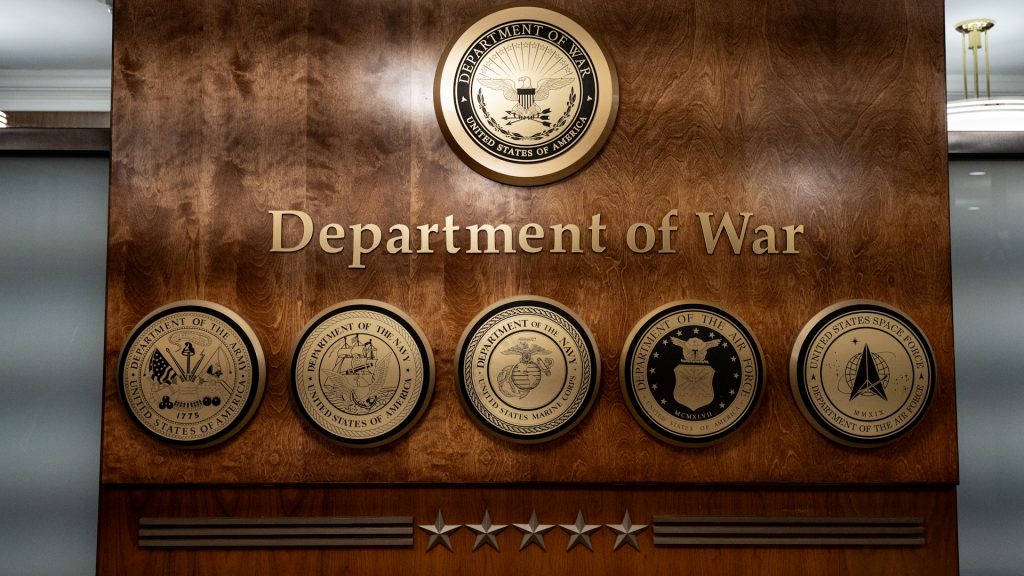
President Donald Trump’s Sept. 5, 2025, executive order did not legally rename the Department of Defense. Instead, it authorized “Department of War” as an additional secondary title in certain non-statutory contexts.
The order also makes clear that statutory references remain controlling. In other words, unless Congress changes the law, the official legal names remain “Department of Defense” and “Secretary of Defense.”
That distinction matters for news reporting. Public branding can change faster than federal law. Because of that, agencies are expected to use secondary titles only when they do not create confusion about legal, statutory or international obligations.
That’s why most news organizations – including SAN – default to “Department of Defense” and “Secretary of Defense” in straight news coverage, in line with The Associated Press’ Stylebook guidance.
What the order allows — and what it doesn’t
The executive order, titled “Restoring the United States Department of War,” allows the secretary of defense to use the additional title “Secretary of War” in official correspondence, public communications, ceremonial contexts and other non-statutory executive branch documents.
It also allows the “Department of Defense” and the “Office of the Secretary of Defense” to be referred to as the “Department of War” and “Office of the Secretary of War” in those same contexts.
The concept could extend to subordinate officials with titles such as “Deputy Secretary of War.” The order also directs the defense secretary to recommend legislation and executive steps needed if the administration wants to permanently change the department’s name.
Rollout questions – and costs
There are also practical considerations. The Congressional Budget Office said the executive order authorized the use of Department of War as a secondary title and that DoD is limited to using it as a parallel designation unless Congress enacts legislation.
CBO estimated that a limited rollout focused mostly on the Office of the Secretary of Defense could cost about $10 million in opportunity costs.
A broader rollout could reach $125 million, depending on how quickly it is implemented. A full statutory rename – changing the legal name across government systems and documents – could cost hundreds of millions of dollars, depending on the scope and timeline.
Politico reported that Pentagon officials were reviewing the potential scale and cost of the rebrand and noted that any formal name change would require an act of Congress.
Sen. Mitch McConnell criticized the move on X, while Sen. Jeanne Shaheen called it a distraction.
If we call it the Dept. of War, we’d better equip the military to actually prevent and win wars. Can’t preserve American primacy if we’re unwilling to spend substantially more on our military than Carter or Biden. “Peace through strength” requires investment, not just rebranding. https://t.co/aKn1HJTK39
Early rollout efforts were uneven. Politico reported rebranded social media accounts and a redirect from defense.gov to war.gov, which was briefly offline. CBO also noted uncertainty in its cost estimates because the department had not yet submitted a detailed implementation plan to Congress.
Keep dropping comments, asking questions and SAN will tackle the biggest ones on Straight From You.
Ella and the staff at Clear Media Project (CMP) curate these articles.
Unless otherwise noted CMP does not write these articles.
The views, thoughts, and opinions expressed in the articles published on this blog belong solely to the original authors and do not necessarily reflect the views of the blog owner. The blog owner does not claim ownership of the content shared by contributors and is not responsible for any inaccuracies, errors, or omissions.
All rights and credits goes to its rightful owners. No Copyright Infringement is intended. If you believe any content infringes on your rights, please contact us for review and potential removal.