Data centers projected to need double California’s current power by 2035
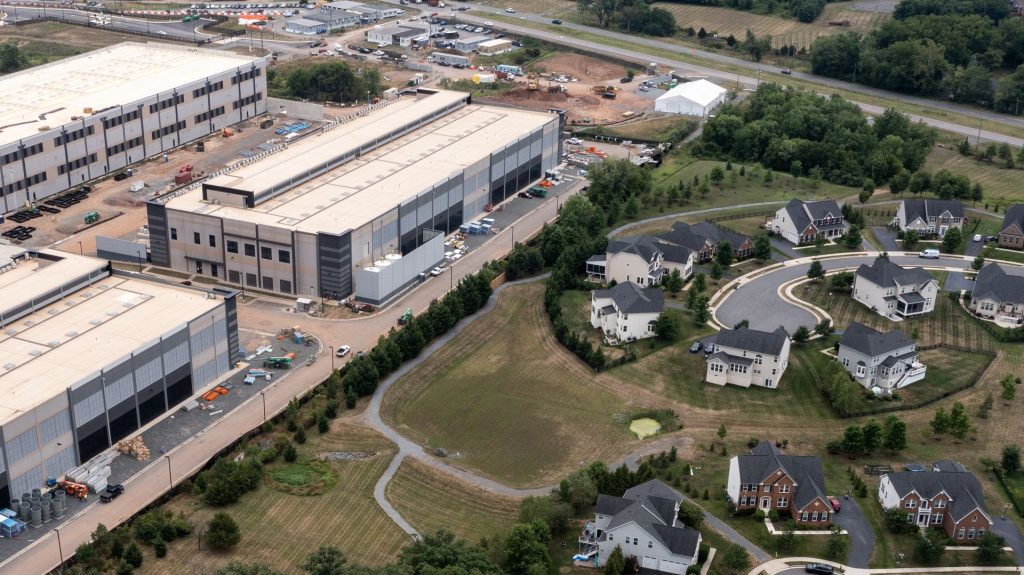
The push to build artificial intelligence data centers is speeding up, with a new report estimating the tech industry will require 106 gigawatts of electricity by 2035. But the breakneck pace at which Big Tech wants to secure computing power is raising serious concerns over whether power companies and regional grid operators can provide enough electricity for spiking demand.
In a new forecast from BloombergNEF, industry analysts found a 36% increase in the amount of electricity needed for existing and planned data centers, compared with BloombergNEF’s April analysis. The research and analytics company said it added 150 data centers to its tracker, and more than a quarter of them are immense pieces of infrastructure, needing upwards of 500 megawatts of power to run.
As demand for power increases, it’s unclear whether supply can keep up. Generating more electricity requires major investments and time to build the physical infrastructure of power plants, solar arrays and batteries. Already, the economic laws of supply and demand are reacting to the data center boom, pressing prices upward in regions expected to see the largest data center growth.
How much electricity is 100 gigawatts?
A watt is an instantaneous measurement of how much electricity a device or data center needs in order to run, and how much power a power plant or solar panel can provide. As opposed to a quantity of electricity consumed over a certain time, a watt — and its multiples such as megawatts and gigawatts — is how much electricity is produced or consumed in a split second.
One gigawatt is 1,000 megawatts, which is 1,000 kilowatts and a kilowatt is 1,000 watts.
In 2025, data centers account for around 40 gigawatts of power already, so BloombergNEF’s estimates say more than 60 additional gigawatts will be needed in the next 10 years.
Unbiased. Straight Facts.TM
The peak electricity demand record in California is 52 gigawatts, set in 2022. It’s estimated data centers could need double that amount by 2035.

The regional power grid serving California has never exceeded a peak demand record of 52 gigawatts set in 2022. If BloombergNEF’s forecast holds true, in 2035, data centers will need roughly double the amount of power as California currently requires to keep the lights on and the air conditioning pumping on its hottest summer night.
The new data centers that clock in at 500 megawatts or more are large enough to consume the electric generating capacity of entire power plants.
Why is the data center boom a problem for the power grid?
BloombergNEF describes the forces creating an “inflection moment for U.S. grids: the desire to accommodate AI-driven load without undermining reliability or driving up power costs.”
Last month, the independent market monitor on America’s largest regional electric grid PJM, which stretches from data center hubs in Virginia to Chicago, warned federal regulators that data centers threaten reliability — increasing the risk of blackouts.
“PJM is currently proposing to allow the interconnection of large new data center loads that it cannot serve reliably and that will require load curtailments (black outs) of the data centers or of other customers at times,” the independent grid watchdog Monitoring Analytics, LLC wrote in a filing to the Federal Energy Regulatory Commission (FERC).
Monitoring Analytics asked FERC to stop PJM from approving new data centers unless the grid operator can guarantee new facilities can be “served reliably as defined both by transmission and capacity adequacy.”
BloombergNEF’s forecast shows new data centers coming to the PJM grid by 2030 will exceed the electricity additions from new power plants or renewable energy estimated by the U.S. Energy Information Administration.
In Texas, BloombergNEF warns that the grid run by the Electric Reliability Council of Texas could be in trouble as soon as 2028.
The grid has reserve power, an extra capacity to generate electricity from batteries or power plants that is kept offline during normal operating conditions, but is used as needed during emergencies. BloombergNEF said the ERCOT reserve margin could “fall into risky territory after 2028, a sign that short-term growth can be absorbed, but longer-term supply will lag.”
The post Data centers projected to need double California’s current power by 2035 appeared first on Straight Arrow News.
Ella Rae Greene, Editor In Chief