Cuban president confirms talks with US amid oil blockade
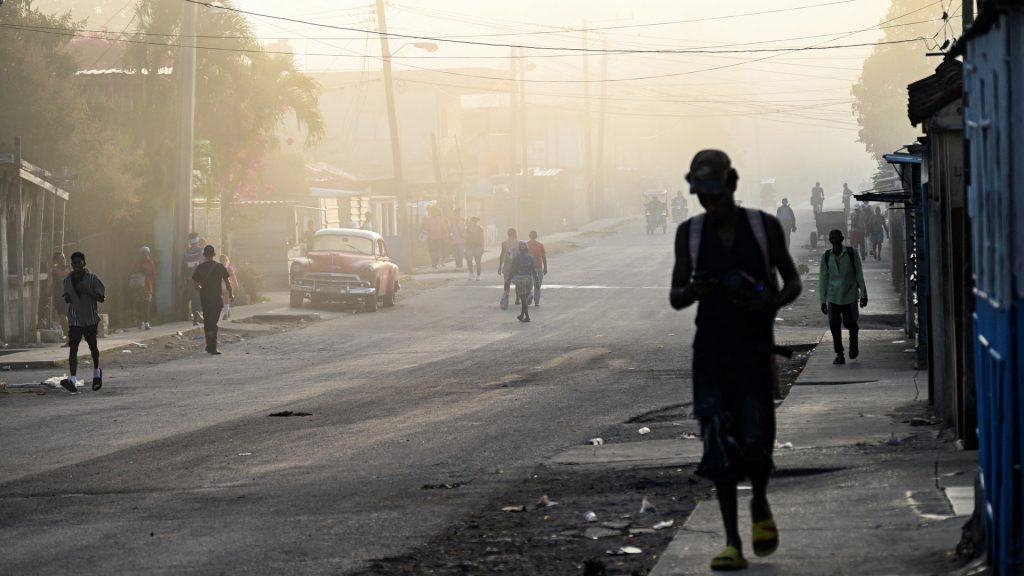
Cuban President Miguel Díaz-Canel said Friday his government spoke with the U.S. amid an oil blockade that has caused power blackouts and protests in his country.
The talks, still in their first phase, are “aimed at finding solutions through dialogue to the bilateral differences between the two nations,” he said.
Díaz-Canel’s comments were made during a publicly broadcast speech at a meeting in Havana between the top levels of government and Cuban Communist Party, according to The Washington Post.
A day before, Cuba said it plans to release 51 prisoners who were arrested during 2021 anti-government protests. Díaz-Canel called this a sovereign practice, adding that Cuba was not pressured into it.
Shortly after the U.S. captured and arrested Venezuela’s former President Nicolás Maduro in January, it gained control over the country’s oil exports and stopped deliveries of Cuba. President Donald Trump then threatened tariffs on any country which sells oil to the Caribbean nation.
President Donald Trump, in a previous Truth Social post, urged Cuba to make a deal with the United States “BEFORE IT IS TOO LATE.”
A White House official also said Cuban leaders “should make a deal” to the Washington Post in response to Díaz-Canel’s Friday remarks.
“Cuba is a failing nation whose rulers have had a major setback with the loss of support from Venezuela and with Mexico ceasing to send them oil,” the official told the Post.
Three senators, Tim Kaine, D-Va., Ruben Gallego, D-Ariz. and Adam Schiff, D-Calif., introduced a War Powers Resolution which they said is meant to make sure “any U.S. participation in hostilities against Cuba is explicitly authorized by Congress.” They cited Trump’s recent comments as their reason for filing the legislation.
“As if the disaster of the Iran War and the resulting spike in oil prices weren’t enough, Trump is now threatening to intervene in Cuba as well,” Gallego said in a statement. “He ran on America First, but now it’s clear he’s become a puppet of the war hawks in his party.”
While giving congressional testimony in January, Secretary of State Marco Rubio said that though the administration “would love to see the regime change” in Cuba, “that doesn’t mean that we’re going to make a change.”
Consequences of oil blockade
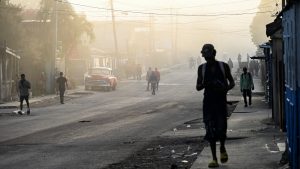
Díaz-Canel said Friday that no fuel has gotten into Cuba for the last three months. Blackouts happened regularly in January and February.
“The deficit at this moment is different from what we were dealing with before,” Díaz-Canel said. “The impact is tremendous.”
An internal cable reviewed by The Washington Post showed that the U.S. Embassy assesses that Cuba’s energy deficiency that “hovers around 60 percent.”
Per the cable, Cuba, despite domestically producing a quarter of the oil it needs, could get to a “zero hour” moment where water, sewage and electricity stop.
The Embassy was already running with only half its staff because of energy shortages, and generator usage at some residences was limited to four hours a day.
Some places in Cuba, Díaz-Canel said, have had times where they’ve gone at at least 30 hours without power. This has caused families anguish, he said.
“In this moment in the country, there are dozens of thousands of people waiting for a surgical operation they can’t get because of the lack of electricity,” Díaz-Canel said.
Although solutions exist, “the magnitude of the problem is so huge that you can’t see them,” he added.
On Saturday, protestors in Cuba ransacked a Communist Party building after a rally about the energy cuts and high food prices. Five people were arrested after offices in the city of Moron were vandalized, the BBC reported.
Although the protest started peacefully, it later escalated, according to Cuba’s state-run newspaper Invasor. Along with the Communist party building, a pharmacy and a government-operated market were also targeted by demonstrators.
Rolling blackouts led some in Cuba to protest by banging pots and pans in the streets at night, or in their homes, the BBC wrote, despite there not usually being political dissent in the country.
Ella Rae Greene, Editor In Chief