Climate change leads to worsening seasonal allergies … and maybe even more suicides
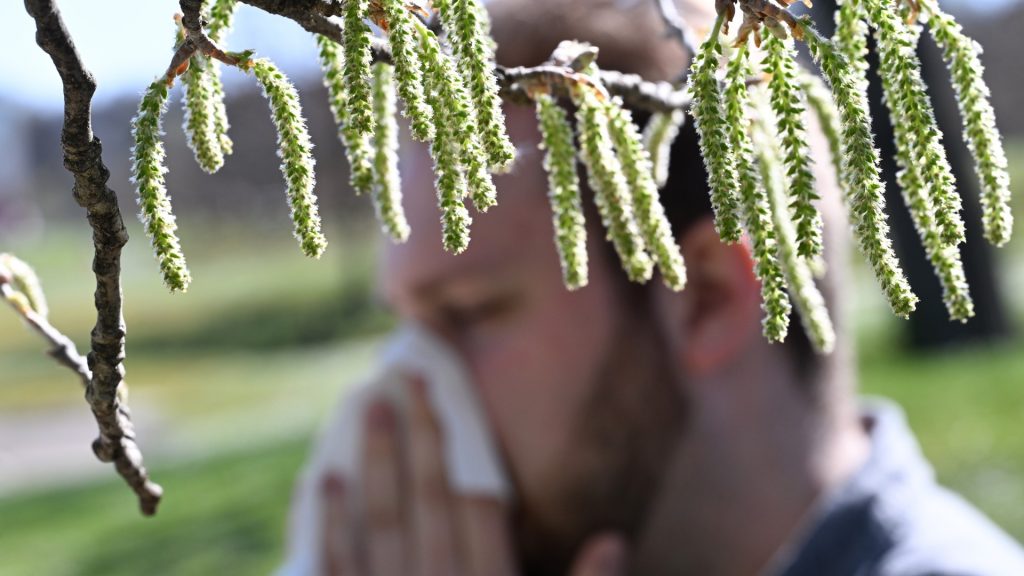
Sniffling, sneezing, coughing, itchy eyes, throat and nose … these are all symptoms of seasonal allergies, and unfortunately, they’re becoming more common, starting earlier and lasting longer.
Editor’s Note: This story contains descriptions of [suicide/sexual assault/etc.]. If you or someone you know is in crisis, help is available. Visit the National Crisis Line website or call or text 988 for immediate support.
This is not an April Fool’s Day joke, even though many may wish it were. March is coming to a close, but for those with seasonal allergies, the suffering is just beginning.
Cities like San Diego, which have ranked low on lists of the worst cities for seasonal allergies, jumped into the top 20 this year, thanks to high pollen counts.
The cause? Climate change.
Climate change = longer allergy season, worsening symptoms
Numerous studies have found that climate change is to blame for longer allergy seasons and worsening symptoms. Freezing temperatures are waning sooner, allowing plants and flowers to bloom and release pollen earlier.
“There are these extreme, chaotic conditions that climate change is associated with,” Kari Nadeau, chair of the Department of Environmental Health at Harvard’s T.H. Chan School of Public Health, told a Boston television station. “And that warming is affecting our pollen seasons.”

In addition to warmer temperatures, Nadeau said greenhouse gas emissions are increasing atmospheric carbon dioxide levels, which stimulate plants to produce and release more pollen, thereby worsening seasonal allergies.
Data from Climate Central indicate that freeze-free seasons have lengthened by an average of 21 days from 1970 to 2025. Some areas, like the Northwest, have seen the season lengthen by even longer, averaging around 31 days more than in 1970.

That’s an additional three weeks to a month when seasonal allergies are possible, putting people with respiratory struggles at greater risk.
“Most U.S. cities have gained about three additional weeks of growing season since 1970,” said Kristy Dahl, vice president for science at Climate Central. “For millions of Americans, that means earlier, longer, and often more intense allergy seasons that can take a real toll on health and daily life.”
Worsening seasonal allergies tied to rise in US suicide rates
That toll can also affect mental health.
In a study published last October, the Journal of Health Economics said deaths by suicide rose by about 7.4% on days when pollen counts were the highest. Although the study did not establish a definitive link, it suggested that allergy symptoms lead to diminished cognitive function and disrupt sleep, both of which are “predictors of suicidality.”
Joelle Abramowitz, associate research scientist at the University of Michigan’s Institute for Social Research and one of the study’s lead researchers, called seasonal allergies a “small shock” that “could have a big effect if you’re already in a vulnerable state.”
“During our study period, there were nearly 500,000 suicides in the U.S.,” Abramowitz said. “Based on our incremental data, we estimate that pollen may have been a contributing factor in up to 12,000 of those deaths over the period, or roughly 900 to 1,200 deaths per year.”
Ella Rae Greene, Editor In Chief