CDC nixes 7 vaccines from routine childhood recommendations
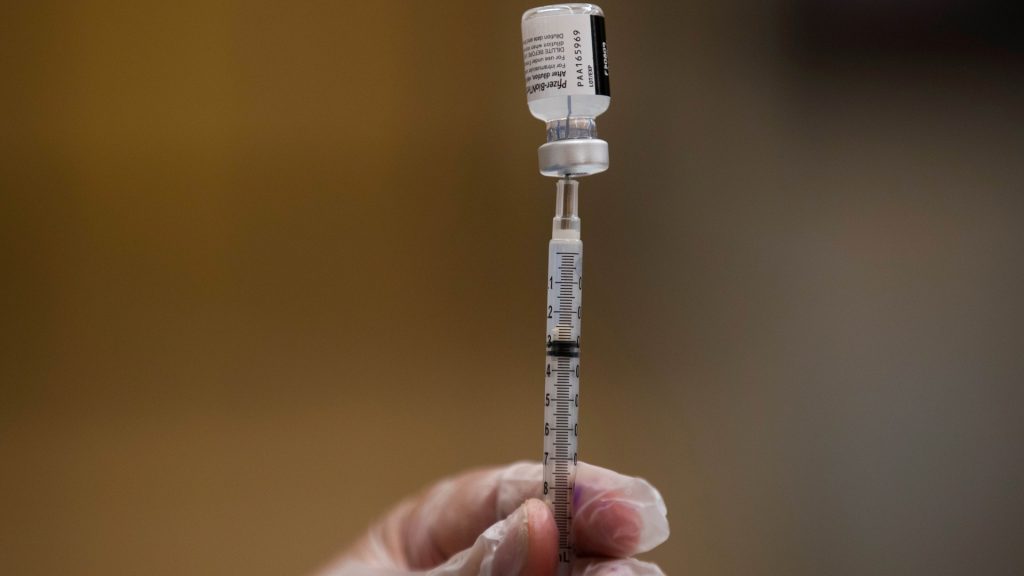
Jim O’Neill, the acting director of the Centers for Disease Control and Prevention (CDC), announced Monday sweeping changes to the country’s routine childhood vaccine schedule.
The CDC now recommends that all children receive vaccines against 11, instead of 18, diseases, including measles, mumps, rubella, polio, pertussis, tetanus, diphtheria, Haemophilus influenzae type B, pneumococcal disease, human papillomavirus and chickenpox.
The seven vaccines the agency no longer recommends for every child include those against respiratory syncytial virus (RSV), hepatitis A, hepatitis B, meningococcal disease, rotavirus, COVID-19 and influenza. The CDC recommended that high-risk children receive these vaccines or that parents and clinicians should decide on a case-by-case basis whether to vaccinate.
The announcement comes after President Donald Trump signed a presidential memorandum in December directing U.S. health officials to review how other developed countries organize their childhood vaccination schedules and to update the American system to ensure it is aligned with best practices and scientific evidence.
Typically, the CDC’s Advisory Committee on Immunization Practices (ACIP), an independent group of physicians and public health officials that develops guidance about the use of vaccines, undertakes a rigorous and lengthy public review process.
The Department of Health and Human Services did not provide in-depth information about its review, and it is unclear if ACIP was involved. However, in a public statement, the department said that the U.S. has recommended more childhood vaccine doses than any other peer country, even as trust in public health fell sharply and vaccination rates — including for COVID-19 and routine childhood vaccines — declined. The department called for additional randomized trials and studies for individual vaccines, combination shots and timing.
“Public health works only when people trust it,” Marty Makary, commissioner of the Food and Drug Administration, said in a press release. “That trust depends on transparency, rigorous science, and respect for families. This decision recommits HHS to all three.”
Widespread criticism
Physicians and public health researchers across the country criticized the changes.
“I think that a reduced schedule is going to endanger children and lay the groundwork for a resurgence in preventable disease,” Caitlin Rivers, director of Johns Hopkins’ Center for Outbreak Response Innovation, told CNN.
“The abrupt change to the entire U.S. childhood vaccine schedule is alarming, unnecessary and will endanger the health of children in the United States,” Helen Chu, a physician at the University of Washington and former ACIP member, told The New York Times.
How does this affect Americans?
While the federal government outlines vaccine schedule recommendations, state governments are responsible for setting and enforcing vaccine policy.
Today, no American outside the military is required by law to receive any vaccine; however, each state sets its own requirements — and vaccine exemption policies — for public school entry.
All states allow children with certain health conditions, such as severe allergies, to skip vaccines and still attend public school. Most states also allow for religious and philosophical exemptions.
State-level vaccine policy has shifted in recent years. Illinois passed legislation empowering its Department of Public Health to set state vaccine guidelines rather than rely on federal guidance. Florida lawmakers are working to repeal and prohibit vaccine requirements for kids who attend public schools. In 2019, New York and Maine disallowed religious exemptions to vaccination. West Virginia long prohibited them, but earlier this year, the governor signed an executive order allowing religious exemptions. Earlier this month, the Supreme Court temporarily suspended the order.
California, Oregon, Hawaii and Washington launched the West Coast Health Alliance in September to provide separate vaccine recommendations in the wake of Trump’s mass firing of CDC officials and “his blatant politicization of the agency.”
Last year, Straight Arrow News spoke with Jason Schwartz, an associate professor in the Department of Health Policy and Management at the Yale School of Public Health. He explained that changes to federal vaccine policy may impact insurance coverage. If the CDC stops recommending a vaccine altogether, insurance companies would not have to pay for it.
“All vaccines currently recommended by C.D.C. will remain covered by insurance without cost sharing,” Dr. Mehmet Oz, administrator for the Centers for Medicare & Medicaid Services, said in a statement.
The post CDC nixes 7 vaccines from routine childhood recommendations appeared first on Straight Arrow News.
Ella Rae Greene, Editor In Chief