CDC formally drops universal hepatitis B vaccine recommendation for newborns
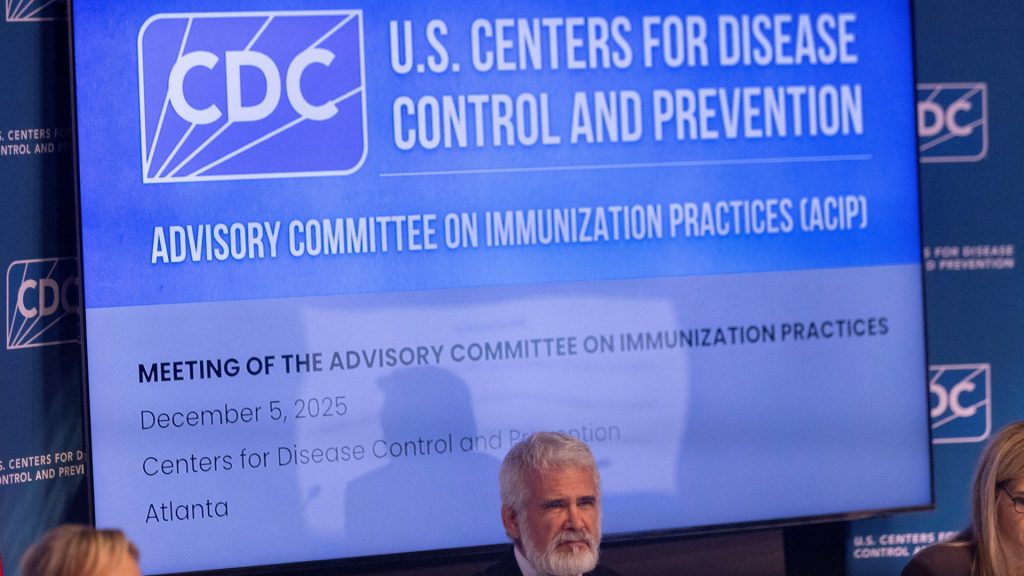
The acting director of the Centers for Disease Control and Prevention has formally adopted new guidelines for hepatitis B vaccination, replacing a longtime recommendation that all newborns be inoculated against the virus. Jim O’Neill, who is also the deputy to Health and Human Services Secretary Robert F. Kennedy Jr., accepted a proposal from an advisory committee dominated by Kennedy-appointed clinicians, professors, and public health experts.
The new guidance focuses on individual-based decision-making, calling for parents and clinicians to decide on a case-by-case basis whether to vaccinate infants born to women who test negative for the virus. Parents should consider the vaccine’s benefits and potential harms, as well as the risk of exposure to hepatitis B, the Department of Health and Human Services said in a press release.
“Parents and health care providers should consider whether there are infection risks such as a household member who has hepatitis B or frequent contact with persons who have emigrated from areas where hepatitis B is common,” the agency said.
Since 1991, the CDC had recommended that all individuals receive three doses of the hepatitis B vaccine; the first was typically administered at birth.
But the Advisory Committee on Immunization Practices (ACIP), a group of physicians and public health officials that develops guidance about the use of vaccines, voted to recommend changes to that longstanding practice.
Instead, the panel said all pregnant women should undergo hepatitis B screening and only infants born to mothers who test positive should be vaccinated at birth and receive antibodies, which help the immune system fight the virus that causes the disease.
The CDC also adopted the panel’s recommendation that infants who do not receive the birth dose should wait two months before receiving the first shot. During the ACIP panel discussion, several committee members pointed out that there was no evidence supporting this recommendation.
O’Neill was appointed the CDC’s acting director in August. He does not have a medical or scientific background. However, he served in several administrative roles at the department under President George W. Bush.
What is hepatitis B?
Hepatitis B is a viral disease that can lead to liver cancer, liver failure and death. The virus spreads through bodily fluids and can be transmitted through sexual contact, from mother to child at birth and by sharing needles or syringes.
The majority of people with Hepatitis B have no symptoms, although some experience fever, fatigue, joint pain and nausea.
Hepatitis B can cause both an acute infection that develops quickly and lasts for only a short time and a chronic infection that can last months or even a lifetime. Existing studies found that infants infected with the virus are more likely than adults to develop the chronic form of the disease.
The CDC estimated that without medical care and vaccinations, some 90% of infections among infants become chronic and that 25% of people infected at birth die prematurely from complications of the disease. Only 5% of adults who become newly infected with the virus develop chronic hepatitis B.
The Department of Health and Human Services estimated that about 25,000 infants are born to mothers with hepatitis B infections, and about 1,000 of those newborns become infected with the virus.
Many physicians and medical organizations condemned the new ACIP guidance.
What impact will this policy change have on Americans?
The vaccine recommendations are not legally binding. Americans — except for military service members — are not required by law to receive the hepatitis B vaccine or any other vaccine, Jason Schwartz, an associate professor in the Department of Health Policy and Management at the Yale School of Public Health, explained to Straight Arrow News.
However, many states set laws that require children to receive certain vaccines, including for hepatitis B, in order to attend public school. Some states also mandate vaccinations for private school, daycare and summer camps.
The hepatitis B guidance change will not impact health insurance coverage for the vaccine. The Affordable Care Act requires all insurance companies to pay for vaccines recommended by ACIP. If ACIP stops recommending a vaccine — which it has not yet done — insurance companies would not have to cover it.
“As of now, nothing that ACIP has done has lessened or weakened any of those financial coverage provisions because of how they’ve changed their recommendations quite deliberately, I think, to keep that access in place,” Schwartz said.
The post CDC formally drops universal hepatitis B vaccine recommendation for newborns appeared first on Straight Arrow News.
Ella Rae Greene, Editor In Chief