Canada quietly models Taliban-style response to hypothetical US invasion
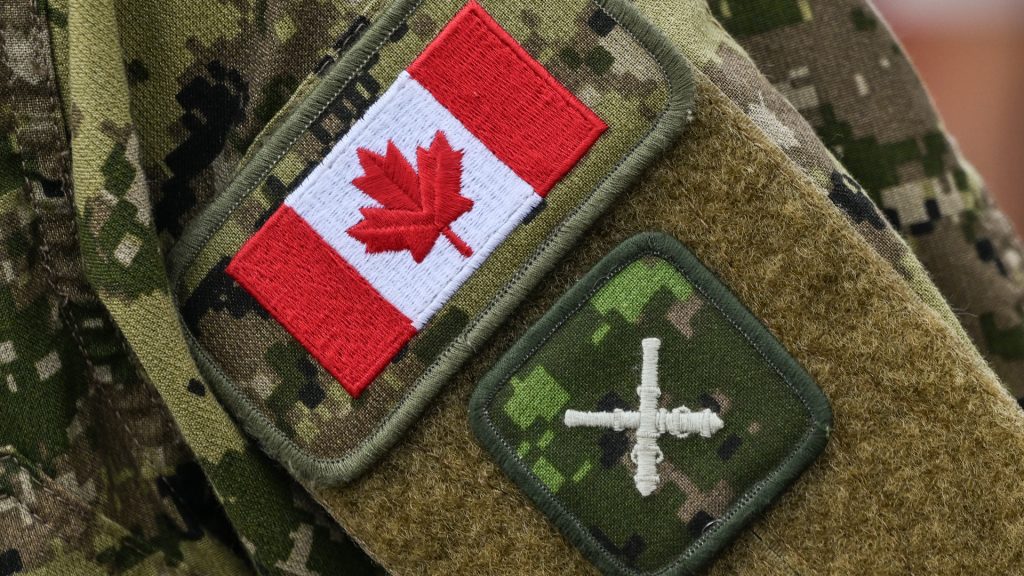
For the first time in over a century, Canada is preparing for the unthinkable — a military invasion by the United States. Military planners in Ottawa have developed a concept for how they would respond if U.S. forces crossed the border, a move sparked by President Donald Trump’s public musings about Canada as a potential “51st state.”
The plan details irregular, insurgency-style resistance drawing on lessons from Afghanistan. Two unnamed senior officials told The Globe and Mail that the scenario assumes U.S. troops could take key land and sea positions in as little as two days and likely within a week. The plan reportedly recommends that Canadians shift toward unconventional tactics against the US invaders.
The Economist notes that Canada’s regular force totals roughly 67,000 personnel, with 27,000 reservists, which is one reason planners valued guerrilla warfare methods over a conventional fight.
By comparison, the U.S. has around 1.3 million full-time active-duty service members across the Army, Navy, Air Force, Marine Corps, Space Force and Coast Guard. That number increases to 2.9 million when including National Guard, Reserves and civilian defense personnel. Those soldiers benefit from the most technologically advanced war apparatus in human history.
Why is Canada modelling a US invasion now?
Officials cited by Bloomberg stress a U.S. invasion remains highly unlikely and that the framework is theoretical and precautionary. Even so, this is the first time such a plan by Canadian forces has been revealed in more than a century — an indicator of how sharply relations have deteriorated during Trump’s second term.
Unbiased. Straight Facts.TM
Canada and the United States have not fought each other since the War of 1812, when the then-British colony successfully repelled American advances.

In practice, The Economist reports, many officials are updating worst-case scenarios while avoiding rhetoric that might provoke Washington, noting some declined to speak on the record.
According to a July 2025 Pew Research poll, 59% of Canadians polled now see the United States as their country’s greatest threat.
What would Canada’s resistance look like?
According to The Independent, planners expect any conflict to begin with a rapid thrust from the south, with U.S. forces taking strategic assets at “lightning speed.” Because Canada lacks the numbers and equipment for a conventional defense, The Globe and Mail says the response would shift quickly to “unconventional warfare.”
In that phase, small units — and potentially armed civilians — would conduct ambushes, sabotage, drone strikes, and other hit-and-run operations. Officials say the concept borrows from Afghan insurgencies, including improvised explosive devices that killed many of the 158 Canadian troops who died in Afghanistan; one official said the aim would be to impose “mass casualties” on any occupying force.
Shift to civilian defense
Canada’s civilian-defense planning predates President Trump’s rhetoric.
Gen. Jennie Carignan, Canada’s Chief of the Defence Staff, is expanding a broader civilian-defense reserve and actively seeking volunteers, roughly ages 16-65, for roles such as heavy-equipment, drone, and cyber operations as part of long-term resilience efforts.
Canada is also borrowing from Finland’s civil-defense playbook — the “72 Hours” household-readiness standard, public “Security Cafés” that loop citizens into planning, alongside widespread shelters — as a template for hardening society.
How strained are ties with Washington?
Despite the modeling, Canadian officials stress this is a conceptual framework, not an operational battle plan, and military-to-military ties remain positive.
Canada and the U.S. recently announced a NORAD exercise in Greenland, while The Globe and Mail said planners are also modeling potential Russian or Chinese missile strikes as part of a broader “Golden Dome” continental-defense effort. As The Economist frames it, much of the planning is about autonomous resilience rather than escalation.
Politically, tensions have grown as Trump has repeatedly referred to Canada as a potential “51st state” and discussed acquiring both Canada and Greenland. The Independent reports that Trump has framed Canada as vulnerable in the Arctic.
Trump recently posted an image overlaying both Canada and Greenland with the U.S. flag.
In response, Canadian leaders are emphasizing alliance solidarity. Foreign Minister Anita Anand saidn “Canada will never be the 51st state.”
Prime Minister Mark Carney stated on Tuesday that Canada stands “firmly with Greenland and Denmark” on Arctic sovereignty and supports their “unique right to determine Greenland’s future.”
What steps is Ottawa taking next?
Bloomberg reports Canada plans to spend 2% of GDP on defense this fiscal year and aims to meet NATO’s 5% target by 2035. The Economist adds a fiscal path: C$82 billion over five years to move defense toward 5% of GDP by 2035, with significant investment in the North.
This comes as Carney is considering sending a small Canadian contingent to Greenland to train with Denmark, France, the U.K., and other European forces as a show of support amid U.S. pressure.
The post Canada quietly models Taliban-style response to hypothetical US invasion appeared first on Straight Arrow News.
Ella Rae Greene, Editor In Chief