Can cities block ICE detention centers? How local governments are fighting back
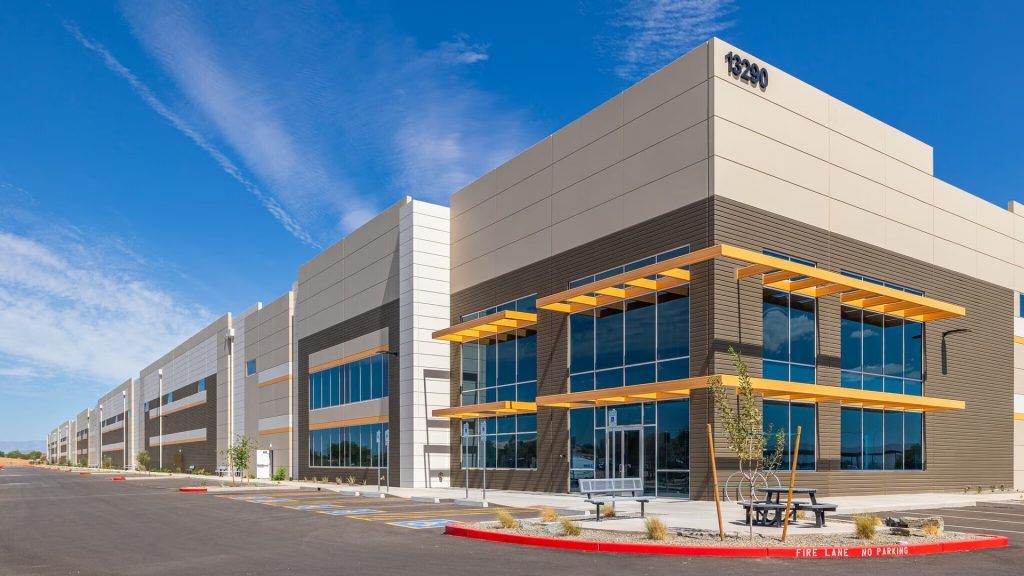
Chris Judd, a City Council member in Surprise, Arizona, first learned about plans for a proposed federal immigration detention center in his district during a phone call with a reporter.
“Did you know DHS purchased a facility a few days ago?” the reporter asked during an interview.
“Sure enough,” Judd later told Straight Arrow News, “they were accurate in what they told us.”
Documents obtained by SAN show the 418,000-square-foot warehouse, roughly 5 miles from Luke Air Force Base, is slated to hold up to 1,500 detainees.
In communities across the country, local officials describe the same pattern: The Department of Homeland Security (DHS) is quietly securing industrial properties before city leaders can ask questions. Caught between the federal government’s decision and their constituents’ concerns, municipal leaders are left trying to explain plans they didn’t negotiate and can’t easily stop.
As city leaders scramble to understand the logistics of a new detention center coming to their neighborhood, residents pack city council meetings to voice their concerns. While some show support for DHS and Immigration and Customs Enforcement (ICE) efforts to expand detention, many argue they don’t want detention facilities in their backyards.
As pressure rises, plans are beginning to fall through across the country — from Kansas City, Missouri, to Hutchins, Texas. In New Hampshire, two Democratic senators introduced legislation this week that would prevent new detention centers without local approval.
A packed council chamber
In the neighborhood where Judd raises his three daughters and represents about 28,000 residents in the 6th District, local officials still have few answers about how the warehouse would be converted into a livable space for so many people.
“My residents expect transparency from us, and I expect transparency from my elected officials,” Judd told SAN. “They’ve been as untransparent as possible.”
According to the Arizona attorney general, the warehouse sits just 300 yards from residential homes and roughly a mile from a high school where more than 60% of students are Hispanic.

“This thing is right smack in the middle of a community,” Judd told SAN. “It’s a big warehouse. It has a bunch of truck bays, so it wasn’t really built or designed as a detention center.”
Twice this month, citizens, including students, packed the Surprise City Council chamber, demanding their elected officials put up more resistance to the federal government, as some urged the City Council to work closely and support ICE’s efforts. During last week’s city council meeting, Judd said more than 150 residents signed up to speak.
“It’s rough,” Judd said. “What I’m telling people is, the only way this facility stops is if the federal government decides not to go ahead with it.”
A similar tale across the country
One day after New Hampshire legislators introduced their bill, Gov. Kelly Ayotte announced that DHS will not proceed with plans for an ICE detention facility in the town of Merrimack following her recent discussions with Secretary Kristi Noem.
“I’m pleased to announce that the Department of Homeland Security will not move forward with the proposed ICE facility in Merrimack,” Ayotte said in the press release, adding that she thanked Noem for addressing the town’s concerns while continuing cooperation on border security and public safety.
In Kansas City, federal officials quietly visited a warehouse just south of downtown as a potential detention site, prompting concern from local leaders.
U.S. Rep. Emanuel Cleaver, whose district includes Kansas City, wrote a letter to DHS demanding answers about the visit and the agency’s plans. According to Cleaver, DHS never responded to his questions.
“If a detention center is going to be opened inside our corporate city limits, we should have sufficient notice to make certain that the location of said facilities is not in an area that would create, with its very presence, conflict with the community,” Cleaver told SAN.

The owner of the warehouse, Platform Ventures confirmed to local news outlets the company was approached in October 2025 with an unsolicited offer to purchase the warehouse and that negotiations were complete.
On Jan. 15 — the same day DHS and ICE agents toured the warehouse — Kansas City City Council members voted 12‑1 in favor of a five‑year moratorium on all city approvals for non‑municipal detention facilities.
In February, following weeks of public pressure, Platform Ventures announced it would not move forward with the deal.
Judd said at least one resident in Surprise used Kansas City as an example, demanding the Surprise City Council take similar action.
“There’s a lot of [anxiety], and they want us to do everything we can,” Judd said.
But he said officials in Surprise were cautious about assuming the strategy used in Missouri would succeed in Arizona.
“We looked at that and the assumption is, if the feds challenged it in court, they’d shoot it down,” he said.
Surprise and Kansas City aren’t alone. Officials in Merrillville, Indiana, Roxbury, New Jersey, and Schuylkill County, Pennsylvania have also been caught off guard by or stood in opposition to DHS’s efforts in recent weeks.
But not everyone is pushing back. In Social Circle, Georgia, officials said they are in communication with DHS about a facility expected to house between 7,500 and 10,000 detainees.
The city announced on its website: “The proposed facility in Social Circle is identified as one of eight ‘mega centers’ that will be located across the nation.”
Though no construction contracts have officially been awarded, a contract is expected later this month. Documentation provided to the city indicates it will include holding areas, gyms, recreational spaces, court facilities, intake areas, cafeterias, laundry facilities and a gun range.
The acquisition of warehouse space across the country comes amid a massive expansion of federal detention capacity. Newly released federal documents show that ICE plans to spend roughly $38.3 billion to convert dozens of sites — including large industrial buildings — into detention and processing facilities capable of holding tens of thousands of immigrants.
The strategy, backed by funding passed by Congress and signed by President Donald Trump, aims to boost the agency’s capacity to nearly 93,000 beds nationwide. As of this month, ICE is currently holding a little more than 68,000 people in detention.
ICE has long relied on a combination of dedicated detention centers, county jails and privately operated facilities to hold immigrants awaiting court proceedings or deportation. Converting large warehouse properties could allow federal officials to increase capacity more quickly than building new facilities from the ground up.
The battle between two powers
In the clash between local communities and the federal government, Ilya Somin, a legal scholar, author and professor of law at George Mason University’s Antonin Scalia Law School, told SAN the federal government has no obligation to communicate future detention plans with local authorities.
“Obviously, if they want cooperation from local communities, then not talking to them is not going to secure that,” Somin said.
DHS may not want buy-in from local communities, according to Somin. Local officials are under no obligation to assist with federal law enforcement, including immigration enforcement.
“They may figure they don’t need cooperation and they can just run the facility using federal resources,” he said.
As for whether local authorities can block the federal government from launching detention centers in their backyard, it’s a bit more complicated.
The Constitution’s Supremacy Clause establishes that states and local governments cannot pass laws or take actions that directly interfere with federal programs or federal enforcement.
The federal government could argue that a moratorium blocking a federal detention facility constitutes an interference with federal operations, which could be framed as a form of discrimination or obstruction against the federal government.
However, courts have generally allowed cities to exercise zoning, permitting and land-use authority, as long as they’re applied in a neutral, generally applicable way, without targeting the federal government specifically.
“I think discrimination only occurs in situations where two activities, which are alike, are treated differently,” Somin said. “They cannot say, everybody else can use the roads but federal agents are not allowed to drive on the roads.”
In the end, Somin said the federal government could take the route of least resistance.
“The federal government will build facilities in some places because some places will be willing to accept it,” Somin said.
Last month, U.S. Rep. Mark Alford, R-Mo., who represents Missouri’s 4th Congressional District, wrote a letter to ICE informing the agency he would welcome the expansion of a detention center in his district.
Bob Huston, presiding commissioner for Cass County, Missouri, echoed Alford’s sentiment.
“You go anywhere in our county — it’s a great place to live, raise families, with low crime,” Huston said. “This would just be another great opportunity for our county to bring something like this here.”
While DHS did not respond to specific questions from SAN, the agency did write, in an email: “These will be very well structured detention facilities meeting our regular detention standards. Every day, DHS is conducting law enforcement activities across the country to keep Americans safe. It should not come as news that ICE will be making arrests in states across the U.S. and is actively working to expand detention space.”
On Feb. 10, Arizona Attorney General Kris Mayes wrote a letter to DHS asking the agency to provide a written response to a series of questions about the potential immigration site.
“Prior to starting any construction or operational activities, DHS must answer basic questions about the use of the facility and its impacts upon the local community,” Mayes wrote.
One day later, Surprise Mayor Kevin Sartor announced he also sent a letter to DHS, writing in part, “The action is grounded in two responsibilities we take seriously; listening to our residents and planning for substantial impacts to our city’s infrastructure and public services.
“The City received no prior notification of the purchase or the intended use. A project of this magnitude would have substantial implications for our city, and we cannot responsibly fulfill our duties to our residents without accurate and complete information,” Sartor wrote.
Aside from the few documents that detail the size and capacity of the Surprise facility, DHS has not provided any additional information to state and local officials, according to Judd.
“That’s it. No other communication from them (DHS),” Judd said. “And we’ve been trying.”
Ella Rae Greene, Editor In Chief