Britain rolls back controversial tracking of legal social media posts
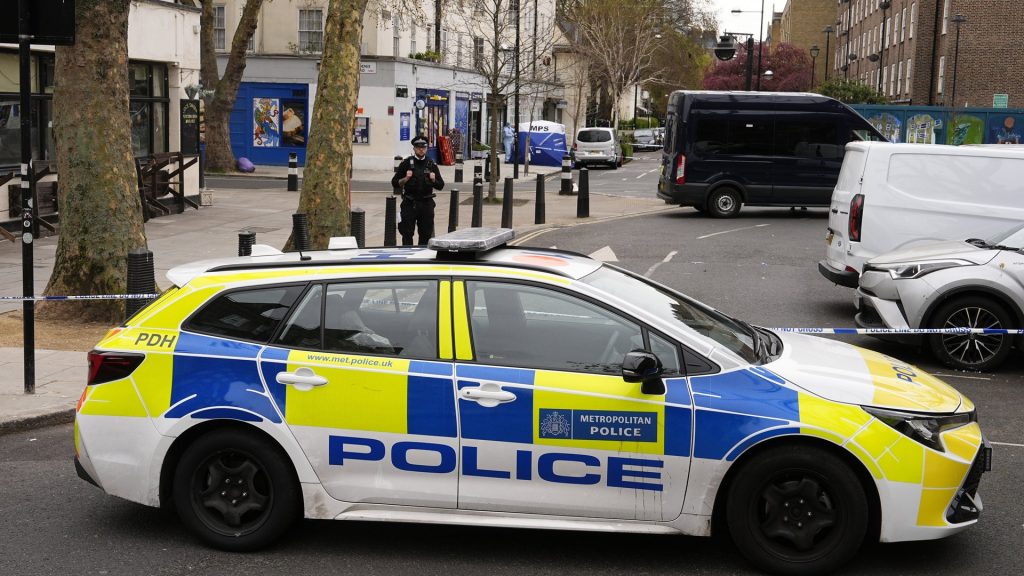
Police in the U.K. will no longer track every offensive social media post and online argument. The government has decided to end a controversial practice in which police logged what are called non-crime hate incidents, or NCHIs.
The U.K. Home Office, which is responsible for public safety, policing, and border control, made the announcement on social media.
“Police time will no longer be wasted investigating legal social media posts, freeing up officers to patrol the streets and tackle real crime,” the post reads in part.
The post goes on to say this new approach will balance protecting vulnerable communities and respecting free speech.
“I have to admit, I laughed,” Paul Bernal, professor of information technology law at the University of East Anglia, told Straight Arrow News. “In some ways, it’s a non-story in that very few such investigations were happening anyway. The way that we police social media in the U.K. is, not to be too blunt about it, fairly arbitrary.”
What led to this
The change comes after a large review of this system from the College of Policing and National Police Chiefs’ Council. NCHIs typically get recorded after police receive a report of a social post motivated by hostility or prejudice towards people of certain races or genders but does not meet the bar for prosecution under hate crime laws.
The review found that, given anyone could report an alleged incident, sifting through every report became impossibly burdensome — and largely open to interpretation. (This is one reason why social media companies themselves have struggled with moderation at scale.)
“For example, if somebody says something nasty, it might fit into our hate crime stuff, it might fit into our public order stuff if it potentially could trigger a riot or something like that,” Bernal said. “It could fit into what we call malicious communications law.”
The government decided to accept all the recommendations from the review.
That includes no longer allowing police to record NCHIs, which can stay on police records for years.
NCHIs may continue to be recorded if they “may be relevant to policing for preventing or solving crime, safeguarding individuals or communities or fulfilling other statutory policing purposes.”
As laid out in their announcement, the U.K. Home Office said this new way of policing will allow officers to focus more on actual crimes than policing arguments on the internet.
“In theory, but the proof will be what they actually do,” Bernal said. “Because they don’t really spend much time policing social media anyway.”
NCHIs history
Guidance for policing NCHIs began in 2005 after the murder of black teenager Stephen Lawrence 12 years earlier. The goal was to help law enforcement continuously gather intelligence to safeguard vulnerable communities.
Things escalated as police and the U.K. government got a better grip on the internet and how it works. Then the 2011 Tottenham riots took place, leaving several people dead. It was triggered by a deadly police shooting and began as a peaceful protest.
“At that time, the prime minister, David Cameron, decided that it was BlackBerry Messenger, if you remember that, that was the cause of all these riots,” Bernal said. “And he said, we should turn it off if there’s any kind of nastiness going on. And that started people taking it a little bit more seriously.”
While Cameron didn’t succeed in getting BlackBerry Messenger shut down, it led to the next big incident, which is commonly known in the U.K. as the Twitter joke trial.
Paul Chambers was upset about an airport in South Yorkshire closing because of snow, so he sent out a tweet saying, “Crap! Robin Hood airport is closed. You’ve got a week and a bit to get your shit together otherwise I’m blowing the airport sky high!!”
A court found him guilty and levied numerous fines against him. Chambers also lost his job, but did later win his appeal with a higher court.
At that time, the Director of Public Prosecutions was Keir Starmer, now the prime minister. Following the Twitter joke trial appeal, Starmer put in place a new set of guidelines about what prosecutions should take place.
“It caused a great deal of embarrassment to the police and so on that they’d convicted someone for a joke,” Bernal said. “And [Starmer] said at that time, the bar should be very high for any prosecutions on social media.”
Free speech concerns
Naturally, this kind of law enforcement runs into concerns over free speech.
“We don’t prioritize it the way that the U.S. does,” Bernal said.
There are no First Amendment protections in the U.K. like we see here in America. The closest analog is the Human Rights Act of 1998, which protects “freedom of expression.”
“Our government’s instincts tend to restrict freedom of speech without realizing that that’s what they’re doing,” Bernal said.
There’s also the Online Safety Act of 2023, which is now starting to be enforced in the U.K.
“That effectively places what we call a duty of care on internet communication systems,” Bernal said. “So, on any of the social media platforms and so on. The duty of care is to protect their users from harm. And the harm includes speech harm, but it’s barely enforced and very difficult to really take seriously.”
Ella Rae Greene, Editor In Chief