Boys’ lawsuit claims Colorado has jailed them months past court-ordered releases
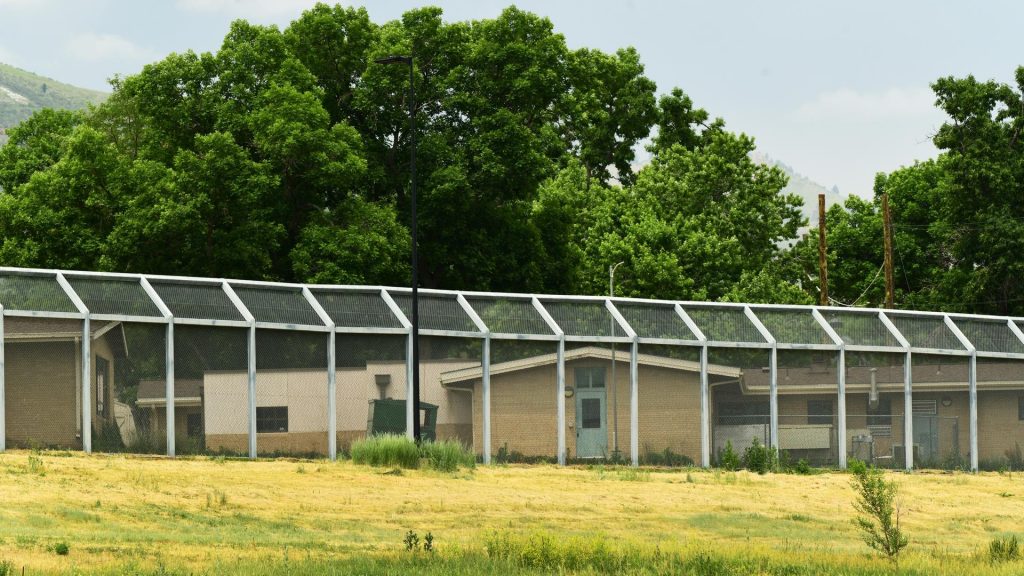
Two Colorado minors filed a class action lawsuit in federal court Thursday against Colorado state officials, alleging they participated in a practice of keeping children incarcerated well after a court ordered a minor’s release. It’s the latest issue to hit Colorado’s correctional system after a Denver newspaper found a critical staffing crisis is forcing more people to quit.
Isaac N., a 17-year-old, and Tony S., a 12-year-old, filed the lawsuit Thursday to stop the state of Colorado from further holding them and other youth in dangerous confines. They alleged state officials have done this for multiple years despite judges’ orders of release, causing physical, neurological, psychological, social and academic harm, according to the American Civil Liberties Union, which is representing Isaac and Tony.
“Instead of locking up releasable kids away from their families, teachers, and peers, the state must commit to programs and services that nurture young people and give every child the opportunity to succeed,” Nancy Rosenbloom, senior litigation advisor of the ACLU’s National Prison Project, said in a release.
The lawsuit names Colorado Gov. Jared Polis, a Democrat, and Colorado Department of Human Services (CDHS) Executive Director Michelle Barnes as defendants.
The state’s Division of Youth Services spokesperson said in a statement to Straight Arrow News that it couldn’t discuss the lawsuit, but that safety and security of youth are a top priority. They added that about 44% of juveniles admitted in the last fiscal year were accused of violent crimes like assault, battery or murder. It’s not immediately clear if Isaac or Tony were charged with violent crimes as the lawsuit stated they face “juvenile delinquency offenses,” which means a minor isn’t being charged with a crime as an adult.
Children are detained pre-trial when they are arrested and when a screening shows they’re a safety risk to the community, or a court decides the person may not appear at their court date.
According to the state’s 2024-25 annual report, youth remained in detention for an average of 24.1 days. The state had 1,940 youth during the year, and experienced a 8.4% drop in daily detention population compared to 2024.
“By law, youth who are accused of committing a crime remain in detention under court order and are only released when the necessary court-mandated placements or services, such as treatment, GPS monitoring, or residential placement, are available to manage those risks,” according to the spokesperson.
Isaac N. was charged with juvenile delinquency offenses, but hasn’t been convicted while being held at a detention facility, according to the lawsuit. The lawsuit said he suffers from post-traumatic stress disorder and attention-deficit/hyperactivity disorder, which Isaac needs treatment for outside of the facility. A judge ordered Isaac to be released two months ago, but he’s in the facility as the state hasn’t found appropriate placement and care for Isaac’s mental illnesses.
Tony S. faces similar juvenile delinquency charges and hasn’t been convicted. A judge ordered his release six months ago, the lawsuit stated, but he remains in detention. He’s been placed in CDHS custody, requiring the department to coordinate a home placement. The ACLU added that Tony has autism spectrum disorder and a medical condition that causes several issues, both of which would benefit from treatment outside detention.
“For years, Colorado officials have publicly acknowledged the inadequacy of the State’s system for releasable youth,” according to the lawsuit. “Yet, despite repeated pleas to address these concerns, CDHS continues to illegally detain hundreds of Releasable Youth each year.”
The two minors aren’t requesting the state to release them from detention, but to instead develop a procedure for how releases shall be done when a court mandates a person to be freed.
“It’s time for the State to take the steps necessary to ensure these children’s safety and bring them home to their communities, where they have a chance at a decent childhood and of growing into a healthy and productive adult,” said Stephanie Persson, senior staff attorney at Children’s Rights, in the ACLU’s release.
Justice Department investigating Colorado’s youth detention
The Justice Department opened a civil rights investigation in December into the state on how children are treated in the facilities. Assistant Attorney General Harmeet Dhillon sent a letter that same day to Polis and other state officials detailing the investigation she ordered of 21 corrections facilities and 12 residential youth centers the state Division of Youth Services (DYS) operates.
Her investigation is focused on “whether Colorado engages in a pattern or practice of violating the constitutional rights of prisoners held at [Department of Corrections] facilities.” She added her investigation will also look into if transgender women are being placed in units designated for women.
“We have not reached any conclusions about the subject matter of the investigation,” she wrote. “During the investigation, we will consider all relevant information, including the efforts Colorado has taken to ensure compliance with the Constitution.”
Colorado’s correctional staffing crisis hits youth facilities
According to the lawsuit, the two are seeking class action status only for youth who are currently or will be in a DYS facility and aren’t serving a commitment sentence and were ordered by a court to be released from detention.
The lawsuit claims that the state kept more than 140 youth in the 2024 to 2025 fiscal year in detention for at least 30 days following a judge’s release order.
“Many of these Releasable Youth are also in the custody of the State’s foster care system and remain in detention solely because they are waiting for the State to find them a foster placement,” according to court papers. “The majority of Releasable Youth also have disabilities and require therapeutic care in the least restrictive environment appropriate to their needs.”
According to The Denver Post, several of the state’s youth detention centers are facing a staffing crisis as the Division of Youth Services has more than 1,000 employees, but has nearly 500 vacancies as of Dec. 22.
The Mount View Youth Services Center in Lakewood, just outside of Denver, had a 57% vacancy rate in June; the Spring Creek Youth Services Center in Colorado Springs had a 10% staff absence in November due to on-the-job injuries, the publication reported.
Former staffers told The Post issues rest with management, alleging they are not helping staff with riots or leading programs. DYS Director Alex Stojsavljevic told the newspaper that it’s difficult working in youth detention and that staff retention is a major priority. He joined the department in October.
The Colorado Criminal Justice Reform Coalition found in a 2024 survey that 93% of the inmates interviewed agreed to some extent there was a staffing shortage at their facilities within the state Department of Corrections (DOC). The survey was conducted in the fall of 2023 through interviews of more than 400 incarcerated individuals.
It noted that the DOC received budget earmarks in 2022 and 2023 on staffing, which were to go to increased salaries, recruitment and retention services, overtime and contracts.
“Most people report that the need for more staff is a significant reason they can’t get the clinical care and programming they need,” the coalition said.
Lawsuit claims staff mistreated youth in facilities
In the ACLU lawsuit, the two plaintiffs say that detention in the youth facilities was akin to an adult jail with how restricted and confined youth are held. They claimed staff routinely conduct strip searches and will use physical restraints on children.
Colorado officials have come under fire for strip searches after the state’s Child Protection Ombudsman reviewed claims that arose from the state’s detention program, according to KDVR in September, a Fox News affiliate television station in Denver.
Stephanie Villafuerta, the ombudsman, told the station she found staff-conducted searches violated the Division of Youth Services’ policy 1,006 times between 2023 and 2025. Violations centered on having no approval, inadequate staffing and no reasonable suspicion for the searches.
Plaintiffs added in the lawsuit that staff failed to protect incarcerees from excessive force.
“Staff, for example, slammed youth to the ground, causing some to lose consciousness, while others received head injuries, broken bones, abrasions, and broken teeth,” according to the lawsuit.
The lawsuit also pointed to a March report from Disability Law Colorado that found 15 suspected drug overdoses among the children in fiscal year 2025, and a more than 50% increase in mechanical and invasive physical restraints on children.
The Division of Youth Services told SAN that the state has worked to improve the facilities program by establishing a new system of care, expanding residential services and increasing access to foster care. The changes came via HB 24-1038, which passed both chambers in May 2024, according to the state legislature.
“The bill allocated over $12 million to strengthen services, support county department of human services needs, and reduce reliance on emergency rooms and other stop-gap settings for the placement of youth,” DYS said.
Another bill, HB 23-1307, was enacted in 2023 that would assist youth in being transferred to out-of-home providers for treatment.
In its annual DYS report, the state profiled several youth who were sent to the detention program and have turned their lives around. One person, identified only as SeaAwna, saw the system as “petty, punitive and just a daycare for the bad kids.” The report said that she struggled with the structure but soon started progressing and earned parole. No information was provided on what charges SeaAwna faced.
“Jails and handcuffs are not acceptable substitutes for foster homes and therapeutic care,” Emma Mclean-Riggs, ACLU of Colorado senior staff attorney, said in a release.
Ella Rae Greene, Editor In Chief