As SCOTUS weighs Trump’s tariff power, these proposals hang in the balance
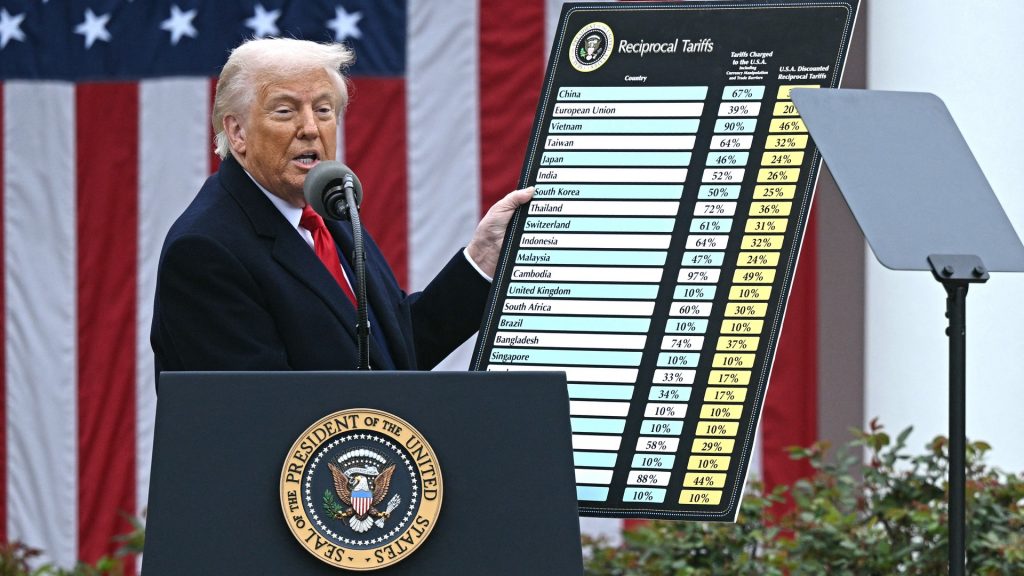
A sweeping set of proposals the Trump administration says tariffs will finance — including a part of the recently proposed $1.5 trillion defense budget — now hinges on a Supreme Court decision over presidential tariff powers. The ruling will determine whether the revenue stream behind those plans remains intact.
The Supreme Court is considering whether it was legal for President Donald Trump to use emergency powers to impose global tariffs, an authority granted through the International Emergency Economic Powers Act. The 1977 law is typically used in foreign policy emergencies rather than routine trade.
Should the court rule against the administration, the U.S. may have to refund over $100 billion to importers, putting at risk a slew of landmark campaign promises — or, as the president put it in a post on Truth Social, “we’re screwed.” If the justices side with Trump, tariffs will remain in place and continue to raise revenue for the country, as they have to the tune of over $200 billion.
Straight Arrow News legal reporter, Eva Fedderly, dives into the implications of the Supreme Court ruling here.
What tariffs will fund
Beyond the proposed trillion-dollar defense budget, Trump has suggested that tariffs will cover numerous projects, ranging from childcare programs and tax cuts to a national sovereign wealth fund. Here’s how he suggested the funding for these programs will play out.
Cutting federal income taxes
In November, President Trump said that tariff revenue could result in the ability to slash or even eliminate federal income taxes.
“Over the next couple of years, I think we’ll substantially be cutting and maybe cutting out completely, but we’ll be cutting income tax,” Trump said on a Thanksgiving call to military members.
Trump reiterated the possibility again a month later.
“I believe that at some point in the not-too-distant future, you won’t even have income tax to pay because the money we’re taking in is so great,” Trump said at a Dec. 2 Cabinet meeting.
Individual income tax amounts to nearly half of federal revenue, and experts say the U.S. hasn’t relied primarily on tariffs since the early 1900s. Former Comptroller General David Walker told SAN that replacing income taxes with tariffs today is “not realistic” given the size of the modern federal government.
Estimated cost: $2.7 trillion, based on revenue from the fiscal year 2025 income taxes.
Stimulus checks
The administration has repeatedly floated the idea of $2,000 dividend checks for low- and middle-income U.S. citizens since July 2025. The checks were intended to stimulate the U.S. economy by giving Americans excess tariff revenue, which Trump emphasized is in the trillions.
During an interview on Wednesday, Jan. 7, a reporter for The New York Times asked when Americans could expect their checks. According to the transcript, the president responded, “I did do that? When did I do that?”
After another reporter stepped in to ask the question again, Trump affirmed that the U.S. tariff money is substantial, and estimated that Americans would see their checks “toward the end of the year,” later than the initial mid-2026 target.
Estimated cost: $279.8 billion, assuming only tax filers and their spouses in households under $100,000 qualify.
Warrior dividends
In December 2025, the Department of Defense gave out one-time checks for $1776, dubbed the “warrior dividends,” to 1.5 million service members, fulfilling a campaign promise to recognize their service.
Trump initially floated the idea with the caveat that it would be funded by tariffs. A senior administration official later claimed the checks were funded by congressionally allocated reconciliation funds intended to subsidize housing allowances for military members.
Estimated cost: $2.6 billion, not included in the total below.
Farmer bailout
Administration officials have said tariffs would help support farmers through trade disruptions, including a $12 billion bridge payment announced in December 2025. However, farmers told SAN’s Dan Levin that the challenges they’re facing run deeper.
Farmers say tariffs have wiped out key export markets, especially soybeans, creating what one grower described as a “self‑inflicted” level of uncertainty. China, once the largest buyer of U.S. soybeans, sharply reduced purchases in response to the tariffs, leaving many producers in the red.
The administration’s $12 billion bridge payment offers short‑term relief, farm groups told SAN, but experts say it doesn’t fix the market disruptions that caused the need for aid.
The Department of Agriculture said $11 billion is expected to be disbursed in February. The payouts will be funded by the Commodity Credit Corporation, an entity under the USDA.
Estimated cost: $12 billion, not included in the total below.
Supplemental Nutrition Assistance Program (SNAP)
During the 2025 government shutdown, the administration said tariff revenue could be used to keep essential programs running, including SNAP, and that happened.
However, the tariff revenue was collected in 2024 but still enabled the continued issuance of food‑assistance benefits while other federal operations were paused.
Estimated cost: $300 million, not included in the total below.
Child care affordability initiative
In a September address to the Economic Club of New York, Trump was asked by Reshma Saujani, the founder and CEO of Moms First, if he would push legislation to “make child care affordable.”
In response, Trump claimed that tariff revenue would be more than enough needed to make child care affordable.
“But I think when you talk about the kind of numbers that I’m talking about — that, because look, child care is child care, couldn’t — you know, there’s something — you have to have it in this country,” Trump said. “You have to have it. But when you talk about those numbers, compared to the kind of numbers that I’m talking about by taxing foreign nations at levels that they’re not used to. But they’ll get used to it very quickly. And it’s not going to stop them from doing business with us. But they’ll have a very substantial tax when they send product into our country. Those numbers are so much bigger than any numbers that we’re talking about, including child care, that it’s going to take care.”
As of the time of publication, the administration hasn’t given any more details on how this promise would be paid for.
Estimated cost: $122 billion.
A US sovereign wealth fund
Trump has expressed a desire to invest in Americans, proposing a sovereign wealth fund during his campaign, which became the topic of a February 2025 executive order. A sovereign wealth fund is a government‑owned investment fund that puts public money in financial assets to earn long‑term returns. Any gains are then spent on public priorities, such as the national budget.
According to the president, money for this fund will “be taken in through tariffs and other intelligent things.”
The executive order requires the secretary of the Treasury Department and the secretary of the Commerce Department to come up with a plan for the fund within 90 days, which Treasury Secretary Scott Bessent said they would aim to “stand up” in the next 12 months.
Estimated cost: Unclear, depending on how much federal officials aim to invest, according to the nonprofit CATO Institute. The federal government took a direct stake in 16 private companies in 2025, and directly invested about $10.5 billion in 8 of them. This is not included in the total below.
Eliminating the federal deficit
In July 2025, Commerce Secretary Howard Lutnick told “Face the Nation” that tariffs would “pay off” the federal deficit.
“You got to remember – this is going to pay off our deficit. This is going to make America stronger,” he said.
The federal deficit is the gap between what the government spends each year and what it brings in through taxes and other revenue. When spending exceeds revenue, the government runs a deficit and has to borrow to make up the difference. As of January 2026, the federal deficit sits at $458 billion in the current fiscal year.
Estimated cost: $458 billion in fiscal year 2026.
Paying down the national debt
Trump has also suggested that tariff revenue could help pay down the national debt, arguing that higher duties on foreign goods will generate enough money to reduce the government’s long‑term borrowing.
The national debt currently sits at $38.44 trillion, an amount that Trump says is “peanuts” compared to estimated revenue.
“We’re going to be giving back refunds out of the tariffs because we’ve taken in literally trillions of dollars, and we’re going to be giving a nice dividend to the people, in addition to reducing debt,” Trump said. “As you know, I inherited a lot of debt, but it’s peanuts compared to the kind of numbers we’re talking about.”
No details have been released on how tariffs alone would shrink the nation’s existing debt.
Estimated cost: $38 trillion, though Trump has specified tariffs would pay down “a portion” of that figure.
Summing it up
Even without counting proposals to pay down the national debt or capitalize a sovereign wealth fund, the administration’s agenda totals roughly $5 trillion, based on cost estimates for each program and including the proposed military budget increase.
How much revenue tariffs actually generate
Joe Rosenberg, a senior research associate at the Tax Policy Center, told Straight Arrow News that TPC estimates the additional tariffs imposed since Trump took office in 2025 would raise “about $250 billion in fiscal year 2026 and about $2.3 trillion over 10 years.” For context, he noted that federal revenues totaled “$5.2 trillion last year.”
While Rosenberg said that this is “real money,” it is not enough to cover the proposed increase in defense spending alone. He also pointed out that Trump and Congress passed a major package of tax cuts last year that the administration has likewise said tariffs will pay for.
What’s at stake for households and the economy
Clark Packard, a research fellow in CATO’s Center for Trade Policy Studies, told SAN that the costs of tariffs fall largely on Americans, despite the president’s repeated claims to the contrary.
“It is crystal clear that American consumers — firms and families — bear the cost of the overwhelming majority of tariffs,” he said, estimating that current tariffs impose “at least $1,000 per year” on the average household, with that amount expected to rise.
Additionally, Packard said that the tariffs aren’t just affecting spending; they’re also affecting jobs.
“Though the administration has staked its economic agenda on bolstering domestic manufacturing, so far, the tariffs are having the opposite effect,” he said. “Manufacturers shed about 70,000 jobs in 2025 — largely due to the tariffs. “
The post As SCOTUS weighs Trump’s tariff power, these proposals hang in the balance appeared first on Straight Arrow News.
Ella Rae Greene, Editor In Chief