As AI drives more power demand, Maine looks at pausing new data centers
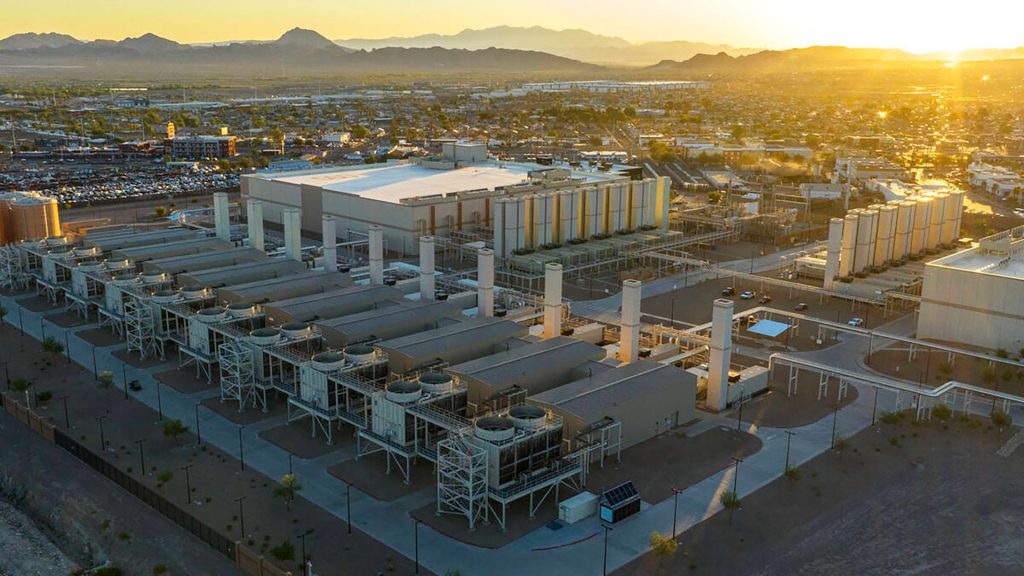
The artificial intelligence boom is hitting resistance in the Pine Tree State. Maine is on track to become the first state to pause large new data center projects, as lawmakers elsewhere debate how the AI build-out could affect power systems, costs and local communities.
The proposal would pause new projects of 20 megawatts or more until November 2027 while the state studies the effects on the environment and the electric grid, The Wall Street Journal reported. The bill passed the Maine House last month with some Republican support and is expected to clear the Senate.
Gov. Janet Mills, a Democrat, backs a moratorium, though her office also supports an exception for one planned project in Jay, Maine.
Why Maine’s fight could ripple beyond one state
Maine’s fight reflects a broader debate over whether states should keep courting data centers for tax revenue and construction jobs even as the facilities place heavier demands on land, water and electricity.
U.S. data centers consumed 183 terawatt-hours of electricity in 2024, according to a Pew Research Center analysis, more than 4% of total U.S. electricity use. That demand is projected to more than double to 426 terawatt-hours by 2030. The total represents traditional cloud computing and cryptocurrency mining, not just AI, even as the AI boom is pushing facilities to expand and consume more power.
That growth is becoming harder for states to ignore because it is concentrated rather than evenly spread. Pew reported that in 2023, data centers consumed about 26% of Virginia’s electricity supply and 12% of Nebraska’s.
In the 13 Eastern states covered by the PJM power grid, data centers contributed to an estimated $9.3 billion increase in future electric contracts, helping drive residential bills higher. Average monthly bills rose by $18 in western Maryland, for example.
The Journal reported that Maine already has some of the country’s highest residential electricity rates, which helps explain why lawmakers there are wary of adding another major source of demand.
Other states are testing similar limits
Lawmakers in at least 11 states — Georgia, Maryland, Michigan, New Hampshire, New York, Oklahoma, South Carolina, South Dakota, Vermont, Virginia and Wisconsin — introduced temporary data-center moratorium bills this session, Stateline reported. Similar measures are expected in Pennsylvania and Minnesota.
Some local governments have already moved ahead with pauses of their own. Stateline reported that St. Charles, Missouri, adopted a one-year ban last August. It also reported that three Indiana counties suspended data-center development last year. Fulton County, Indiana, imposed another one-year pause this week, and DeKalb County, Georgia, delayed new development through June 2026.
The Journal reported that concern is spreading to larger cities, with Denver and Detroit among those considering restrictions. In Maine, the paper reported that recent proposals in Wiscasset and Lewiston were paused or failed at the local level after residents objected.
Nebraska shows how big these projects can get
If Maine shows the backlash, Nebraska shows the scale of what states are being asked to host. Flatwater Free Press reported that Google is considering a Nebraska data center that could need 1,000 to 3,000 megawatts of power, more than three times Lincoln’s peak summer demand.
The project could be paired with a privately built natural gas plant that might generate more electricity than the largest power plant now operating in the state.
The proposal may depend on a bill, backed by Gov. Jim Pillen, that would allow privately built and owned power facilities for large industrial customers.
Kenny Zoeller, director of policy research for Pillen’s office, told Flatwater Free Press that the goal is to keep Nebraska competitive while ensuring “the largest corporations in the world should be paying for their own generation of their facilities, not your average Nebraska homeowner.”
That argument captures the broader split playing out in statehouses and local governments. Supporters see tax revenue, construction jobs and economic development. Critics see possible strain on public utilities, environmental costs and the risk that households could still absorb part of the burden.
What happens next in Maine and beyond
In Maine, the next step is Senate action and possible amendments. The Journal reported that lawmakers are considering carveouts for already planned projects in Jay and Sanford, and that some political operatives see a version of the bill as likely to become law.
Beyond Maine, lawmakers and local officials elsewhere are still debating whether to pause new projects, regulate them more tightly or keep competing for them.
In Nebraska, Flatwater Free Press reported that the governor-backed power bill advanced out of committee and still must go before the full Legislature, where it could face resistance.
Ella Rae Greene, Editor In Chief