Artemis II crew successfully plunges into Pacific after moon mission
They took a “giant leap for mankind” — and now they are home.
After going farther into space than any humans ever have, the Artemis II crew splashed down off the coast of San Diego on Friday.
Artemis II consisted of NASA astronauts Reid Wiseman, Christina Koch, Victor Glover and Canadian Space Agency astronaut Jeremy Hansen.
“What a journey,” Wiseman said upon splashdown. He confirmed all astronauts were safe, saying: “We are stable…four green crew members.”
The 10-day mission was historic for many reasons, among them being that Glover was the first Black man to fly around the moon, and Koch was the first woman. Hansen is also the first Canadian to circumnavigate the moon.

During their trip, Artemis II crew members went more than 252,000 miles from Earth — going past the 248,655 miles Apollo 13 did in 1970. Altogether, they traversed more than 690,000 miles.
The computer system on the Artemis II mission is also much different than Apollo’s. Apollo crew members used a computer with a 1-MHz processor and about 4 kilobytes of erasable memory, according to Communications of the ACM. That computer was not focused, or in the control loop for every system, the magazine wrote.
Artemis’ computing architecture, on the other hand, is able to manage nearly all of the Orion spacecraft’s functions that are critical to its safety.
Highlights of the mission
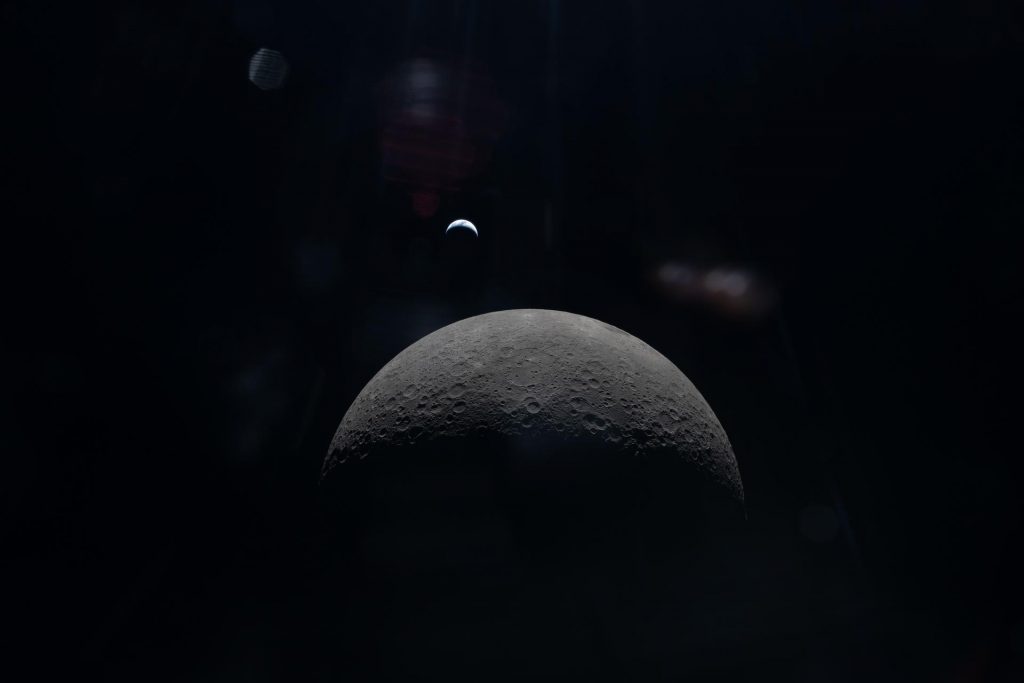
During a lunar flyby, the crew watched a solar eclipse from space, an experience Glover called “unreal.”
Koch told President Donald Trump during a phone call that one of the highlights of the trip was going around the far side of the moon and “having the first glimpses of Earth again after being out of communication for about 45 minutes.”
“It really just reminds you what a special place we have and how important it is for our nation to lead and not follow in exploring deep space,” she said, according to CBS News.

Before their journey, astronauts asked permission to name two craters.
The names they picked were Integrity, which is name of their capsule, and Carroll, after Wiseman’s wife, who died of cancer in 2020.
Artemis II was the most critical mission for the Artemis mission yet. Besides some issues with their toilet, it was a smooth trip.
The next mission one is set for 2027, when Artemis III will test integrated operations between the Orion spacecraft and one or both commercial landers from SpaceX and Blue Origin, according to NASA. Artemis IV astronauts are expected to conduct a moonwalk in 2028.
The Artemis II mission is “just the beginning,” NASA administrator Jared Isaacman said Friday.
“It’s a huge moment for everybody,” he said. “We are back in the business of sending astronauts to the moon, bringing them back safely and to set up for a series more.”
Ella Rae Greene, Editor In Chief