Arizona legislation would block release of license plate reader data
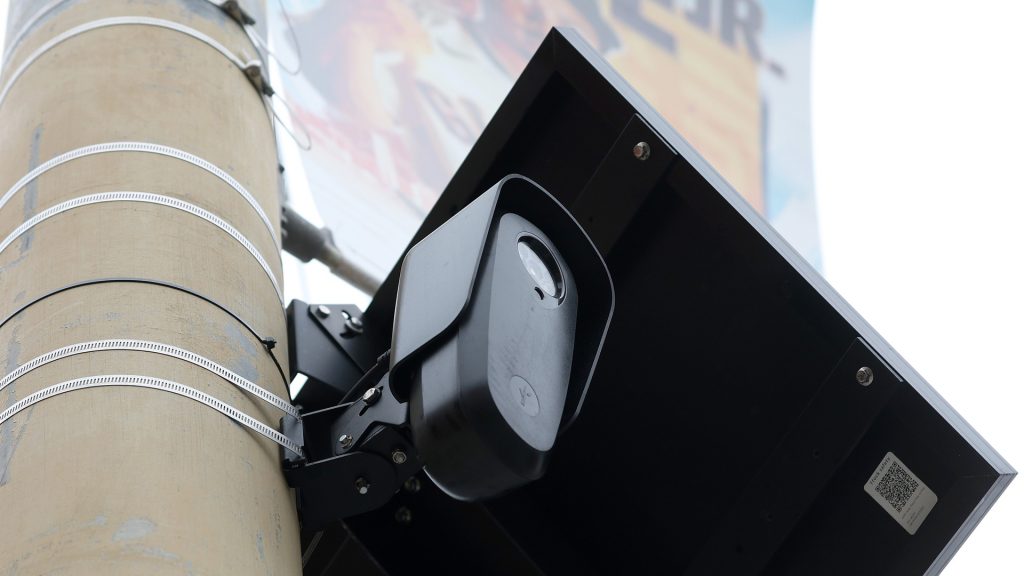
Legislation in Arizona regarding license plate reader cameras is stirring debate due to a section that would ban public records inquiries into law enforcement’s use of the technology. Critics of the exemption say it diminishes oversight of police agencies, while supporters say it protects crime victims from having their data made public.
State Sen. Kevin Payne, a Republican who is the bill’s primary sponsor, says the legislation aims to define how data obtained by license plate reader cameras can be used by law enforcement.
Known as Senate Bill 1111, the legislation has received backing from both the Arizona Police Association and the Arizona Association of Chiefs of Police, according to the Arizona Mirror. AI-powered license plate reader cameras produced by the company Flock Safety are in widespread use across the state.
Although Payne has touted the bill as a way to prevent “government overreach” while still allowing law enforcement to use the technology, the public records exemption has civil liberties advocates pushing back.
Payne did not respond to a request for comment from Straight Arrow News.
Dave Maass, director of investigations at the Electronic Frontier Foundation, told SAN that “blanket public records exemptions” for license plate reader systems “do not serve the public interest.”
Records exposed abuses
Much of what is known about the use — and abuse — of license plate reader systems comes from public records. The website HaveIBeenFlocked, for example, built a searchable database of records released by law enforcement agencies throughout the U.S. In numerous instances, law enforcement failed to properly redact sensitive data.
The website lets users see whether a law enforcement agency looked up certain license plate numbers in Flock Safety’s system, which pulls in data from license plate reader cameras from across the country. It also lists the justification that officers cited for each inquiry.
The data showed that police departments have tracked individuals who attended protests. Departments also have performed searches for Immigration and Customs Enforcement, even though the federal agency has no formal contract with Flock.
A lobbyist for the Arizona Sheriffs’ Association told lawmakers who questioned the public records exemption that it would protect domestic violence victims from public exposure, according to the Arizona Mirror.
But Maass says law enforcement agencies should balance the privacy interests for each public records request instead of introducing a total ban.
“Why shouldn’t you be able to ask for your own plate data?” Maass said. “Why shouldn’t you be able to ask for data on the movements of city buses? If the Oscar Meyer Wienermobile is driving through town, is that really a big secret?”
More important, Maass said, the public should be able to know if an innocent person is harmed due to a mistake by the technology.
Flock Safety has pushed back against the release of information on law enforcement searches of its data. The company recently advised law enforcement to be “as vague as permissible” when performing searches in its system.
The post Arizona legislation would block release of license plate reader data appeared first on Straight Arrow News.
Ella Rae Greene, Editor In Chief