Are there more earthquakes, or are we just noticing them more?
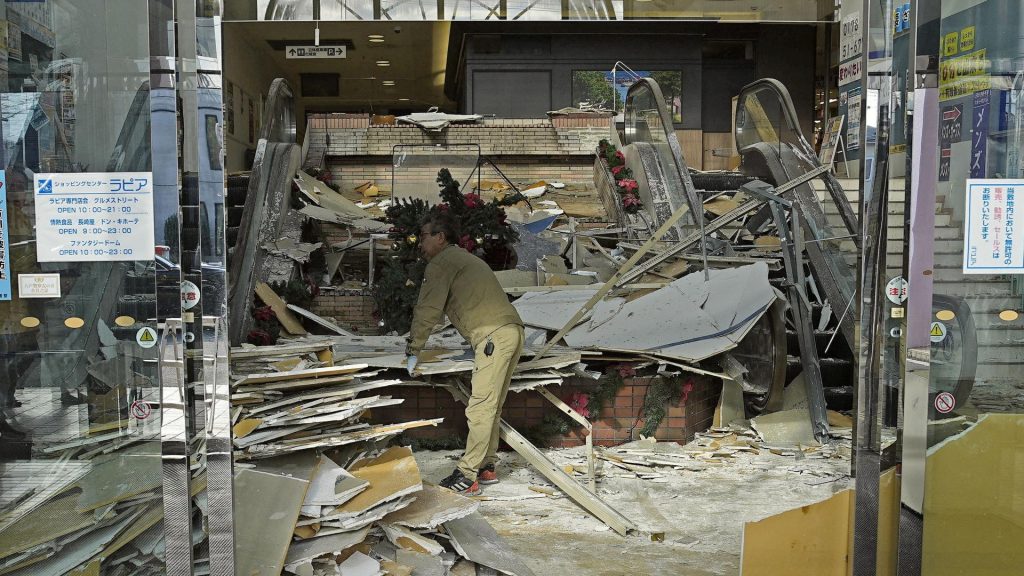
A magnitude 7.0 earthquake struck Alaska on the morning of Dec. 6, followed by more than 20 aftershocks. Two days later, a magnitude 7.5 earthquake off Japan triggered massive tsunamis.
The quakes occurred along the so-called “Ring of Fire,” a seismically active region encircling the Pacific Ocean. While earthquakes are common in the area, the recent activity has raised concerns. Are we seeing more earthquakes? Experts say no.
“Typically, we think of earthquakes of magnitude 5 and greater as being hazardous,” said Matthew Weingarten, a professor at San Diego State University. “In any given year in the continental United States, there are about 10 earthquakes of that size.”
According to the U.S. Geological Survey, about 20,000 earthquakes happen worldwide each year, or roughly 55 per day. So far in 2025, there have been approximately 1,800 recorded earthquakes.
Earthquakes occur when stress builds along fault lines in the Earth’s crust.
“It’s like a rubber band,” Weingarten said. “You’re slowly pulling it apart over time, and eventually it won’t stretch anymore. An earthquake happens at the point where just a little more stress causes it to snap.”
In regions with frequent seismic activity, such as Alaska and Japan, building codes are often designed to withstand strong shaking. That is not the case everywhere.
“When you feel an earthquake, you can feel a little dizzy,” said Deborah Kilb of the University of California San Diego. “You’re not quite sure what’s happening because the seismic waves are moving so fast.”
Safety experts say people indoors during an earthquake should drop to the ground, cover their head and neck, and hold on to a sturdy object. They advise staying away from windows and avoiding elevators.
Those outside should move away from buildings, trees and other objects that could fall.
The post Are there more earthquakes, or are we just noticing them more? appeared first on Straight Arrow News.
Ella Rae Greene, Editor In Chief