Anti-ICE protesters interrupted a Minnesota church service. Can they be charged?
A Sunday church service at Cities Church in St. Paul, Minnesota, was interrupted as protesters walked in, alleging a pastor there heads the Twin Cities field office for Immigration and Customs Enforcement. The episode landed the demonstrators in a legal gray area as religious freedom and the right to protest clashed amid a surge of federal agents in the area.
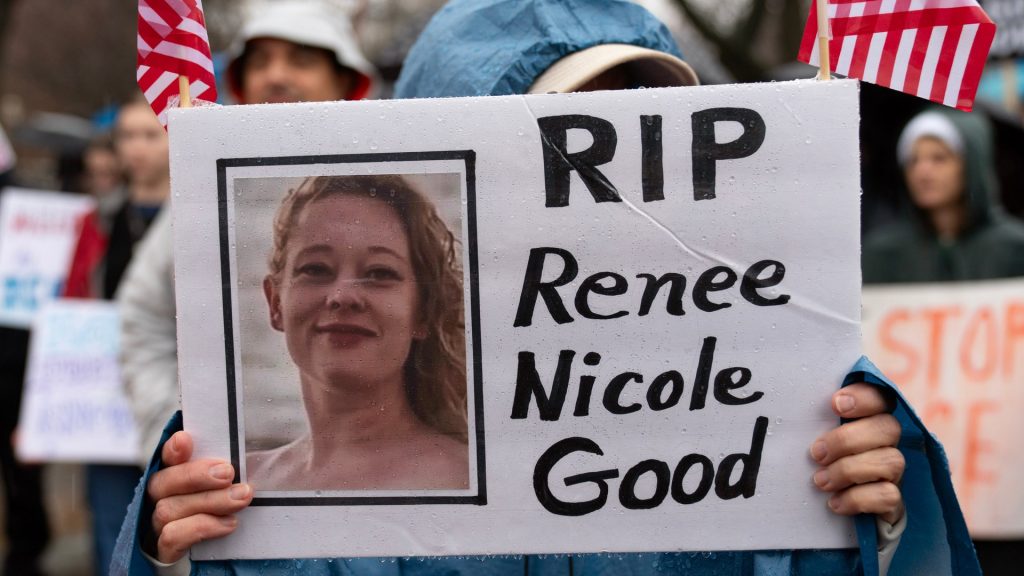
Attorney General Pam Bondi posted on X Sunday night that she’s investigating the protest, classifying it as “intimidation of Christians.” Black Lives Matter Minnesota and former CNN anchor Don Lemon shared livestreams on social media in which protesters entered and demanded justice for Renee Good, the Minneapolis woman killed by an immigration officer on Jan. 7, and for ICE to leave the area.
“If state leaders refuse to act responsibly to prevent lawlessness, this Department of Justice will remain mobilized to prosecute federal crimes and ensure that the rule of law prevails,” Bondi wrote.
On Monday, Harmeet Dhillon, who heads the Justice Department’s civil rights division, said charges are forthcoming. She singled out Lemon, now an independent journalist who has frequently criticized President Donald Trump.
“Don Lemon himself has come out and said he knew exactly what was going to happen inside that facility,” Dhillon told conservative influencer Benny Johnson on his podcast. “He went into the facility, and he began — quote, unquote — ‘committing journalism,’ as if that’s some sort of a shield from being a part, an embedded part, of a criminal conspiracy. It isn’t.”
But whether the protest — or Lemon’s embedded coverage of it — were illegal is not clear. Minnesota does not have a law explicitly barring such demonstrations. Justice Department officials cite a 1994 federal law that bars using force or physical obstruction to interfere or intimidate people during religious worship. The law also barred demonstrators from physically blocking access to abortion clinics.
Church targeted for pastor’s alleged job in ICE
The protesters chose Cities Church because one of its pastors, David Easterwood, apparently is the ICE official named in a class action lawsuit, accusing him, along with Homeland Security Secretary Kristi Noem, acting ICE Director Todd Lyons and others, of alleged racial profiling and unlawful seizure and arrests of people throughout Minnesota. The American Civil Liberties Union and several law firms filed the lawsuit in U.S. District Court.
“To have someone in the role of a pastor also being in that role as an overseer is unconscionable,” protest organizer Nekima Levy Armstrong, a civil rights lawyer, told The New York Times.
Cities Church hasn’t yet publicly commented on the protest or claims about Easterwood.
Protesters enter Cities Church during Sunday service
Video of the protest shows that several congregants remained seated, joined the chants, recorded the protest or left the church. Some were recorded encouraging the protesters to leave.
Protesters and congregants clashed over whether a church was a proper place to protest, Lemon’s video shows. He is also seen questioning church leaders, worshippers and protesters about the disruption. At several points in the video, he questions church affiliates harder on their stances about not protesting there.
Lemon said he did not help plan the protest, but learned of it from the organization behind the demonstration.
St. Paul Police officers responded to the church about 10:40 a.m. after receiving calls that 30 to 40 protesters had interrupted church services, Public Information Officer Nikki Muehlhausen told Straight Arrow News. However, the officers did not appear to disperse the group.
“When officers arrived on scene, the group had moved outside the church and began to walk down the alley,” Meuhlhausen said in an email to SAN. “Saint Paul Police continued to monitor the protest.”
She added that the incident is the subject of an “active and ongoing disorderly conduct investigation.”
Rarely used national law suggested
Several people suggested the Justice Department file charges against the protesters under the Freedom of Access to Clinic Entrances and Places of Religious Worship Act. That is the same law the Trump Administration said last January had been politically weaponized against people who protested against abortions at family planning and women’s health clinics.
The FACE Act has been used historically to protect reproductive health centers and places of worship from force, threats of force, physical obstruction and property damage targeted at patients, providers and worshippers.
During the Biden administration, Matthew Connolly was charged for violating the law when he barricaded himself in a bathroom at a Planned Parenthood clinic in Philadelphia, causing it to close down and cease visits for the day, NPR reported in March. Connolly was known to protest at the facility against abortions and was charged to deter him from future disruptions.
But after Trump took office, a Justice Department memo announced that “no new abortion-related FACE Act actions — criminal or civil — will be permitted without authorization from the Assistant Attorney General for the Civil Rights Division.”
For demonstrations inside a church with services underway, the law states protesters could be charged if they used similar actions outlined in prohibitions against reproductive centers. A first conviction carries a penalty of up to a year in jail, a fine or both.
However, the law bars enforcement if a person is demonstrating or picketing.
“Nothing in this section shall be construed: to prohibit any expressive conduct (including peaceful picketing or other peaceful demonstration) protected from legal prohibition by the First Amendment to the Constitution,” according to the law.
Minnesota disorderly conduct law may not apply
According to Minnesota state law, a person could be charged with disorderly conduct if they either knowingly or have reasonable knowledge their actions would cause “alarm, anger or disturb others or provoke an assault or breach of the peace.” It is only a misdemeanor.
However, the Minnesota Supreme Court ruled in 2017 that a person who disturbs an assembly or meeting cannot be guilty of disorderly conduct, as the law is “substantially overbroad” and violates the First Amendment.
The post Anti-ICE protesters interrupted a Minnesota church service. Can they be charged? appeared first on Straight Arrow News.
Ella Rae Greene, Editor In Chief