Americans want to give back this holiday season. What’s stopping them?
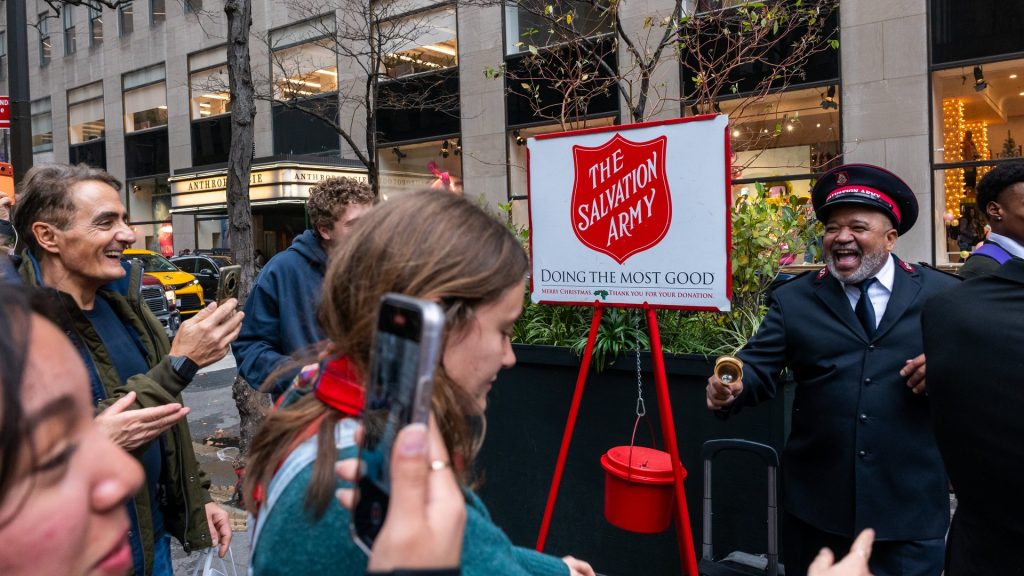
The holiday season often surrounds Americans with calls to give back. From Salvation Army bell ringers on busy street corners to social media clips of local donation drives, opportunities to volunteer or donate are hard to miss.
Humans are inherently generous, and the holiday season naturally stirs those feelings to the surface — a mix of tradition, emotion and the hope of doing something good.
“One of the ways we feel like we matter is by making a difference in the world — by contributing to the welfare of other people,” said Emiliana Simon-Thomas, UC Berkeley’s Greater Good Science Center science director. “There’s this core motivation to do things that matter, to fuel a sense of meaning and purpose — and that’s really the driver of generosity.”
Yet despite the abundance of donation and volunteering options, many well-intentioned people find themselves stuck.
Why giving back feels hard right now
When opportunities to pitch in are endless, good intentions don’t always lead to action. Deciding where to start can feel overwhelming: That question of how to help can feel surprisingly paralyzing.
“At our core, we’re wired to be generous — overthinking just gets in the way,” Simon-Thomas said.
But why?
Several factors influence a person’s decision to give back, including financial strain, time constraints, burnout, overthinking and a lack of a clear starting point. There’s also fear of scams or donating to the wrong organizations.
“When people are asked to make quick decisions, the average person chooses to be fair or generous,” Simon-Thomas told Straight Arrow News. “It’s actually when people slow down and overthink that they tend to become more self-interested.”
Decision paralysis isn’t a lack of generosity; rather, Simon-Thomas said, it’s a stress response. When people face uncertainty about how to help or whether their effort will matter, the nervous system shifts into fight, flight or freeze. Paralysis is the freeze.
Research shows quick decisions are more generous, but extended deliberation fosters doubt and misperception, stalling good intentions.
And there are a lot of moments for extended deliberation on any one person’s quest to do good.
“250,000 [charities] is a lot to choose from,” said Michael Thatcher, president and CEO of Charity Navigator. “Helping people reduce the complexity of their choices is something we really focus on.”
Plus, economic uncertainty has reduced Americans’ ability to give back this holiday season. Many are still recovering from the government shutdown, which limited access to essentials through SNAP and similar programs. While federal workers have returned to work, the impact of missed paychecks or temporary layoffs has not fully subsided.
The government shutdown affected people at all income levels, and now Angela Williams, the CEO of United Way Worldwide, said people are making tough decisions.
“The misconception is that only poor people are impacted by things like government shutdowns or benefit cliffs, and that’s absolutely not true. We are all just one medical mishap away from poverty,” Williams told SAN. “Life happens — a job loss, a sick child, rising rent — and rather than judging, we should be thinking about how to be generous.”
Food, housing assistance and utility bill assistance remain the three most consistent areas of need, according to United Way data.
“When people did not receive their paychecks, that didn’t mean that their mortgages or rents were wiped away. They weren’t. It just compounded the issues. And so we see people still having to play catch-up with the limited resources that they have,” Williams said.
Additionally, Williams noted the increasing uncertainty about health care benefits and rising premiums.
“People who have existing bills or are anticipating medical needs in the upcoming year — if their health care premiums are going up astronomically — they again find themselves in this tough position of having to make difficult choices concerning basic needs for living.”
Community needs have shifted
Salvation Army spokesperson Dale Bannon told SAN that some families face a 20-25% increase in need, and struggle to afford basic necessities and gifts.
“With more than two-thirds of Americans concerned about having enough money to afford gifts, The Salvation Army continues to work tirelessly to provide Christmas gifts, food, shelter and rent and utility assistance to people in need,” Bannon told SAN.
Bannon works to dispel common misconceptions of who needs help at the holidays and what that help can look like. Not everyone in need lacks a job or a home. Bannon said that the need is “often closer to home than people realize.” And gifts are nice, but many folks could benefit from assistance on cost of living.

Calls for food assistance during the government shutdown quadrupled, Williams said. That’s on average: West Virginia saw a 1,680% increase in calls for help, according to data from the West Virginia 211 call center.
As need increased, so did giving.
“During the government shutdown and SNAP payment pauses, we saw a 600% increase in traffic and donations to food pantries in late October. Donations follow what’s happening. People were worried about food security and stepped up,” Thatcher said.
Generosity isn’t limited to a credit card
Money often comes to mind when considering ways to give back. But that common misconception that people can’t make a meaningful difference without making a financial donation is just that — a misconception.
Thatcher noted that volunteering, joining a board or reaching out to organizations you care about are valuable ways to contribute.
Unbiased. Straight Facts.TM
Strong social networks encourage generosity. Individuals tend to volunteer, donate and give blood more often when with friends or in groups.

“Charities are generally eager for helping hands,” he said.
Donating items such as clothing or vehicles is also helpful. Many donations have drop-off programs; giving circles offer another option, allowing people to pool resources for a common cause.
Williams described generosity as giving through “time, talent and treasure.” For those unable to donate money, she recommended volunteering at local shelters, animal shelters or food banks. Using unique skills to support administrative work, gardening or truck unloading for food distribution is also meaningful.
The Salvation Army encourages anyone who is inspired by the Angel Tree program, but unable to support its cost, to volunteer at a local branch during the holidays or year-round.
Where to start: Simple steps
Giving doesn’t require perfection, just intention.
Thatcher suggested starting with something you care about. He said to pick “causes that grab you emotionally, that grab you by the heart.” Once you choose a cause, you can get specific.
“If you’re trying to figure out how to get going, what do you care about? And then dig into that a little bit,” Thatcher said.
Small actions still matter.
“Once you know the ‘what,’ you can find the ‘where,’ and that’s where Charity Navigator helps. Then go do something — write a check, volunteer, join a giving circle. Engagement builds connection and keeps you involved,” he said.

“Be generous, but give within your means. Don’t give until it hurts — give until it feels right, and then keep giving,” Thatcher said.
Simon-Thomas said the point of giving back isn’t to solve the problem; being generous doesn’t have to fix everything to be meaningful.
“You’re contributing to a collective effort, and that matters,” she said.
Trust, transparency and avoiding scams
Another hurdle to diving in: Figuring out where to start. Charity Navigator, United Way Worldwide, The Salvation Army and the Better Business Bureau are all reliable sources for identifying charitable organizations and finding volunteer opportunities.
Thatcher shared insights on how best to vet charities and offered red flags to watch for.

“One easy way to verify legitimacy is to look the organization up on Charity Navigator or through the IRS charity lookup,” Thatcher said.
Inappropriate pressure — urgency that pushes you to donate immediately — can be another red flag, Thatcher said. “Resist that. Ask for time and use it to do research.”
He also advised being on the lookout for unusual payment methods.
“If someone asks you to buy gift cards and donate those, that’s a huge red flag. Donors should be able to dictate how they donate,” Thatcher said.
Why we give back
The act of giving spreads “joy and love,” fosters human-to-human connection and can have a “legacy effect” for years to come.
“I think it’s inherently human. We care for each other, our families, our communities. When we see someone in need, it’s natural to want to help. Giving happens everywhere, among all kinds of people. It’s part of the beauty of being human,” Thatcher said.
While holidays are a good time to help, Williams said it’s important to keep giving back year-round to strengthen resilient communities.
“The holidays are difficult for many people — loneliness, disconnection and an overemphasis on material exchange can make things harder. I hope people remember to extend grace, especially to those on the fringes of community,” Simon-Thomas said. “Doing what you can — mentally, emotionally, materially — makes a difference.”
The post Americans want to give back this holiday season. What’s stopping them? appeared first on Straight Arrow News.
Ella Rae Greene, Editor In Chief