Aldi to add nearly 200 stores as bargain demand grows
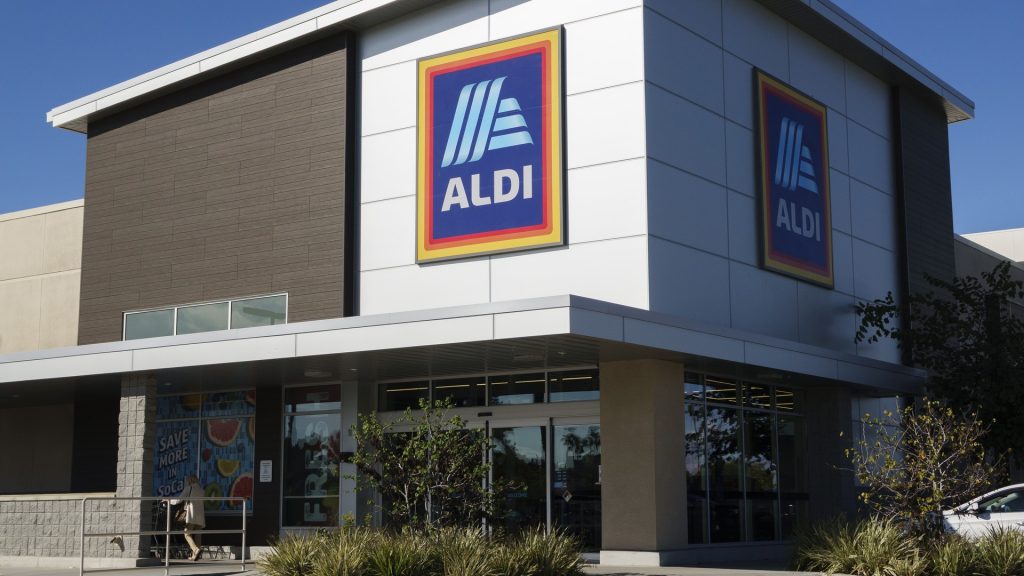
Discount grocer Aldi is expanding its U.S. footprint as inflation and high grocery prices continue to squeeze household budgets. The German-owned chain says it plans to open more than 180 stores this year across 31 states.
Aldi’s store count keeps climbing
Known for low prices and compact, neighborhood-style stores, Aldi has steadily gained ground with cost-conscious shoppers. By the end of 2025, the company operated 2,614 U.S. locations, making it the third largest grocery chain by store count – behind only Walmart and Kroger.
Store traffic rose roughly 50% between 2019 and 2024, according to company data.
Alongside the new stores, Aldi plans to add distribution centers in Florida, Arizona and Colorado as part of a $9 billion investment plan through 2028.
Focus on quality and affordability
Unbiased. Straight Facts.TM
Aldi stores typically average about 10,000 square feet, compared with roughly 178,000 square feet for a Walmart supercenter.

Aldi says its appeal centers on simplicity, quality, and savings – a model built largely around private-label products rather than national brands like Heinz or General Mills. Shoppers also bring or purchase their own bags, helping keep operating costs down.
CEO Atty McGrath says today’s consumers are prioritizing value over variety.
“Consumers now really are not looking for fancy stores, and tens of thousands of different items to choose from,” McGrath said.
She said the products her company carries are priced to save while not sacrificing quality.
Retail analysts say that approach is paying off. Matthew Hamory of AlixPartners told CNBC that discount grocers like Aldi, Walmart and Costco have gained ground on traditional supermarkets like Albertsons and Kroger in key areas such as produce and meat.
“You’re buying good quality fresh food, good quality private brands,” Hamory said. “They’re in stock. They’re local to you. And they’re convenient.”
Market share still trails leaders
Despite its rapid expansion, Aldi remains a smaller player in overall market share. Numerator estimates the chain controls about 2.8% of the U.S. grocery market, well behind Walmart, Kroger, Costco, Albertsons and Publix.
Still, competitors are taking notice. Kroger CEO Ron Sargent said on a December earnings call that the grocery business has become especially competitive as shoppers focus more on value.
Albertson’s CEO Susan Morris echoed that sentiment, noting that even higher-income shoppers are tightening their budgets.
Shoppers willing to go the distance
For some customers, the savings are worth the drive. Emily Curtis, who now lives in New York City, told CNBC she and her husband drive 30 minutes each way to shop at Aldi.
She said she first began shopping for bargains there when she was in college at the University of Alabama. Years later, she’s still a loyal customer, pointing out that “prices are the main draw and that’s why we go out of our way.“
The post Aldi to add nearly 200 stores as bargain demand grows appeared first on Straight Arrow News.
Ella Rae Greene, Editor In Chief