A Texas town arrested a reporter for getting info from a cop. The Supreme Court declined to hear the case.
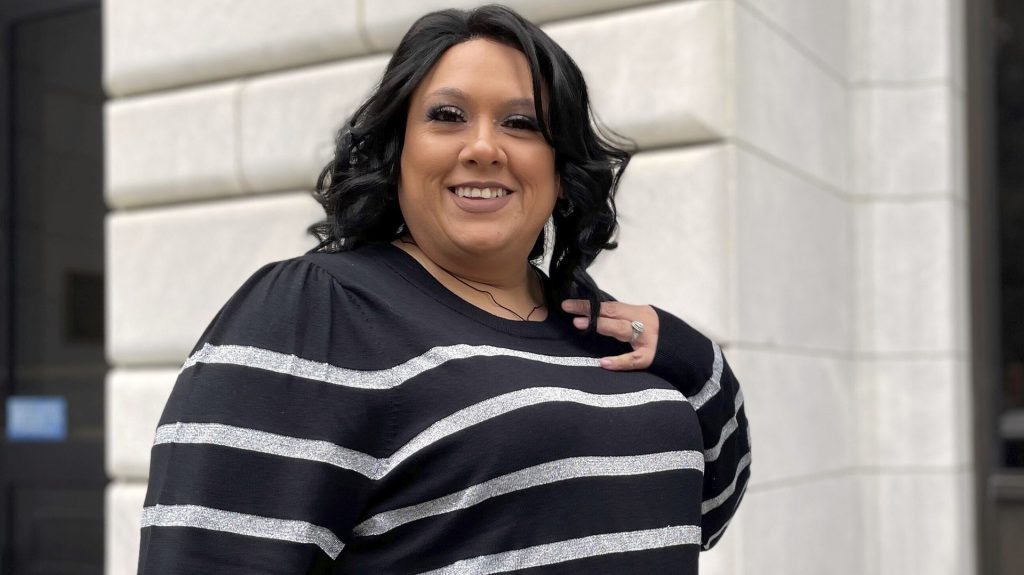
An independent journalist has lost a nine-year court battle arguing that a Texas city violated her First Amendment rights when they arrested her for confirming information from a police officer.
The Supreme Court declined to hear Priscilla Villarreal’s case on Monday. In it, she alleged the Webb County District Attorney’s Office and the City of Laredo retaliated against her for publishing the names of two people who died in the city. The names weren’t previously known, but Villarreal used her connections to acquire official confirmation.
Liberal Justice Sonia Sotomayor dissented, adding that Villarreal was arrested “for doing something journalists do every day: posing questions to a public official.”
“That officer voluntarily provided the information Villarreal sought, and Villarreal published those facts, consistent with her role as a journalist,” she wrote. “Six months later, Villarreal was arrested for asking those questions.”
The leading opinion to deny the case was not available on the Supreme Court docket.
The Foundation for Individual Rights and Expression, a First Amendment advocacy group, represented Villarreal in her subsequent lawsuits.
“FIRE is disappointed that the Supreme Court denied our petition to review citizen journalist Priscilla Villarreal’s case,” the foundation said in a Monday statement on X, “in which the courts below held Laredo, Texas, officials are immune from a lawsuit after they arrested Priscilla for asking police questions—something reporters do every day, and something the First Amendment squarely protects.”
The independent journalist, known locally as “La Gordiloca” (“the chubby crazy lady”), was arrested in 2017 after publishing the names. She questioned a source inside the police department about details her followers shared with her on the two fatal incidents, according to the Columbia Journalism Review. The Laredo Police Department sought arrest warrants against Villarreal for violating a 2017 Texas law that made it a felony to solicit nonpublic information from a public official for a personal benefit.
The Webb County District Attorney’s Office, Laredo City Attorney’s Office nor the Laredo Police Department have yet to respond to Straight Arrow News’ request for comment.
Villarreal contends arrest violated rights to free speech, equal protection
The journalist sued the city of Laredo and the Webb County District Attorney’s office in 2018, claiming that both violated her First and Fourteenth Amendment rights when the arrest warrants were authorized.
The Foundation for Individual Rights and Expression said a U.S. District Court judge dismissed the lawsuit because officers were entitled to qualified immunity. The measure is commonly used in civil lawsuits against law enforcement officers and their agencies for actions taken while on duty. It’s been used to say that an officer cannot be held liable for actions that were previously found in a court case to otherwise be legal.
She appealed the case to the Fifth Circuit Appellate Court, which sided with her that the officials weren’t shielded with qualified immunity and the arrest was an “obvious constitutional violation,” FIRE said in a release. The order was issued in a three-judge panel and not by all judges.
“If the First Amendment means anything, it surely means that a citizen journalist has the right to ask a public official a question, without fear of being imprisoned,” Circuit Court Judge James Ho wrote in the leading opinion. “Yet that is exactly what happened here: Priscilla Villarreal was put in jail for asking a police officer a question.”
The Texas officials got the decision reversed by a full appellate court panel in 2024, according to FIRE. The nonprofit appealed to the U.S. Supreme Court after the lower court ruled in a related case that probable cause doesn’t prevent a lawsuit when a person has evidence that officials selectively enforce a criminal law against them.
The Fifth Circuit affirmed in a 10-5 April ruling that the officials were still entitled to qualified immunity in Villarreal’s case, which prompted her and FIRE to seek Supreme Court intervention.
The Monday Supreme Court decision not to hear Villarreal’s case effectively ended the lawsuit.
“The decision not to take Priscilla’s case only shines more light on the need for the Court to revisit how qualified immunity applies in free speech cases, sooner rather than later,” FIRE said in a Monday statement on X.
Ella Rae Greene, Editor In Chief