Why the US is ramping up intelligence activity in Cuba
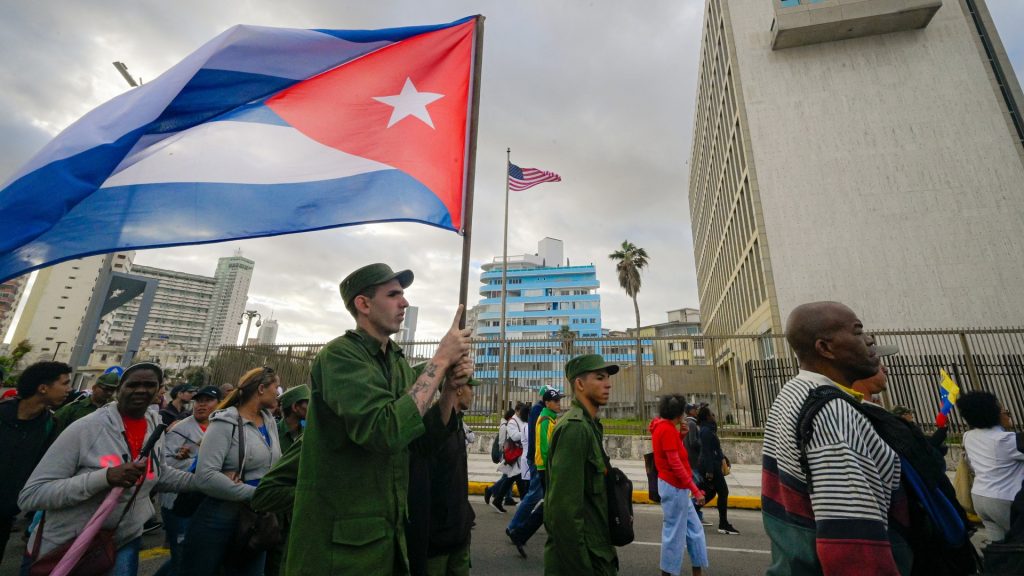
The U.S. has reportedly expanded its intelligence activity in Cuba as the Trump administration increases pressure on the island’s government.
Two people familiar with the administration’s plans told Politico the move is part of a broader campaign to pressure Havana into major changes, with one describing the goal as reform or a loss of power by the current communist regime.
One person told Politico the U.S. had recently sent “spies and assets” to Cuba. Another described the move as an increase in the CIA’s “presence.”
Both spoke anonymously because they were discussing sensitive intelligence, Politico said.
A broader pressure campaign
The intelligence push is one part of a larger Trump administration strategy toward Cuba.
The administration has blocked fuel shipments, threatened penalties against countries that send oil to the island and pursued new sanctions on Cuban entities and individuals. Severe blackouts have strained daily life, affecting transit, hospitals, water service and food storage.
The U.S. has also offered $100 million in humanitarian assistance and support for satellite internet if Cuba permits it. Still, Secretary of State Marco Rubio has said aid must be distributed by groups not tied to Cuba’s government or military-linked businesses.
Rubio has argued that Cuba’s economic system is broken and that instability on the island directly affects U.S. national security. Cuba is about 90 miles from Florida.
The Ratcliffe visit
CIA Director John Ratcliffe traveled to Cuba in May and met with officials, including Raúl Guillermo Rodríguez Castro, the grandson of former Cuban President Raúl Castro.
A CIA official told The Associated Press that Ratcliffe delivered President Donald Trump’s message that the U.S. was “prepared to seriously engage on economic and security issues, but only if Cuba makes fundamental changes.”
Cuban officials said the island does not threaten U.S. security and objected to Cuba’s continued place on the U.S. list of state sponsors of terrorism.
Raúl Castro charged
Days after Ratcliffe’s visit, the Justice Department unsealed charges against Raúl Castro in connection with the 1996 shootdown of two Brothers to the Rescue planes.
The indictment alleges conspiracy to kill U.S. nationals, destruction of aircraft and four counts of murder. The planes were operated by a humanitarian exile group that searched for Cuban migrants stranded at sea.
Raúl Castro was Cuba’s defense minister at the time. Cuban President Miguel Díaz-Canel called the indictment a political maneuver aimed at paving the way for military action against Cuba.
Military option remains unclear
The administration’s next steps are not clear.
One person familiar with the plans told Politico the intelligence buildup could be useful if the U.S. considered military action, while cautioning that any possible operation remained undefined.
A senior White House official previously told Politico that Trump has diplomatic and military options in Cuba but has not decided how to proceed. The AP reported in May that sources said military action was not imminent.
Rubio has said the administration prefers a negotiated diplomatic solution. But he also said Trump has the right and obligation to address threats to U.S. national security.
Why Cuba is back in focus
Politico noted that U.S. intelligence agencies have operated in Cuba for decades, though that work became more limited after staffing reductions connected partly to the Havana syndrome cases, in which officials working at the U.S. Embassy in the Cuban capital and their families experienced mysterious symptoms, including severe headaches, blurred vision and vertigo.
Rubio has described Cuba as a national security threat because of its ties to U.S. adversaries. At a May press appearance in Florida, he said Cuba hosts a Russian and Chinese intelligence presence and warned that a failed state near U.S. shores could create migration, violence and instability.
The administration has also sharpened its public criticism of Cuba’s government. The State Department recently released a document titled “Cuba: The Capital of 21st Century Communism,” accusing Cuba’s government of decades of wrongdoing.
Round out your reading
- Why Gen Z is staying home on the weekends.
- Autism research is entering a new era. Here’s what scientists are learning.
- The big reason small cities want data centers. Hint: It’s not permanent jobs.
- High school teacher arrested at city meeting after clapping for anti-data center speech.
- Off Script: Everyone’s watching Michigan. Our reporter explains why the race just changed.
Ella Rae Greene, Editor In Chief