Do girls still code? How tech industry gender-equality programs are responding to AI
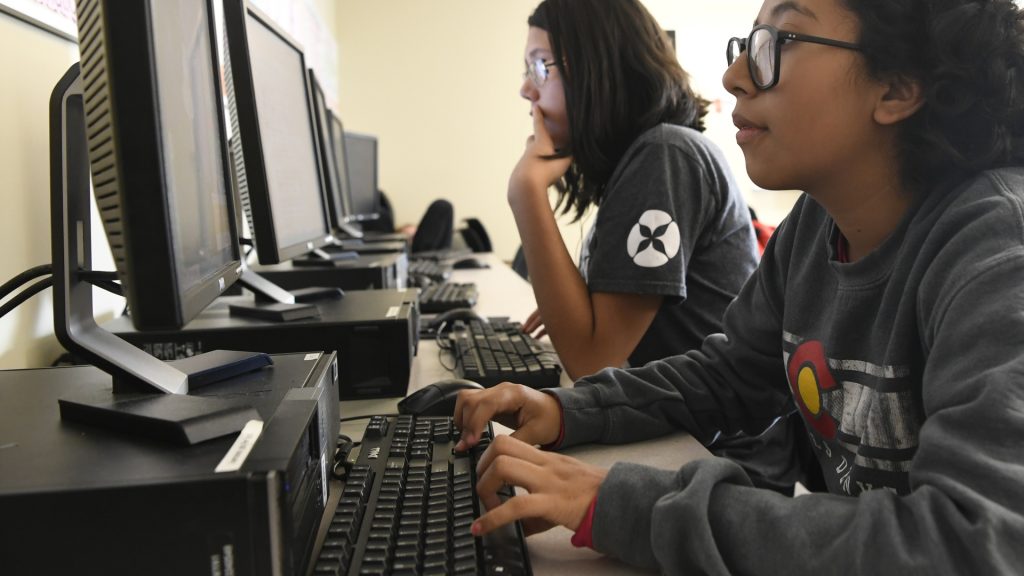
For years — decades, even — a career in tech has been seen as a logical choice for people seeking a stable salary, and as a potential first step into the middle class for people from underprivileged backgrounds. But the field has also long been defined by gender imbalance: Women made up only 26% of the U.S. STEM workforce in 2011.
Organizations sprang up worldwide to make the opportunities offered by the tech boom more accessible to women; millions of girls were introduced to basic tech concepts, training as coders through bootcamps, summer schools and engagement programs.
In 2026, however, coding is no longer such a predictable gig. With the rise of vibe-coding, cheap artificial intelligence tools and the growing data-annotation industry, the benefits of this massive investment in women’s coding might be at risk, according to Jayathma Wickramanayake, a senior adviser at UN Women.
“A large number of women are also in areas of employment that could be easily replaceable by generative AI,” Wickramanayake told Straight Arrow.
If the industry continues to devalue coding skills, these significant investments in STEM education for young women may no longer yield the intended benefits, she said.
Why coding?
The 2010s saw a huge number of coding-education startups around the world specifically aimed at reducing the tech industry’s gender imbalances. Code First Girls and Girls Who Code were founded in 2012, in the U.K. and U.S., respectively. Model Karlie Kloss’s organization Kode with Klossy and the UN’s flagship program IamtheCODE followed in 2015, and the UN’s African Girls Who Can Code initiative started in 2018.
The principles behind these organizations were the same: to increase the representation of women in the tech industry. These were huge investments motivated by the belief that helping girls to code would allow them to find employment and thrive in a rapidly changing technological landscape.
The founder of Girls Who Code wrote in a 2017 Medium post that she had founded the organization with “the belief that computing skills are a critical path to security and prosperity in today’s job market,” aiming to “give families a real shot at the middle class.”
The majority of students served, she wrote, “are from historically underrepresented groups in tech,” she said, and “these stories are urgent reminders that we need to dramatically increase the percentage of women in our engineering workforce and we need to do it now”
Do girls still code?
It would be a huge shame for the long-term efforts to bring young women into the tech industry to go to waste, Wickramanayake told Straight Arrow.
Wickramanayake said that UN Women is concerned not only with women’s vulnerability to replacement as coders, but also that their perspectives might be missing from conversations around AI governance, model training, ongoing bias in training data and related risks.
The UN is attempting to respond to the shift to AI with a range of initiatives, including its “UN Women AI School,” which launched last year. The school provides AI skill training, with the goal of creating “a shift from fear to empowerment.”
“AI has the power to accelerate progress toward gender equality — but only if women and feminist leaders actively shape its development and use,” the organization said in its announcement.
The school offers a range of programs, including a bootcamp-style 12-week online training to help women build “an AI-powered advocacy campaign, civic tech prototype, policy tool, or democratic participation action plan,” and use artificial intelligence to further gender equality.
The AI skills emphasized go far beyond coding, tackling how to use AI for advocacy, policy influence and handling risks responsibly, among other things.
“I think there’s an important piece of women and girls in the labor force and how they’re being impacted by AI, that needs to be discussed and acknowledged more by companies and governments,” Wickramanayake said.
What skills do girls need now?
It is important to focus on preserving the “hard-won gains in the past decades, investing in women and girls’ education, skill building, getting girls to code,” Wickramanayake told Straight Arrow.
Girls Who Code seems to agree.
“We are approaching an age where students can no longer rely on entry-level coding as a straightforward path to a career in tech,” the organization noted in its 2024 annual update, “they also need to be trained in cybersecurity and emerging technologies like AI to be competitive.”
Now, the organization has branched out into AI, machine learning, game design, cybersecurity, data science and web design.
Kode With Klossy’s LinkedIn states that the organization is “deeply invested in training our scholars to be both responsible builders and critical consumers of AI,” and Code First Girls provides an in-depth series of articles on how to build a career in machine learning. And, last week, the Portugal-based SheCodes, founded in 2017, announced their own new series of AI-focused workshops.
Round out your reading
- From Obama to Trump to Biden: When networks said ‘no’ to presidential speeches.
- ‘The end of American science as we know it.’ White House funding plan sparks alarm.
- AI data centers are popping up everywhere. What exactly do they do?
- The Trump administration is accused of breaking a law built to target the KKK.
- One Republican senator is dead, another is still alive. Both are the center of conspiracy theories.
Ella Rae Greene, Editor In Chief