States overhaul EBT cards to combat scammers after billions lost
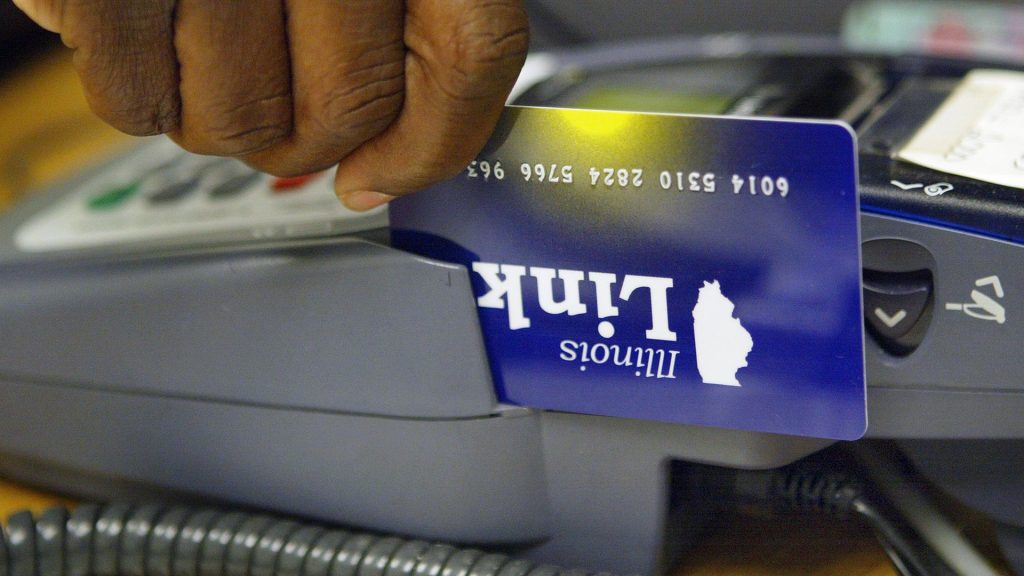
Americans have been tapping their credit cards for years. SNAP recipients, meanwhile, have largely relied on technology from another era, leading to billions lost to scammers.
Several states across the country are now moving toward chipped EBT cards to prevent those funds from being easily stolen.
“It’s quite important,” David Super, law professor at Georgetown University, told Straight Arrow.
Chipped cards
The latest state to make this move is Maryland.
“Across the nation, families are struggling with rising costs on everything from food to energy. Here in Maryland, we are laser-focused on providing accessible and secure relief to hardworking families,” Gov. Wes Moore, D-MD, said. “These fraud-resistant ‘chip-and-tap’ cards are a major step towards that goal.”
Other states like New York, Michigan and Oregon are also making that move.
The reasoning behind it is to make card skimming more difficult for scammers who want to steal these benefits from this vulnerable population.

“There’s been an enormous proliferation of so-called skimming, where people are using their EBT cards at perfectly appropriate authorized places, and an attachment that’s been put on the card reader copies all their information and allows their accounts to be drained by criminals,” Super said.
Federal investigators have estimated that scammers have stolen tens of billions of dollars. Those investigators said the most money was stolen from EBT recipients in Georgia, but that state has yet to adopt chip-enabled cards.
Using chips versus the typical magnetic stripe makes skimming more difficult.
“Neither the states nor the feds have been very effective at stopping this or catching the gangs involved, and a chip makes that vastly harder,” Super said.
The cost
Food stamps have undergone significant changes since the program began in the 1930s. While it originally involved stamps, the move to cards was made in the late 1980s and early 1990s.
Making the move to chip cards will save significant amounts of money by reducing stolen funds, but it also costs states more money.
“The chips are more expensive than the stripes, which is why the states have gone with the stripes in the past,” Super said. “There’s constant pressure to keep costs down in human services programs, including SNAP.”
It’s estimated that each chipped card costs a few dollars more for the states than magnetic stripe cards do. But because the stolen funds primarily affect the recipients and the states themselves, many have been reluctant to make the switch.
“Neither the states nor USDA have had a big incentive to update the system and cause it to stop,” Super said.
For the most part, states contract with private companies such as Conduent and Fidelity Information Services to produce these cards. When the states negotiate new contracts, it becomes easier to switch to chips.
“It’s easier to add new technology when you’re bidding a new contract than as a contract modification,” Super said. “I think that’s a lot of what’s happening here, and I think people have finally given up on the notion that state and federal law enforcement would catch enough of these gangs to deter this behavior, and it recognized that the only way to stop it is to make it technologically impossible.”
Food Stamp changes
These changes come as the Trump administration makes major changes to programs like SNAP. Many states are making changes to reduce their error rates and avoid penalties from the federal government.
Any error rate over 6% will cost the state’s funding.
However, the move to chipped cards likely isn’t a product of these changes because stolen funds from individuals do not count towards the error rate.

“They’re just getting stolen by criminals, and SNAP has not counted that as fraud,” Super said.
While these changes won’t affect the error rates, they will certainly affect the people who rely on these programs for food.
“This should have happened four years ago, maybe more, and it hasn’t happened because it costs a little bit more, and there’s relentless pressure to not spend money on anything in these programs when you can get a buy with doing it cheaper,” Super said.
Round out your reading
- From Obama to Trump to Biden: When networks said ‘no’ to presidential speeches.
- ‘The end of American science as we know it.’ White House funding plan sparks alarm.
- AI data centers are popping up everywhere. What exactly do they do?
- The Trump administration is accused of breaking a law built to target the KKK.
- One Republican senator is dead, another is still alive. Both are the center of conspiracy theories.
Ella Rae Greene, Editor In Chief