Minnesota wildfires force dramatic rescues as smoke chokes the Eastern US
Wildfires burning in remote parts of northeastern Minnesota have forced evacuations from the Boundary Waters region, while smoke from fires in Minnesota and Canada is spreading unhealthy air across much of the Midwest and Northeast.
St. Louis County in northeastern Minnesota declared a local emergency as fires burned across the Superior National Forest and Boundary Waters Canoe Area Wilderness. The U.S. Forest Service said at least 17 fires were burning across the forest, including three inside the Boundary Waters.

The Boundary Waters is a remote wilderness area accessible mostly by canoe. Rangers estimated between 6,000 and 10,000 people were inside the 1.1 million-acre wilderness when evacuations began. Officials said about 90% had been evacuated by Wednesday.
Minnesota Gov. Tim Walz said Canadian authorities helped rescue two groups of YMCA campers stranded near the border, including one group stuck on an isolated sandbar. Officials also said first responders carried out 17 air rescues Monday.
The fires have burned at least 33,000 acres. Officials said hot, dry and windy conditions, along with a high number of lightning strikes, helped the fires spread. Temperatures in the region climbed well above normal, with some areas topping 100 degrees.
Phil Manuel, an incident meteorologist with the National Weather Service, said rain in the forecast may help but is unlikely to end the fire threat.
“Odds are, these fires will be here until it snows,” Manuel said.
Officials said fire is a natural part of the ecosystem in northern forests, but fires at this scale are not typical. Minnesota officials said some fires in the Boundary Waters may be allowed to burn indefinitely if they do not threaten people or property.
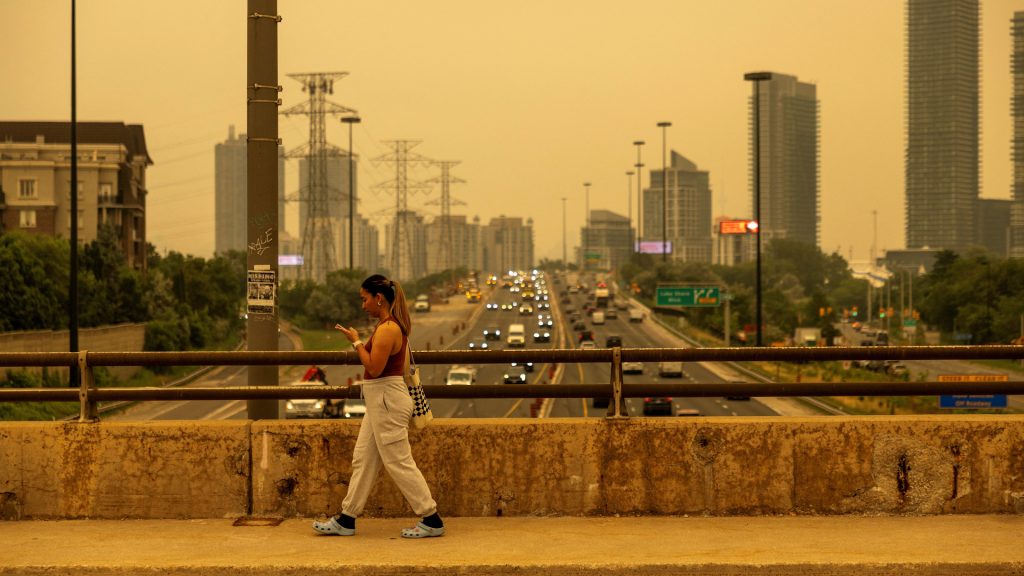
The smoke is now affecting millions of people far from the flames. Air quality reached hazardous levels in parts of northeastern Minnesota, where officials advised people to avoid outdoor activity and stay indoors.
Michigan and Wisconsin warned residents about air quality issues that could last for days. Air quality alerts also stretched into the Northeast, including New York City, Pennsylvania and Massachusetts. In parts of New England, residents in Vermont, New Hampshire and Maine reported yellowish and brownish skies.
More than 100 wildfires were also burning in Canada, and winds were carrying smoke southeast across the border. Forecasters said the most intense smoke could reach as far south as Washington, D.C.
Health officials said wildfire smoke can be dangerous because of fine particle pollution in the air. Pollution can cause shortness of breath, coughing, dizziness, and fatigue, and can aggravate heart and lung disease.
Officials advised people to limit time outdoors, especially children, older adults and anyone with heart or lung conditions. Experts recommended keeping windows closed, using air conditioning or air purifiers when possible and wearing an N95 mask if going outside is unavoidable.
Round out your reading
- With more prison space than prisoners, correctional facilities are shutting down.
- ‘Game changer’: New cancer treatment turns major surgery into an outpatient procedure.
- Viewers overwhelmingly support ‘The View’s’ fight against the FCC. Will that matter?
- Why an ICE shooting in Houston isn’t leading to mass protests.
- Milwaukee detective is the latest officer charged with misusing Flock cameras.
Ella Rae Greene, Editor In Chief