Education Dept. launches crackdown on school sexual misconduct, but critics question impact
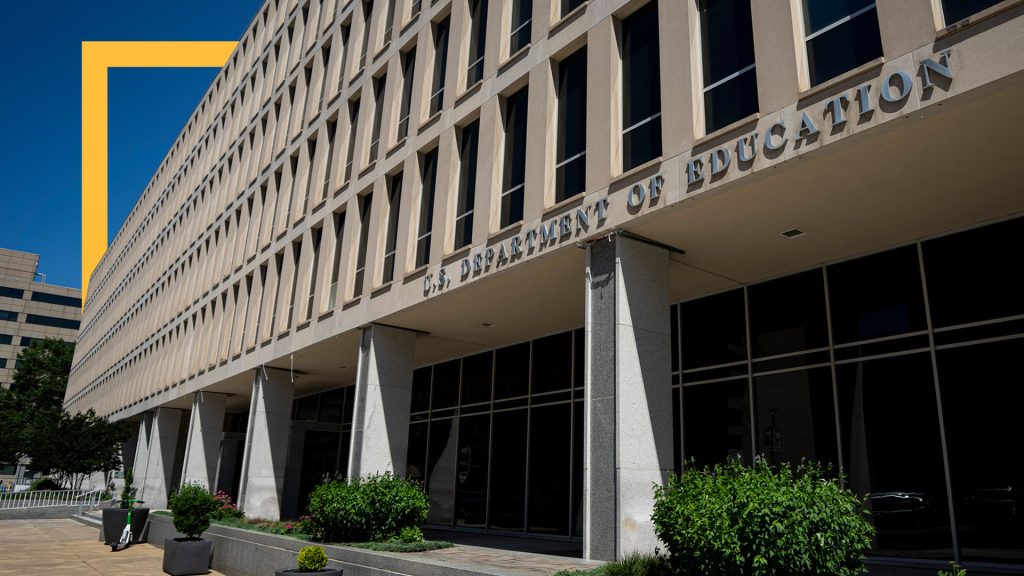
The warning from the Department of Education is clear: schools that fail to protect students from sexual predators could face consequences. But advocates want to know whether this latest move will finally change how schools handle allegations of abuse — or simply repeat a familiar cycle.
The U.S. Department of Education’s Office of Civil Rights (OCR) has launched an initiative to crack down on the issue of adults sexually assaulting students in schools. They’ve issued a “Dear Colleague” letter to lay out their plan.
“I think all of us in the community that’s trying to prevent sexual misconduct among teachers and assault on kids think the letter is a good idea, and is a step in the right direction,” Charol Shakeshaft, distinguished professor emerita from Virginia Commonwealth University, told Straight Arrow.
New initiative
The new guidance from the department reminds federally funded educational institutions that they must protect students under Title IX and the Elementary and Secondary Education Act (ESEA).
“The Department of Education has always had authority to enforce Title IX in cases of educator sexual misconduct,” Joel Levin, cofounder and program director of Stop Sexual Assault in Schools, told Straight Arrow.
That dates back to 2001 under the Bush administration when the Dept. of Education issued new regulations on enforcement under Title IX, essentially saying schools receiving federal funding must investigate harassment and assault allegations.
This new guidance from the department pushes that same message but includes the threat of losing federal funding if schools do not comply.
“Make no mistake, the Department will fully enforce federal law and employ every resource at its disposal to protect children from sexual predators,” Sec. of Education Linda McMahon wrote.
Other pushes in this initiative include preventing what’s called “pass-the-trash” practices.
That’s when school employees accused of sexual misconduct are allowed to quietly resign or transfer to another school or district, rather than the school reporting the allegations or pursuing disciplinary action.
The letter uses the example of the Los Angeles Unified School District, claiming they have an agreement with the teacher’s union to reassign teachers accused of abuse, having relations with a student and more.
That school district has countered by saying that’s not what reassignment means.
“Reassignment can often mean that a teacher is taken and placed on leave and just sent home,” Esther Warkov, cofounder and executive director of Stop Sexual Assault in Schools, told Straight Arrow. “They’re not at school.”
The new guidance also pushes for schools to accurately collect and report data and conduct meaningful investigations.
That includes conducting their own investigations and not just passing the buck to law enforcement.
The department also said it’s opening 20 investigations into school districts whose 2023-24 Civil Rights Data Collection (CRDC) submissions contained responses suggesting those districts are not properly addressing student sexual misconduct.
“We have to recognize the problem before we can do anything to solve it, and that schools are going to be held accountable, which I think is also very important,” Dr. Elizabeth Jeglic, professor of psychology at the John Jay College of Criminal Justice in New York, told Straight Arrow.
What it means
“Only thing they can really do is revoke federal funds,” Warkov said.
“That doesn’t ever really happen,” Shakeshaft added.
Otherwise, experts Straight Arrow spoke with believe this is more of a show.
“It’s sort of like a performance, trying to show that the Education Department is on top of it and is protecting students from sexual misconduct by school staff, and they’re going to do something about it, but in fact, there are already other laws that school districts are bound by,” Levin said.
Sex assault in schools is clearly a major issue and has been for many years.
Just this month, a school counselor in North Carolina was caught allegedly sexting students, a California teacher will spend nearly a decade in prison for sleeping with a student and a Texas school staff member faces serious charges for allegedly grooming a student.
“About 19% of students say they’ve been the target of sexual misconduct directed toward them by a school employee,” Shakeshaft said.
But will this letter and new initiative make a difference?
“It’s performative,” Warkov said.
“The threats are less meaningful than how to solve the problem,” Jeglic added.
When OCR opens a case like this, there are typically only a few ways it can go.
The first is to conduct a full investigation, which tends to be rarer, especially as the Trump administration moves to weaken OCR.
Another option is an Early Complaint Resolution.
“Which means no one has to go through this huge process of investigating, which is very time consuming and could take years,” Warkov said. “They get right to the matter, and they create a set of protocols that the school needs to follow in order to become Title IX compliant.”
The first Trump administration under former Sec. of Education Betsy DeVos made serious changes to Title IX regulations, especially when it comes to sexual misconduct.
Those changes included narrowing the definition of sexual harassment, asking schools to investigate only if they had actual knowledge of the assault instead of hearsay and more.
“Until that complaint process is restored to the pre-administration levels, we’re not going to see any real change,” Warkov said.
This new initiative also only focuses on schools that receive public Title IX funding.
“That doesn’t speak to private schools,” Jeglic said.
This also focuses solely on employee abuse and not peer-to-peer abuse, which is another major issue and also not as widely reported.
“I think schools are also responsible for working with youth and detecting youth-on-youth sexual abuse, and so we want to make sure that we’re highlighting the scope of the problem in its entirety,” Jeglic said.
Deptartment of Education issues
This all comes amid the Trump administration’s plan to dismantle the Deptartment of Education and public schools themselves have now become a major part of political discourse.
This new guidance also comes just a few months after Sen. Bernie Sanders, I-VT, put out a report detailing how the Trump administration’s cuts have had a major impact on sex assault cases in schools.
“When a child with a disability is denied the education they are entitled to, when a student faces racial or sexual harassment — they turn to the Office for Civil Rights for help,” Sanders said. “Yet the Trump administration has decimated this office.”
There has also been at least one congressional hearing on the issue.
“The Department of Education wants to do something to show that they’re doing something for the common good, and so it’s just a way of saving face,” Warkov said.
The Trump administration has also publicly sparred with teachers’ unions.
That continued in McMahon’s letter, which specifically called out teachers’ unions in the first paragraph of the seven-page letter.
What happens next with both the Education Department and this new initiative remains a bit unclear.
“It may or may not lead to any action,” Shakeshaft said.
Round out your reading
- With more prison space than prisoners, correctional facilities are shutting down.
- ‘Game changer’: New cancer treatment turns major surgery into an outpatient procedure.
- Viewers overwhelmingly support ‘The View’s’ fight against the FCC. Will that matter?
- Why an ICE shooting in Houston isn’t leading to mass protests.
- Milwaukee detective is the latest officer charged with misusing Flock cameras.
Ella Rae Greene, Editor In Chief