California banned ‘sell by’ dates on food. Could your state be next?
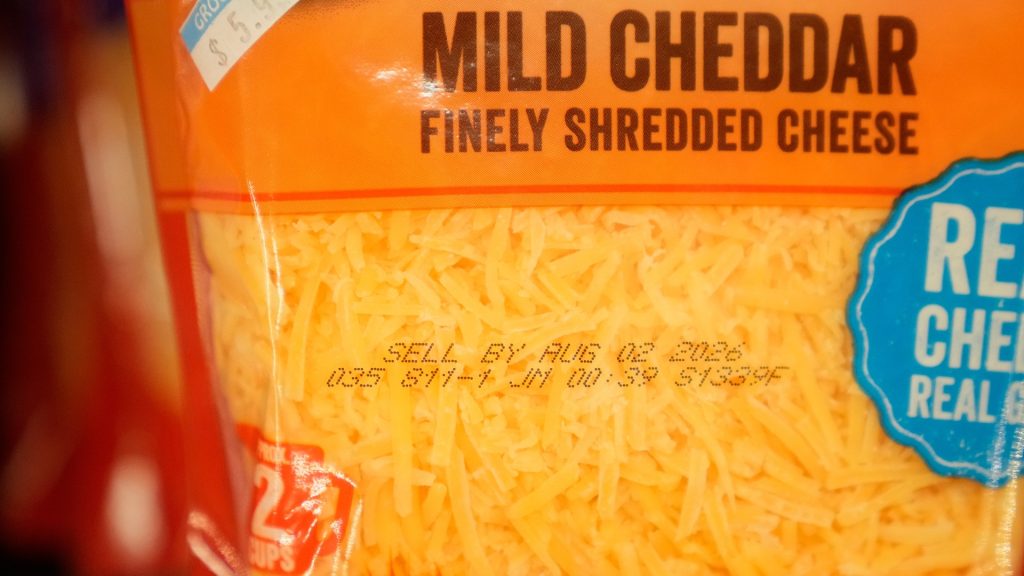
Often, Americans see a “sell by” date on a food label that has passed and ask, “Can I still eat this?” It’s a question that is about to become a lot less common for Californians.
A new law, effective as of Wednesday, bans all sell-by dates, instead requiring manufacturers to use labels that say “best if used by” or “use by.”
“Using clear, consistent date labels will help reduce confusion about when food is safe to eat, cut down on unnecessary food waste, and make it easier for consumers to make informed decisions,” the law’s author, California Assemblymember Jacqui Irwin, wrote on X. “A simple change with meaningful benefits for families, businesses, and the environment.”
Starting July 1, 2026, California’s standardized food date labeling law #AB660 takes effect!
Using clear, consistent date labels will help reduce confusion about when food is safe to eat, cut down on unnecessary food waste, and make it easier for consumers to make informed…— ASM Jacqui Irwin (@ASM_Irwin) June 30, 2026


California is the first state to standardize food date labels, banning the “sell by” label entirely. It’s a label, in fact, that was never supposed to be for consumers in the first place.
Sell-by dates lead to wasted food
Sell-by dates have been widely debated for more than a decade. Harvard even published a report on food labeling in 2013 that found confusion around the intent of a sell-by label results in billions of pounds of food waste each year.
California specifically throws away 2.5 billion meals’ worth of unspoiled food each year, according to the Department of Resources Recycling and Recovery.
“We need a standardized, commonsense date labeling system that actually provides useful information to consumers, rather than the unreliable, inconsistent and piecemeal system we have today,” Emily Broad Leib, lead author of the report and director of Harvard Law School’s Food Law and Policy Clinic, said in the 2013 report.
The report recommends making “sell-by” dates invisible to consumers and establishing a more easily understood date-label system that uses unambiguous language.
Now, California is leading the charge.
From California and on to the rest of the country?
As Straight Arrow previously reported, people across the country are subject to regulations enacted in California, especially when those regulations affect manufacturing.
For example, when California was granted waivers allowing the state to have its own vehicle emissions standards, manufacturers began changing how they build EVs to cater to the nation’s largest automobile market.
In this case, manufacturers decided to change the stickers on all their products, rather than only on those sold in California.
Date stickers never needed to be there in the first place
In the realm of food, sell-by stickers never actually needed to be there in the first place. According to Smithsonian Magazine, federal law only requires that infant formula be dated. While some states have additional laws requiring dates on products like eggs, milk and meat, there is no universal rule.
Despite that, manufacturers have taken to labeling everything. Smithsonian shared a theory as to why that might be: When one of Al Capone’s family members became sick from milk, the mobster took an interest in the milk industry, Smithsonian reported. Capone purchased a milk processor and lobbied the Chicago City Council to pass a law requiring visible date stamps on milk containers, according to the story.
Food expiration dates didn’t become widespread until the 1960s. Since then, there have been efforts to eliminate the labels, but manufacturers have fought back. After all, once a fridge is free of all the food that was tossed out, consumers have to buy more.
Round out your reading
- America at 250: Straight Arrow’s week-long look at the pressures testing modern America.
- Ketamine is booming in America. The reasons go beyond drugs.
- Cluster of AI news sites suddenly goes dark after human reporter starts asking questions.
- A 79-year-old, obese, well-connected man gained exclusive access to a new weight loss drug. Is it Trump?
- Newsom pushes national wealth tax after opposing California billionaire tax.
Ella Rae Greene, Editor In Chief