Did rising egg prices seem illegal? Turns out, they were
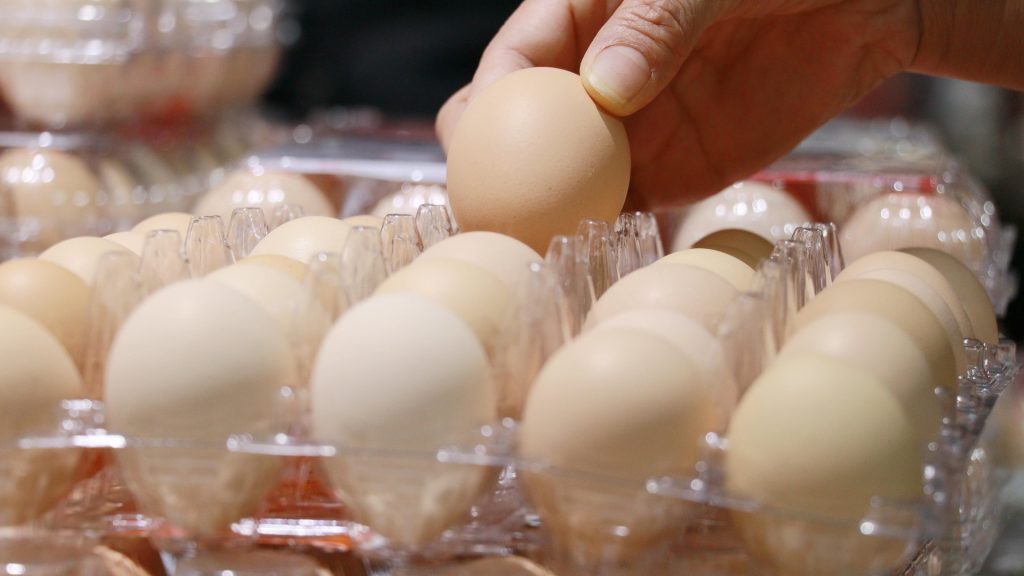
For years, egg prices have been a topic of discussion among Americans, in the media and even in the federal government.
People were doing everything they could to offset the costs, from refusing to use real eggs at Easter to purchasing chickens to collect their own eggs. Even the White House faced criticism for using pricey real eggs at its annual Easter Egg Roll.
Now, officials say that prices might have been, in fact, higher than they should’ve been. Perhaps even illegally too high.
A new settlement
On Tuesday, the Department of Justice announced that it and more than a dozen states had reached a settlement with three leading U.S. egg producers.
The settlement claims that the companies conspired to manipulate egg prices between 2022 and 2025 — a theory that federal antitrust enforcers and state attorneys general investigated.
“We are proud that these settlements will keep egg prices competitive and keep money in the hands of consumers across the country,” Deputy Assistant Attorney General Nicole Sarrine said in a statement.
According to the DOJ, the three companies — Cal-Maine Foods, Versova/Centrum and Hickman’s Egg Ranch — provide eggs to grocery stores, restaurants and retailers across the U.S.
How did they do it? And what’s the punishment?
The companies are accused of collaborating to artificially inflate daily egg price quotations, essentially claiming a greater demand for eggs than actually existed.
They reportedly sent bids to Urner Barry, a market reporting company that releases daily quotations that serve as a benchmark for the egg industry. Urner Barry’s analysis helped retailers price their eggs for sale to consumers.
“Every year, billions of eggs are sold with prices based on Urner Barry’s price quotations,” the DOJ wrote.
In its lawsuit, the DOJ cited text messages that the owners of the egg companies sent to each other, in which they discussed plans to “hold” market prices. The companies allegedly planned to bid “early and often,” making it appear as though there was a market for more eggs than they could produce.
“As a group we need to bid like they vote in Chicago, early and often,” an alleged co-conspirator said, according to a federal court complaint.
As part of the settlement, the companies are required to donate 53 million eggs to food banks and community organizations in states participating in the lawsuit. The companies also will have to pay those states a total of $3.3 million.
Companies continue to deny wrongdoing
Despite the settlement, the companies released statements denying any wrongdoing.
Cal-Maine called the allegations “baseless” in a statement to CBS News, and Versova said it’s “pleased the U.S. Department of Justice investigation has been resolved without any finding of or admission of wrongdoing.”
The DOJ says its settlement will deter companies from working with competitors to influence egg prices.
What egg prices really looked like
According to the U.S. Bureau of Labor Statistics, the average price of grade A large eggs cost around $1.53 in March 2020.
By December 2022, that number had spiked to $4.25. And by March 2025? It cost Americans, on average, $6.23 for a carton of eggs.
It’s worth noting that other factors also played a role in these prices, including the bird flu, which resulted in the depopulation of roughly 44 million hens in 2023, as Straight Arrow previously reported.
Round out your reading
- America at 250: Straight Arrow’s week-long look at the pressures testing modern America.
- Ketamine is booming in America. The reasons go beyond drugs.
- Cluster of AI news sites suddenly goes dark after human reporter starts asking questions.
- A 79-year-old, obese, well-connected man gained exclusive access to a new weight loss drug. Is it Trump?
- Newsom pushes national wealth tax after opposing California billionaire tax.
Ella Rae Greene, Editor In Chief