Court expands presidential power over independent agencies — but not the Fed
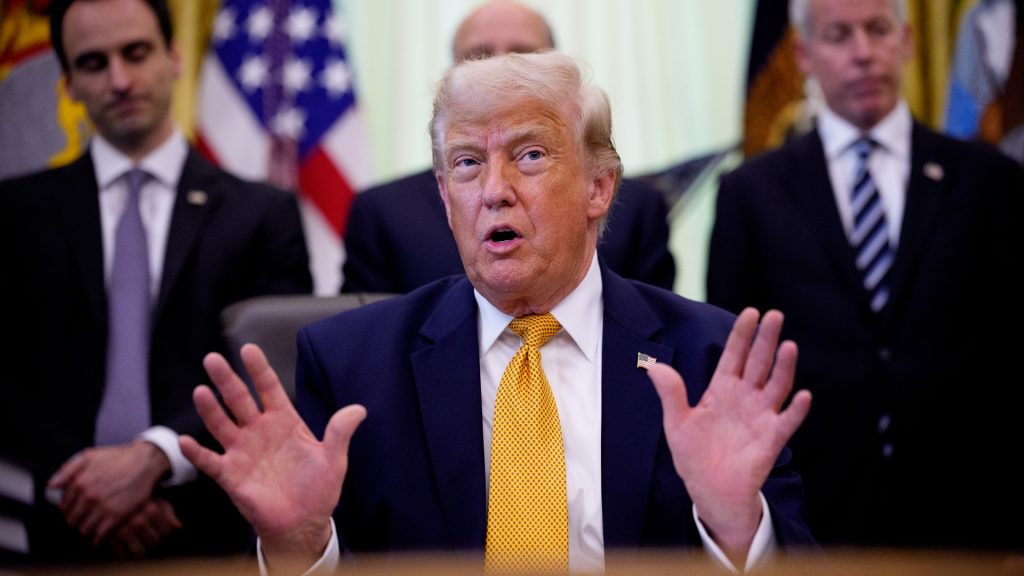
The Supreme Court overturned nine decades of precedent curbing executive power when it ruled Monday that President Donald Trump can fire Rebecca Slaughter from the Federal Trade Commission, paving the way for other presidents to terminate employees of independent agencies and commissions.
However, the court carved out an exemption — at least for now — for the Federal Reserve, blocking Trump’s attempt to fire Lisa Cook, a Fed governor.
Chief Justice John Roberts wrote both opinions.
Trump was pleased.
“BIG WIN just moments ago at the Supreme Court, in the Slaughter Case, confirming Presidential Power in our Country to remove Executive Branch Officers and Agency Appointees, or Representatives, under Article II,” Trump wrote on Truth Social. “It is such an Honor to be the sitting President who won this Historic and Unprecedented Ruling, one of the most important ever given with respect to Presidential Powers.”
Slaughter case
By allowing Trump to fire Slaughter and other independent regulators, the court greatly expanded presidential authority over a variety of regulatory agencies, overruling the court’s ruling in Humphrey’s Executor v. United States in 1935.
The court split 6-3 along ideological lines.
“Today, this Court undoes centuries of political practice and concludes that all three branches of Government have been acting in open defiance of the Constitution all this time,” Justice Sonia Sotomayor wrote in a dissent. “Its conclusion is wrong.”
Cook case
But in a related case, the court ruled 5-4 that the Federal Reserve plays a unique role, and that the president is not allowed to fire governors of the central bank.
In 2025, Trump attempted to fire Cook, a Biden appointee, saying she committed mortgage fraud by claiming two homes as her primary residence to obtain lower interest rates. Cook denied the allegation.
Cook sued to keep her position, arguing that if a president can fire a Fed governor without cause, it could undermine the institution’s independence. She would have been the first governor removed by a president in the Fed’s history.
The court ruled that Cook can stay in office — for now, at least until her lawsuit is resolved.
Round out your reading
- America at 250: Straight Arrow’s week-long look at the pressures testing modern America.
- Ketamine is booming in America. The reasons go beyond drugs.
- Cluster of AI news sites suddenly goes dark after human reporter starts asking questions.
- A 79-year-old, obese, well-connected man gained exclusive access to a new weight loss drug. Is it Trump?
- Newsom pushes national wealth tax after opposing California billionaire tax.
Ella Rae Greene, Editor In Chief