The US has classified code as weapons before. It didn’t work out for them
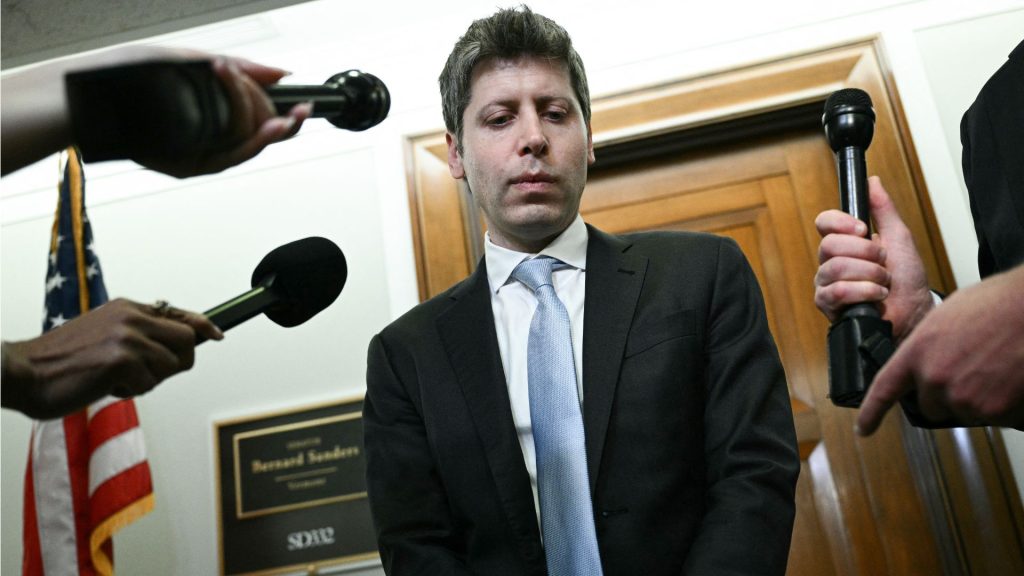
OpenAI CEO Sam Altman is going along with a process he’s told his staff isn’t how he wants to work in the long term: handing the government a say in who gets to use the company’s newest model.
According to The Guardian, GPT-5.6 will ship to only a small group of partners first, with the government “approving access customer by customer during this preview period” before a wider release. The request came from the White House’s Office of the National Cyber Director and the Office of Science and Technology Policy, with Commerce Secretary Howard Lutnick personally pressing Altman to secure sign-off from other agencies before OpenAI moved forward, even for a limited rollout.
Just weeks earlier, a federal directive forced Anthropic to disable access to its two most advanced models entirely. This wasn’t over a specific disclosed flaw but rather over the concern that foreign nationals could use the technology. A company that lost access is now suing the government over the order.
Both firms are currently navigating a reality historically reserved for arms manufacturers as the government intervenes directly in the rollout schedule for frontier AI.
The administration’s reversal
Just a year before this week’s GPT-5.6 negotiations, the Trump administration was telling the opposite story. At the Paris AI Action Summit in February 2025, Vice President JD Vance told European leaders that the U.S. believed stringent AI regulations could harm the industry.
“We believe that excessive regulation of the AI sector could kill a transformative industry,” Vance said at the time, CNN reports, urging European leaders to adopt the same deregulatory posture.
During that summit, the U.S. and the United Kingdom both declined to sign a joint declaration on AI safety. But now, 16 months later, the administration is personally calling AI executives to halt a launch.
This isn’t uncharted territory. It’s a similar fight from the 1990s, but the difference is in direction. Back then, the White House started restrictive, before the courts opened it up. This time, the federal government started loose and is now tightening its belt on its own.
History lesson
Back in the early 1990s, the U.S. government classified strong encryption as literal munitions, placing it on the United States Munitions List. This list covered actual weapons, with the State Department controlling exports while the Commerce Department handled lower-stakes dual-use technology.
The policy encountered issues after Berkeley student Daniel Bernstein developed “Snuffle,” an encryption algorithm. Bernstein wanted to publish the program online, but the rules required him to register as an arms dealer and obtain a government license first. If he didn’t, he could face civil and criminal penalties.
Bernstein sued, and a federal judge ruled that code is speech, protected by the First Amendment. That ruling pushed the Clinton administration to act. In November 1996, former President Bill Clinton signed an executive order moving most commercial encryption from the Munitions List to the Commerce Control List, which had far fewer restrictions.
A Ninth Circuit panel later went further, ruling in 1999 that the government’s publishing restrictions were unconstitutional. But that opinion was pulled for a rehearing that never finished after regulators loosened the rules again before the court could rule. The case fizzled out a few years later on a technicality, without ever producing a final appellate verdict. The restrictions were already gone by that point.
How does AI fit into this?
Courts have only ever found that code counts as speech in narrow circumstances. For example, courts have ruled that it counts as speech when it resembles ordinary communications and its expressive value outweighs the job it’s actually doing, not simply because it’s made of text.
But a growing body of legal experts argues that model weights, the underlying components that comprise a trained AI model, don’t clear that threshold. University of Minnesota law professor Alan Rozenshtein argues there’s no reason to automatically treat the distribution of model weights as protected by the First Amendment, unlike the academic research and human-readable source code used to build them.
Other legal analyses frame it even more bluntly, saying the First Amendment likely protects model algorithms, but not the weights themselves.
That distinction makes it different from the Bernstein case. The papers and code describing how GPT-5.6 works likely carry real constitutional weight. But the weights themselves, the actual files the government is restricting, sit on much shakier ground, and nobody’s been forced into court to settle that question — yet.
What happens next?
The legal fight is already playing out in court, just in a different case than the one getting attention now. In March, Anthropic sued the Department of Defense over a “supply chain risk” designation. The company argued that the DOD was retaliating against Anthropic’s refusal to allow the Pentagon to use Claude for autonomous weapons and mass surveillance.
A coalition of groups filed a brief backing Anthropic, arguing the government’s demand amounted to a First Amendment violation.
“Requiring Claude to express ideas that Anthropic does not wish to express is classic compelled speech, which lies in the heartland of First Amendment’s prohibitions,” the groups wrote.
Judge Rita Lin agreed, finding Anthropic would likely succeed on its First Amendment retaliation claim and granted a preliminary injunction.
The export control directive that hit Anthropic in June immediately drew comparisons to the 1990s encryption fight. But the lawsuit that actually followed over that directive didn’t make a First Amendment argument. Instead, it stuck to narrower legal arguments about what the export-control law actually covers.
This leaves the real question unanswered. Bernstein’s case held that code is protected speech under the correct conditions. Whether that protection extends to a model’s actual weights, as the government continues to tighten restrictions, remains untested.
Round out your reading
- Not red or blue: America’s politically homeless middle.
- Peter Thiel’s ‘Dialog’ network was super-secret. A data leak changed that.
- The novel legal strategy that Taylor Swift and Matthew McConaughey are using to fight AI.
- Illinois balances budget with new $200 million social media tax that tracks in-state users.
- When Trump serves up ‘Just the News,’ it comes with a side of bias.
Ella Rae Greene, Editor In Chief