SCOTUS stakes Hawaii’s ‘vampire’ gun rule, stopping other state attempts
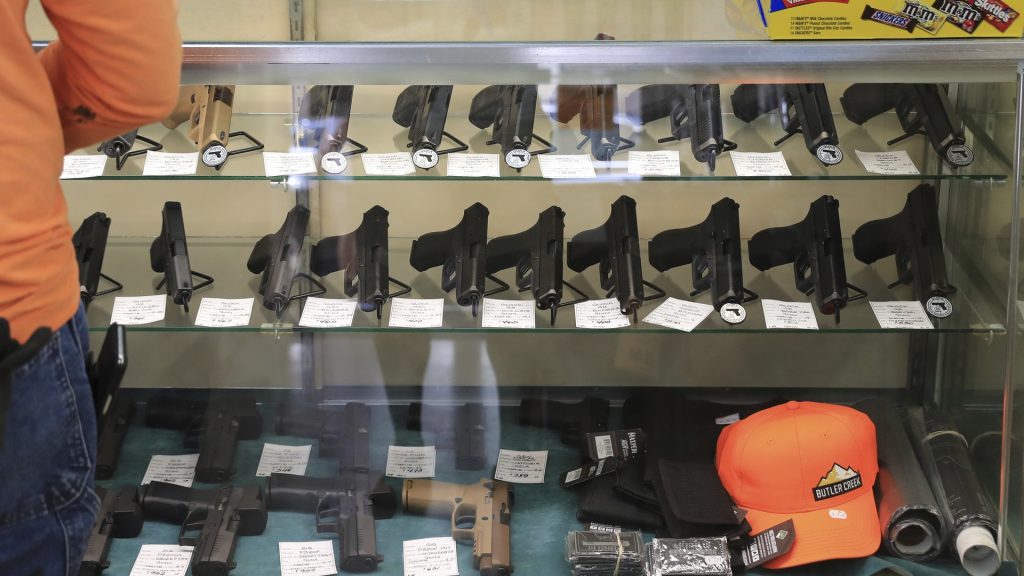
In the movies, killing the original vampire leaves its minions reduced to ash and flames. The Supreme Court on Thursday set forth a similar chain reaction across the country when it ruled Hawaii’s “vampire” gun law runs afoul of the Constitution.
Justices in the 6-3 majority ruled that Hawaii’s law requiring express permission from a property owner to carry a firearm violated the Second Amendment. The ruling reverses an appellate court’s decision upholding the law.
The 2023 law struck down on Thursday was often referred to as a “vampire” law, a reference to the fictional Count Dracula, who may enter a household only by invitation.
The ruling was one of several handed down in the twilight of the Supreme Court’s current term.
At the heart of the case was whether a gun owner should need express permission or enjoy an implied permission until told otherwise.
In the majority opinion, Justice Samuel Alito said the restriction would leave lawful gun owners worried about whether entering many of the businesses they frequent would amount to committing a crime.
“This regime hobbles what the Second Amendment protects: the right of Americans to carry arms for self-defense as they go about their daily lives,” he wrote.
In a dissent, Justice Ketanji Brown Jackson said the case was more about property rights than the Second Amendment.
“Today’s decision makes one thing clear: The Court’s objective is protecting guns, not consistently preserving any principle of law,” she wrote.
Alito responded to this thought in a footnote, saying that “states may not adopt property-law rules that violate constitutional rights.”
‘Spirit of Aloha’
The state’s argument in this case included a novel approach that it called the “Spirit of Aloha.”
It cited pre-statehood laws under King Kamehameha III that banned dangerous weapons. The colonial king instituted a ban in 1833 as one of the kingdom’s first laws. For years after it became a state in 1959, Hawaii maintained strict gun laws following the spirit of those colonial laws.
The majority dismissed the state’s argument, saying that “local attitudes can neither shrink nor inflate the meaning of fundamental Bill of Rights guarantees that apply to the States through the Fourteenth Amendment.”
Other states affected
Hawaii’s law was similar to others enacted in response to the Supreme Court’s 2022 ruling in New York State Rifle & Pistol Ass’n v. Bruen, which affirmed the public’s right to armed self-defense in public.
According to Hawaiian attorneys, five other states either enacted laws or were considering them, depending on how the high court ruled in the case decided Thursday.
Not a free-for-all
An important distinction in the ruling is that it does not bar a property owner from posting signs saying that firearms aren’t allowed.
“Private property owners can absolutely still exclude firearms from their property (even if it is open to the public) if they so choose, either by posting signage or requesting armed patrons leave,” Jake Fogleman, director of policy with the right-leaning Independence Institute, said in a post to X.
He added that the court merely flipped the onus of banning firearms on the property owner instead of a gun owner having to assume guns aren’t welcome on a property.
Round out your reading
- Not red or blue: America’s politically homeless middle.
- Peter Thiel’s ‘Dialog’ network was super-secret. A data leak changed that.
- The novel legal strategy that Taylor Swift and Matthew McConaughey are using to fight AI.
- Illinois balances budget with new $200 million social media tax that tracks in-state users.
- When Trump serves up ‘Just the News,’ it comes with a side of bias.
Ella Rae Greene, Editor In Chief