Scientists warned California’s biggest faults were under stress. Then the ground shook
A magnitude 5.6 earthquake struck Northern California on Wednesday, marking the region’s strongest earthquake since 1940 and renewing attention to a recent study that found Southern California’s two largest fault systems are carrying the highest stress levels in at least 1,000 years.
The U.S. Geological Survey placed the epicenter about 7 miles northwest of Willits in Mendocino County. The quake struck at a depth of roughly 5 miles.
Officials said hospitals reported some injuries, but there were no immediate reports of major damage. More than 6,000 customers across six nearby communities briefly lost power, according to Mendocino County officials.
Study warns of elevated stress
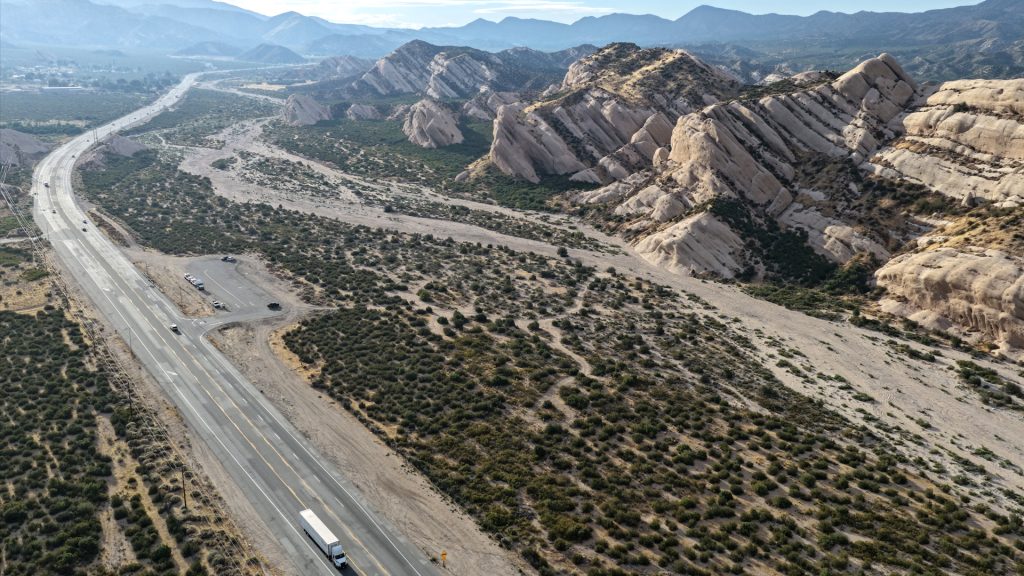
The earthquake occurred just days after researchers published a study concluding the Southern San Andreas and San Jacinto fault systems are in a “critically loaded state” after centuries of accumulating stress.

Researchers used geological evidence, including sediment records and tree-ring data, to reconstruct how pressure has built over time. They stressed the findings do not predict when a major earthquake will occur, only that the faults are carrying unusually high levels of stored energy.
Ahmed Elbanna, director of the Statewide California Earthquake Center, told LAist that a major earthquake could happen “today, tomorrow, or in 10 years, or in 30 years.”
Limited damage in the north
Veteran California seismologist Lucy Jones told The Associated Press the Mendocino County area experiences earthquakes regularly, though they are typically smaller.

She said aftershocks were likely but would “probably stay on the low side.” Three smaller quakes under magnitude 2.7 struck near the epicenter within an hour.
Residents described strong shaking that knocked dishes, bottles and picture frames off shelves. County officials urged people to stay off roads while crews inspected bridges, utilities and other infrastructure.
California’s MyShake early warning system issued nearly 657,000 alerts before the strongest shaking arrived. Scientists with the ShakeAlert program said more than one million alerts were ultimately delivered across all warning systems.
Other earthquakes around the Pacific
Wednesday’s quake came during an unusually active period around the Pacific.
In Venezuela, back-to-back magnitude 7.2 and 7.5 earthquakes killed at least 164 people and injured nearly 1,000. The United States has pledged search-and-rescue teams, medical support and humanitarian aid.
Hours later, a magnitude 7.2 earthquake struck off northern Japan’s coast.
Officials reported several injuries but no tsunami and no problems at the Fukushima Daiichi nuclear plant.

Round out your reading
- Not red or blue: America’s politically homeless middle.
- Peter Thiel’s ‘Dialog’ network was super-secret. A data leak changed that.
- The novel legal strategy that Taylor Swift and Matthew McConaughey are using to fight AI.
- Illinois balances budget with new $200 million social media tax that tracks in-state users.
- When Trump serves up ‘Just the News,’ it comes with a side of bias.
Ella Rae Greene, Editor In Chief