Campaign cash at Disney World? Here’s the legal loophole lawmakers use
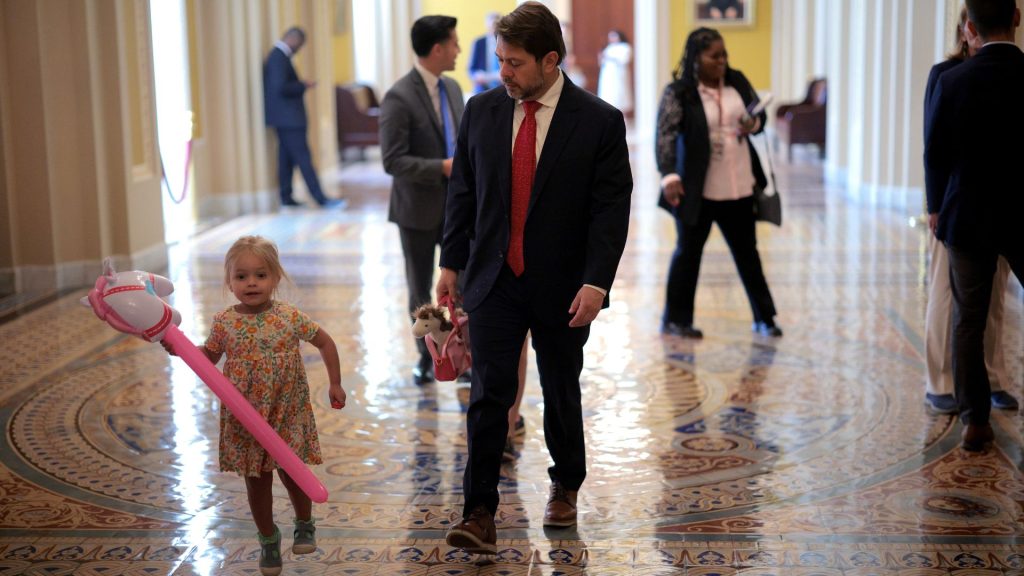
Just months after Sen. Ruben Gallego, D-Ariz., faced criticism over his friendship with former Sen. Eric Swalwell, D-Calif., he is once again facing new criticism — his use of his campaign funds.
This week, Politico published an article about Gallego’s spending of his leadership PAC, a political action committee, to finance family trips to Miami, Chicago and even both Disney resorts. The outlet also reported that he has used more than $18,000 in child care reimbursements since 2019.
Gallego told Politico that he was well within his legal rights to use the funds in these ways, saying in a statement that the funds were “permitted by the FEC.” But the use of campaign funds raises ethical questions about what is and what isn’t permitted by the Federal Elections Commission.
What are the rules?
The FEC’s legal standard for campaign finances is called the “irrespective test,” and there’s a simple idea behind it.
The regulation asks one question for every dollar in a campaign fund: Would this expense exist even if the person weren’t running for office? If the answer is yes, then it’s for personal use and using campaign contributions for personal use is illegal.
But other expenses are automatically prohibited. FEC rules flatly ban spending campaign money on groceries, rent or mortgage payments, tuition, salaries for family members who aren’t doing real work, and clothing beyond campaign T-shirts.
Sports and concert tickets are also on that list, but there’s one way around that: they’re allowed if the event is “part of a specific campaign or officeholder activity.”
In February 2023, weeks after Gallego launched his Senate campaign to replace former Arizona Sen. Kyrsten Sinema, Gallego, his family, Swalwell, his then-chief of staff and several donors attended Super Bowl LVII, according to Politico. The event was billed as a fundraiser for the “Swallego Victory Fund,” with tickets to attend costing donors $5,000.
Gallego used the FEC’s sporting event provision to legally justify the event.
Where things get messy
Not every campaign expense is automatically banned. Childcare is one area where the FEC goes on a case-by-case basis.
In 2018, the FEC ruled that Liuba Grechen Shirley, who was running for a House seat in New York, could use campaign donations for childcare reimbursements. The FEC allowed her to use the funds because it was a direct result of her campaign, not her parenthood. Years later, the FEC extended that logic to Swalwell.
The real legal gray area is structural, not categorical. The personal-use ban binds a candidate’s official campaign account, but leadership PACs — the same kind that Gallego used for his Disney trips — may not be.
The FEC has previously ruled that the personal-use statute only applies to a “campaign account,” and a leadership PAC technically isn’t one. Watchdog groups have pressed the FEC to close the gap since 2018, but it hasn’t budged.
The same reasoning allowed a leadership PAC tied to former Rep. Ileana Ros-Lehtinen, R-Fla., to pay for Disney World tickets after she left Congress. The FEC never pursued a case against her, and now Gallego is facing similar questions.
How often does this happen?
Gallego isn’t an outlier but one entry in a long, bipartisan list.
In February 2026, the Campaign Legal Center accused Sinema of converting more than $700,000 to personal use after leaving office. These expenses included luxury resorts, meals and staff salaries paid months past the legal wind-down limit.
A month later, the National Legal and Policy Center filed a complaint alleging Rep. Alexandria Ocasio-Cortez, D-N.Y., spent nearly $19,000 in campaign financing on a psychiatrist and billed it as “leadership training and consulting.”
Republicans have also faced criticism for their use of campaign financing. Two Texas Republicans, Reps. Ronny Jackson and Wesley Hunt have spent years fighting off a House ethics probe over campaign money paid to private dining clubs. Both were cleared of any wrongdoing, according to The Texas Tribune.
What’s next?
Campaign Legal Center and Issue One have both asked the FEC to close the leadership PAC loophole since 2018. But the FEC has declined to act.
Congress has introduced bills that would do that. But those bills have died in committee. The most recent bill, the Political Accountability and Transparency Act of 2024, was introduced but never made it out of committee.
Congress has introduced bills that would do that. But those bills have died in committee. The most recent bill, the Political Accountability and Transparency Act of 2024, was introduced but never made it out of committee.
Round out your reading
- Not red or blue: America’s politically homeless middle.
- Peter Thiel’s ‘Dialog’ network was super-secret. A data leak changed that.
- The novel legal strategy that Taylor Swift and Matthew McConaughey are using to fight AI.
- Illinois balances budget with new $200 million social media tax that tracks in-state users.
- When Trump serves up ‘Just the News,’ it comes with a side of bias.
Ella Rae Greene, Editor In Chief