As Musk becomes the first trillionaire, historian sees warning signs
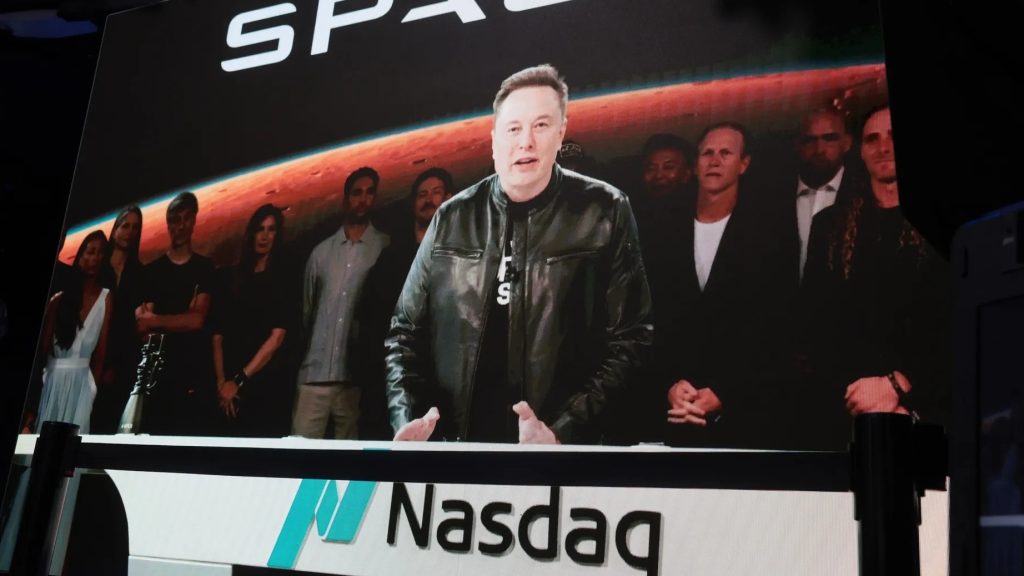
As Elon Musk’s net worth rocketed past the trillion-dollar mark with Friday’s record-setting initial public offering of SpaceX, analysts have scrambled to put that unfathomable level of wealth into perspective. Still, the human mind struggles to grasp what a trillion dollars in the hands of one person truly looks like.
Straight Arrow spoke to economic and social historian Guido Alfani, whose most recent book, “As Gods Among Men: A History of the Rich in the West,” explores the super-rich and the role they have played in society over the last thousand years.
Alfani said Musk might well be the wealthiest person who has ever lived.
The growing concentration of wealth, the erosion of the social contract between the ultrawealthy and the public, and now the arrival of the world’s first trillionaire could threaten our social order and democracy, he said.
Our conversation with Alfani has been lightly edited for length and clarity.
Lauren Pearle: As an economic historian and expert on the super-wealthy, what’s your reaction to Elon Musk becoming the world’s first trillionaire? Is this a potentially dangerous development as inequality continues to widen?
Guido Alfani: In some respects, the emergence of the first trillionaire is simply the consequence of a much larger, and much more globalized, world economy. Which is not to say that it does not pose any danger.
In the western tradition of political thought, we find an important commonality: from the times of Aristotle in the fourth century BCE to Thomas Piketty in the 21st century, an excessive concentration of wealth has been considered inimical to democracy.
This is also what the Founding Fathers of the United States believed about 250 years ago, when the U.S. had the most egalitarian wealth distribution of all the large countries of the West. So, at least from a political point of view, the appearance of the first trillionaire should give us pause.
Lauren Pearle: Your book discusses how, in past generations, the very rich felt a responsibility to give back to their communities. How has the social contract between U.S. billionaires and everyday Americans changed over the years?
Guido Alfani: Up until at least the first half of the 20th century, U.S. billionaires essentially performed the traditional social role assigned to the “bourgeois” rich in the West since the 15th century: helping their communities in times of crisis.
Their wealth, derived from commerce, manufacture, or finance, seemed highly suspicious, even downright sinful, to medieval theologians: hence the need to find a role for the rich to play, as a means of integrating them into society.
And they did perform this role: as late as the 20th century, the wealth of the richest was tapped to help fund the military effort during the world wars, through the expansion of highly progressive taxation of pretty much everything — income, wealth, and inheritances.
In the U.S., during the crisis of the 1930s, President Roosevelt also asked the richest to contribute more than the other strata of society to foot the bill for the crisis, again through progressive taxation.
But what about now? In the 21st century, unfortunately, we have experienced a long series of crises already: the Great Recession, which began in 2008, the sovereign debt crisis in some European countries, and the COVID-19 crisis.
In all these instances, across Western countries, there has been a widespread call for society to make the rich contribute more to crisis relief — but nothing was done in this respect in virtually any Western country, and the U.S. is not an exception. Think of Joe Biden’s failed attempts to introduce a so-called “billionaire tax.”
So, to me, it is clear that, in the U.S., as elsewhere in the West, the very rich are no longer fulfilling the social contract that they had accepted (or were forced to accept) since the end of the Middle Ages.
Which makes the answer to the question, “What is their wealth for?”, unclear — and this is the kind of question that, when it goes unanswered, inevitably tends to foster social unrest.
Lauren Pearle: How does the wealth and access of today’s billionaires stack up to that of the robber barons and ultra-rich of the past?
Guido Alfani: It is very difficult to make direct comparisons of wealth levels over time, especially over a long span of time.
Maybe the best option is to do what the great British economist of the 18th century, Adam Smith, suggested: roughly compare the human labor that could be bought with the expected income generated by a given fortune in the time and place to which each wealthy individual belonged.
If we do this, we find a sort of confirmation of the widespread impression that today’s super-rich are unmatched in history.
Elon Musk might well be the wealthiest person who has ever lived, excluding emperors or other rulers whose wealth is not easily distinguishable from that of the state. In 2025, he could have commanded the work of 557,800 people.
This is far more than Bill Gates could command in 2005, when he was the richest person in the world (75,000 people), or more than John D. Rockefeller could in 1937 (116,000 people).
The truly extreme wealth of today’s wealthiest is somewhat scary, especially considering how much it has grown in comparison with just a couple of decades ago.
Also, as humans, the super wealthy can, and do, make mistakes. The size and significance of the mistakes that one of today’s super-rich individuals could theoretically make are as historically unprecedented as their wealth.
Lauren Pearle: Have the consumption patterns of the ultra-wealthy changed over the past generations?
Guido Alfani: There are examples of levels of consumption that would have been unthinkable in the past not only for technological reasons, but also for the sheer size of the wealth that they require. Think of Jeff Bezos’ first-ever tourist trip into orbit in 2021.

There is also another novelty: some of these forms of consumption, surely including orbital tourism, would probably have been considered immoderate and therefore best either avoided or indulged privately until a few decades ago.
I am sure that many among the very wealthy still think this way, but it is also clear that at least some super-rich individuals today no longer care what society thinks about their consumption and their overall behavior.
Lauren Pearle: And finally, what are some potential worst-case scenarios if the gulf between the American working class and middle class and the ultra-wealthy continues to widen?
Guido Alfani: On the one hand, several studies have shown that, across history, excessive economic inequality tends to lead to widespread revolts, even revolutions. So, a theoretically possible outcome of continued inequality growth is revolution and widespread violence. We are talking about massive levels of death and suffering here, and nobody should want that.
On the other hand, one can imagine that, when the ultra-wealthy’s command of economic resources gets closer to being absolute, they might not stop there and could also seek to control politics.
One super-rich individual could then rule, as a sort of modern dictator, or a small group could rule as an oligarchy of wealth. This would mean the end of democracy.
Round out your reading
- People are overdosing on GLP-1 injections. What does that look like?
- Researchers put chatbots in a simulation. Grok ended the world in 4 days.
- Fearing more e-bike injuries, Illinois looks to become 10th state to mandate registration, insurance.
- Why are young professionals facing such a tough job market? Hint: It’s not just AI.
- We’re building a new Straight Arrow. Help us shape our future by taking our survey.
Ella Rae Greene, Editor In Chief