Texas governor pushes new rules for data centers as voters sour on big tech
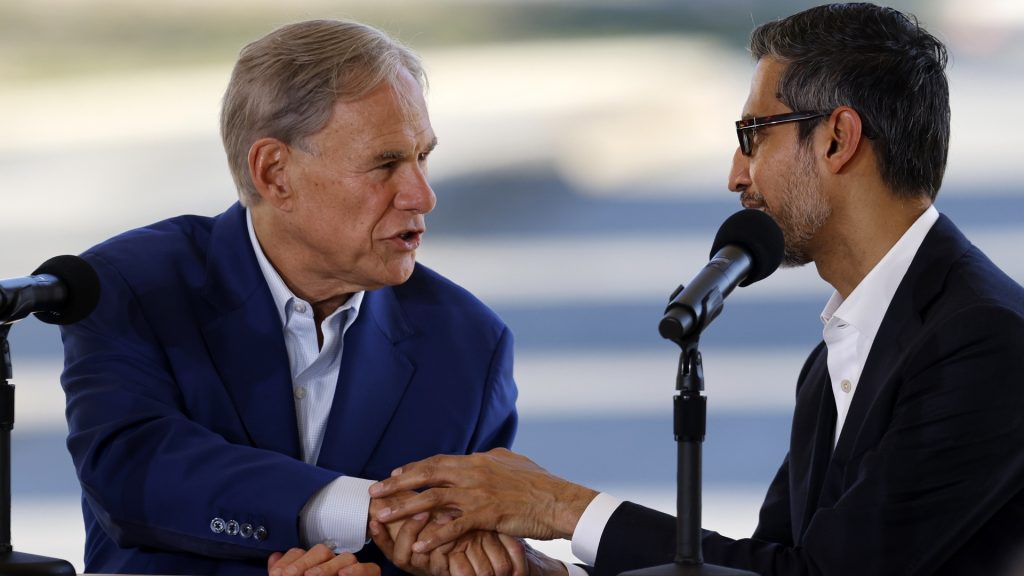
Texas Gov. Greg Abbott issued a directive Wednesday to increase government oversight of data centers and protect consumers.
“The rapid scale of data center development requires oversight to ensure everyday Texans are not burdened with the costs of infrastructure driven by data center expansion,” Abbott wrote in a letter to Chairman of the Public Utilities Commission of Texas, Thomas Gleeson, and the CEO of the Electric Reliability Council of Texas (ERCOT), Pablo Vegas.
In the letter, Abbott directed the utilities commission to take steps to ensure that data center developers pay for all of the electricity and related infrastructure needed to serve them. Moreover, Abbott said he wants data center development to result in lower electricity bills. And he asked the commission and ERCOT to identify actions they can take to protect consumers. His deadline: July 17.
Texas is among the fastest-growing data center markets in the U.S. with at least 528 facilities either operational or in planning stages, according to the Texas Tribune. Abbott’s letter comes as the political backlash against the tech industry is growing — with a majority of both Democrats and Republicans now opposed to data center construction in their communities.
What impact are data centers having on Texas?
ERCOT has projected that peak electricity demand in the state could reach 367,790 megawatts by 2032 — roughly four times more than the previous demand record set in 2023. The real demand will likely be lower, ERCOT has said, because not all large load data centers will be built. But the conclusion is clear: Texas needs more electricity.
And the amount of power the state needs is already rising. This summer, ERCOT expects its peak demand to hit 92,200 megawatts — up 8% since 2023. Much like the rest of the country, Texans have seen their electricity bills rise, and data centers’ impact on electricity supply and demand is a part of that equation.
Communities across the state are pushing back against data center development, driven largely by how much water data centers are capable of consuming. From Hays County, south of Austin to Alvin, south of Houston, several local governments considered ordinances against data centers this week.
Abbott’s letter also lays out priorities for the next Texas Legislative Session, which kicks off in 2027. Those include requiring data centers to disclose annual water and electricity consumption data and mandating the use of the water-efficient technology available. And Abbott called for repealing sales tax exemptions that are estimated to sap $3.3 billion from the state’s biennial budget.
“We’re encouraged to see Governor Abbott call for greater water efficiency and elimination of subsidies that have helped fuel unchecked growth,” said Luke Metzger, executive director of the nonprofit Environment Texas. However, Metzger went a step further, urging lawmakers to crack down on pollution from gas power plants and diesel backup generators that many data centers rely on.
An election year issue
“It’s an election year,” University of Houston Energy Fellow Ed Hirs told Straight Arrow, when asked why he believes Abbott is taking on the data center issue now. “Affordability, and in particular, affordability of energy has suddenly jumped up from bottom of the second page to middle of the first page in voter concerns.”
Abbott’s Democrat opponent, State Representative Gina Hinojosa responded with a statement that Abbott is “backtracking” after he “helped create the most generous tax dollar giveaway to data centers in the country.”
Abbott is the latest addition to the list of state governors calling for greater oversight of data centers. JB Pritzker of Illinois and Mike DeWine of Ohio have both paused their states’ tax incentives for data centers in recent weeks.
Round out your reading
- People are overdosing on GLP-1 injections. What does that look like?
- Researchers put chatbots in a simulation. Grok ended the world in 4 days.
- Fearing more e-bike injuries, Illinois looks to become 10th state to mandate registration, insurance.
- Why are young professionals facing such a tough job market? Hint: It’s not just AI.
- We’re building a new Straight Arrow. Help us shape our future by taking our survey.
Ella Rae Greene, Editor In Chief