House panel backs A-10 Warthog through 2030, eyes autonomous successors
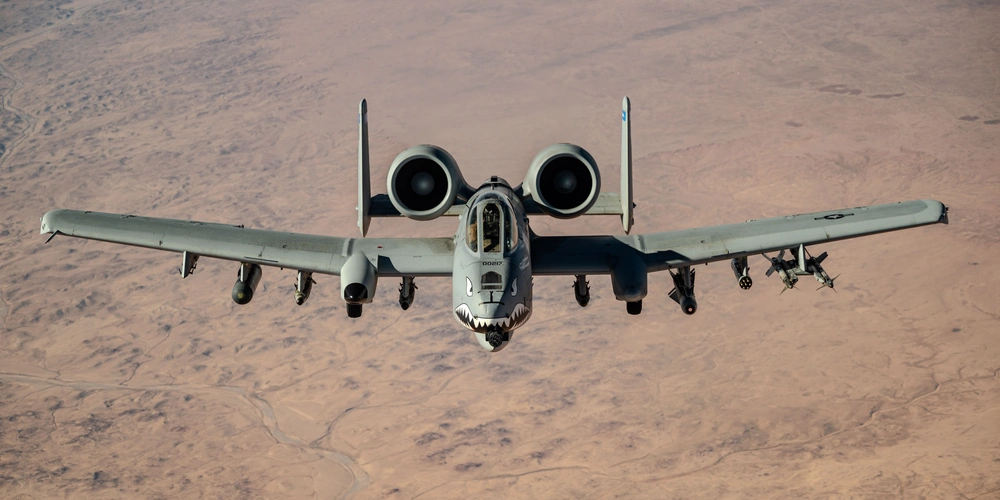
U.S. House lawmakers want the Air Force to keep the A-10 Warthog flying and combat-ready through its planned 2030 retirement while testing autonomous aircraft that could eventually take over the aging jet’s close air support mission.
The House Armed Services Committee approved the provisions as part of its fiscal year 2027 National Defense Authorization Act, which the panel passed 44-12 late Thursday after a marathon markup that stretched past midnight.
The measures, offered by Rep. Abe Hamadeh, R-Ariz., were adopted in a tactical air and land forces en bloc package.
One measure directs the Air Force to maintain enough training, depot maintenance, spare parts and contractor support to keep the A-10 fleet mission-ready through 2030, including combat search and rescue. The service ended its A-10 depot maintenance at Hill Air Force Base, Utah, in February, though the amendment’s “as necessary” language means the Air Force may simply deem reopening the depot line unnecessary.
The bill also blocks the Air Force from moving the A-10’s formal training unit without first submitting a cost-benefit analysis to Congress and waiting 90 days. The 357th Fighter Squadron at Davis-Monthan Air Force Base, Arizona, the service’s only A-10 pilot training unit, graduated its last class in April and is on track to inactivate by the end of the fiscal year.
A separate provision would create a program under the Air Force Historical Research Agency to capture A-10 oral histories and technical records, including from pilots, maintainers and joint terminal attack controllers, before the fleet is gone.
The package also addresses what comes next in a world without Warthogs.
Another Hamadeh measure directs the Air Force to develop a plan for “competitive experimentation, prototyping, and operational assessment of autonomous, semi-autonomous, artificial intelligence-enabled, and adjunct aircraft capabilities” tied to the A-10 mission set. The plan would make a limited number of A-10s available for research and development, with nontraditional and venture-backed defense firms given the opportunity to participate.
The amendment ensures that humans remain in the loop. Experiments must run in a way “consistent with meaningful human command and control, by a qualified military aviator,” over functions including target engagement, weapons release and mission abort.
The Air Force has not identified a direct replacement for the A-10. The service sees its Collaborative Combat Aircraft as wingmen for crewed fighters like the F-35 but has no program for an uncrewed attack jet, leaving no clear successor in the pipeline.
Another Hamadeh provision requires a report on the Warthog’s combat record from Operation Desert Storm through Operation Epic Fury, including its recent role supporting the recovery of downed aircrew in Iran and operations in the Strait of Hormuz.
A separate amendment from Rep. John McGuire, R-Va., directs the Pentagon to evaluate transferring retired A-10s to another military service, such as the Army or Marines.
None of the measures block the jet’s planned retirement from service. The Air Force has pushed for years to divest the Warthog over survivability concerns, and the bill keeps that path open as long as the service preserves the specialized mission expertise associated with the aircraft and its crews and fills the readiness gaps left in its wake.
The bill now heads to the House floor.
Ella Rae Greene, Editor In Chief