A data center photo op with Sam Altman sparks political fury for Gretchen Whitmer
A photo-op in an agricultural town near the University of Michigan with Gov. Gretchen Whitmer and OpenAI CEO Sam Altman electrified criticism on social media as Michiganders expressed disappointment in the governor’s presence. A political strategist told Straight Arrow that Whitmer walks a tight line with the move.
The photo spread like wildfire over the internet, garnering more than 1 million views and hundreds of comments noting the disapproval of the new data center in Saline Township. The pushback is something that politicians like Whitmer need to take note of and pivot if they want to win elections, strategist Juven Jacob told Straight Arrow.
He said politicians would be smart to take positions against the projects because of the known issues surrounding them.
“It’s better to be cautious, and to come out against something that we don’t really know what the ramifications are going to be in terms of the environment,” he said.
Data centers became a major focal point in the 2026 elections. Democrat and Republican residents across the nation have flooded their town halls to convince elected officials to either repeal, reject or find a way to remove the electric-heavy projects. For Democrats, it has those voters worried about water supply and quality. Republicans are concerned about small businesses and families feeling the brunt of dwindling energy sources.
Altogether, residents decry tax breaks that politicians entice developers with. The officials contend it will speed up construction and result in an influx of jobs, but the economic benefits haven’t been enough to convince some voters. Anthony Elmo researches tax policy with nonprofit Good Jobs First and previously told Straight Arrow that data centers have become “one of the most heavily subsidized industries in the world.” He’s against giving developers the incentives to build the centers.
In Whitmer’s case, the photo op has been perceived by many as her going against Michiganders’ stances.
Whitmer isn’t certain about her political future. She’s term-limited as Michigan’s governor and has been asked about vying for the presidency in 2028. Chances are open for that race, U.S. House and Sen. Elissa Slotkin’s seat. Slotkin hasn’t made her 2028 plans known either.
“Disgusting,” wrote U.S. Rep. Rashida Tlaib, D-Dearborn, on X. “So disappointed in Governor Whitmer’s support of data center expansions in our state especially when so many Michiganders are opposed.”
“Governor Whitmer and her Big Tech billionaires broke ground at the Saline Township data center project yesterday, despite pushback from the community,” wrote Heather Dow, a self-proclaimed “meme queen,” on X. “They get the multimillion dollar tax breaks while residents get the grid strain, aquifer depletion, and noise pollution headaches.”
Unbiased. Straight Facts.TM
The Great Lakes — Erie, Huron, Michigan, Ontario and Superior — contain 84% of North America’s source for fresh water.

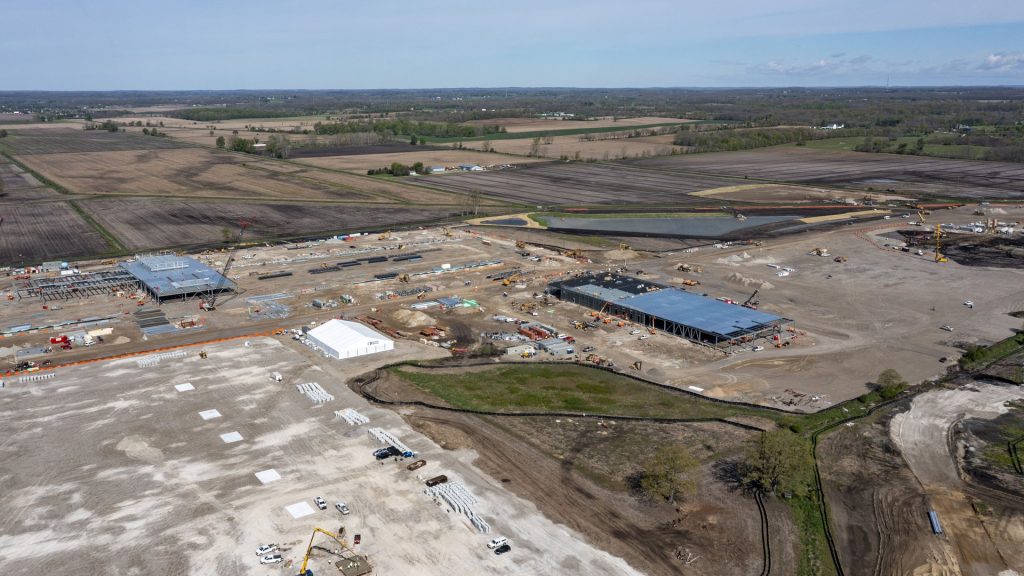
Saline Township, where the 1.4-gigawatt data center is located, fought against the project. Resident feared developers would skirt agreements and “destroy this community,” local newspaper The Saline Post reported resident Josh Lebaron saying in November. The Post added that the township’s board was opposed to the project, but couldn’t afford the legal fees to fight it.
“I don’t know what we can do to go back at it if the state wants it here,” Saline Township Treasurer Jennifer Zink said, according to The Post. “The judge would have favored it because Gretchen Whitmer wants it here. She took full credit for it.”
That hasn’t sat well with residents. Residents filed three recall petitions in Washtenaw County — where Saline Township is located — against Township Supervisor James Marion, Clerk Kelly Marion and Trustee Thomas Hammond, according to the county election commission.
“There’s nothing to activate folks and activate voters on the campaign trail, or constituents if you’re in an office, like something like drinking water,” Jacob said.
Data centers take control of the election
Mass shootings, gun violence, social reform, LGBTQ+ rights, the Israel-Hamas war, Jeffrey Epstein — none of those topics have redefined an election as greatly that data centers have, Jacob said. He couldn’t recall a time where a single topic reshaped the national conversation and influenced how politicians run their campaigns.
“This one is kind of different because it is sustaining,” he said. “It is something that is not coming up in the news and dominating the news, but is consistently in the news.”
He attributed that to the uncertainty behind how the centers operate. Pressure has constantly exploded within people about the data centers as news coverage of contentious town halls, videos of the centers’ noise levels and water quality remain a major topic.
It’s also an easy target for challengers, Jacob said.
They are matters that affect the working class, who constantly feel left behind but are voicing sharp opposition to data centers, but billionaire companies roll in with promises to generate job growth, he said. It circles back to the “people over profits” ideal he’s seen winning campaigns adopt.
“That animosity, that could be harnessed in a powerful way, and you can create a winning coalition just by making this an issue in the campaign,” Jacob said.
Round out your reading
- Plea bargains keep America’s courts running. Guilt or innocence barely matters.
- Trump says the media isn’t covering one of his biggest accomplishments. We checked.
- Mike Lindell denied MyPillow was hacked. Its private data is now online.
- Red meat allergy rises with ticks as HHS targets Lyme disease, alpha-gal syndrome.
- We’re building a new Straight Arrow. Help us shape our future by taking our survey.
Ella Rae Greene, Editor In Chief