Why the class of 2026 feels behind before day one
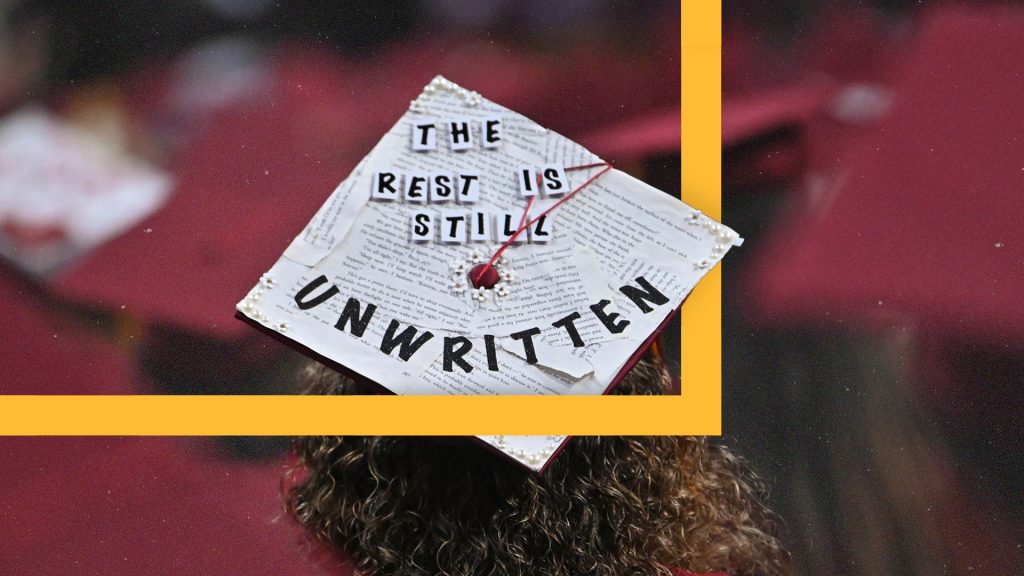
Only days after graduating from California Baptist University, 22-year-old Mia Pollock is already playing catch-up.
“It feels as though I should have it already figured out,” Pollock told Straight Arrow. “And since I don’t, I must be behind.”
It’s a feeling shared by a record number of graduating seniors in both high school and college as they cross the stage this spring. As caps fly skyward, the job market is shifting beneath graduates’ feet. According to a recent job outlook survey by the National Association of Colleges and Employers, employers are rating the market as only “fair,” which is the lowest assessment since 2021.
With that uncertainty comes an anxiety many graduates say is holding them back from fully experiencing the excitement that usually comes with this chapter. A recent Centers for Disease Control and Prevention study found that 2 in 5 U.S. high school students reported experiencing symptoms of depression.
“I think it is easy for a young college graduate to already feel a bit defeated when we are hearing how difficult the current job market is,” Pollock said.

A job market that changed the rules
“What has changed is legibility,” said Dr. Anthony Lee, president and CEO of Westcliff University. “Students used to be able to look at a career path and see several years ahead with reasonable confidence. That kind of visibility is harder to come by now.”
Recent graduates are facing a tougher labor market than the broader workforce. The unemployment rate among recent college graduates was 5.6% in the first quarter of this year, compared with 4.2% for all workers, according to the Federal Reserve Bank of New York.
Whether it’s hiring freezes, AI’s absorption of entry-level roles or inflation outpacing starting salaries, graduates are navigating uncertainty that feels less like a rough patch and more like a change in the employment structure as a whole.
READ MORE: Gen Z is fed up with AI, and they want you to know it
“They are not worried they cannot get a job,” Lee said. “They are worried the job will change faster than they can.”
And that pressure is starting well before graduation day. High school college counselor Laurie Kopp Weingarten said her students are already asking “what should I major in?” — not to find something they love, but to find something that will still exist in 10 years.
“Students used to arrive at college excited to explore,” she said. “Now they’re feeling pressure to map out a long-term plan before they’ve even stepped onto campus.”
In a market where hiring processes are longer and competition is steeper, many enter the workforce with uncertainty instead of excitement. According to ZipRecruiter’s 2026 Annual Grad Report, only about 20% of graduates with work experience land a role before receiving their diploma.
“Fragile confidence is the phrase that comes to mind,” said Stephanie Turner, co-founder of LaunchPoint Talent, where she coaches hundreds of young job seekers through the journey from campus to career. “Most of these students did everything right. They went to college, worked hard, maybe did internships and they’re stepping into a market that isn’t rewarding their effort the way they expected.”

The pressure to keep up
“When they see peers announcing offers on social media, it adds to that internal pressure in a very real way,” said Lisa Blair, director of the Career Center at California Baptist University. “The expectation of having everything locked in before graduation doesn’t reflect how the market actually moves.”
Rebecca Polimeda, senior director of the Career Center at Stevens Institute of Technology in New Jersey, said landing a role by graduation is no longer the norm. For many graduates, it can take closer to three to six months post-diploma, sometimes longer, she said.
“Parents still view immediate full-time roles as the main (return on investment) for college,” Polimeda said. “Students sometimes have to stay longer in an internship, go through six or seven rounds of interviews, or wait months for decisions. And that’s becoming the norm.”
Alyssa Burton, who graduated from California Baptist University this month alongside Pollock, feels that pressure intensely.
“Social media and comparison culture can create unrealistic expectations surrounding what success after graduation is supposed to look like,” said Burton, who is 22. “Everyone’s timeline looks different and constantly comparing yourself to others can take away from appreciating the growth happening in your own life.”
Still, not every graduate is struggling.
“I’m hopeful that the past four years have prepared me to address any uncertainty I may face,” said Vincent Menichelli, a May 2026 environmental engineering graduate from Stevens Institute of Technology. Menichelli has long planned to head straight to graduate school after receiving his diploma.
“I’m excited to welcome the opportunities and challenges as they come, one step at a time,” he said.
However, the 22-year-old understands the anxiety his peers are facing.
“There’s definitely external pressure to appear collected,” he said, “primarily from people who aren’t actively in the job market.”

Burning out before they begin
What makes this moment different, experts told Straight Arrow, is that some students are arriving at graduation already running on empty.
“One of the biggest misconceptions about burnout is that people assume it only happens in adulthood or in the workplace,” said Dr. Anna Elton, a licensed marriage and family therapist. “I’m seeing burnout begin much earlier.”
READ MORE: The demoralization of America’s doctors
Elton said she has worked with teens who pushed themselves relentlessly beginning in middle school, only to reach senior year emotionally depleted, shocking parents with plans for a gap year or delaying college entirely.
“Many young people have spent years in achievement mode without enough emotional recovery or identity exploration,” she said.
Angela Schedler, a licensed clinical social worker, said the pressure pipeline begins before most realize.
The pressure to succeed is starting at a younger age,” she said. “No more kids just being kids.”
And that exhaustion can be misunderstood.
“Families may interpret this as laziness, avoidance or attitude,” said Ellen Ottman, a licensed marriage and family therapist and founder of Stillpoint Therapy Collective. “When it may actually be a stress response.”
Follow the signs that a young person is carrying more than they’re letting on: disrupted sleep, irritability and stomach issues.

Parents are feeling it too
Graduation stress doesn’t stop at the student. It affects the whole family.
For Nery Rodriguez, founder of Catalyst Connection, a business consulting and coaching company, this is a particularly busy season. Her stepson is a high school senior, just weeks from graduating. While he’s already committed to a university to play lacrosse, there are still uncertainties ahead.
“The cost of school, moving from home and what comes after is definitely causing stress,” Rodriguez said.
Derrick Christy, CEO of Gateway Education, an education technology company and parent of two graduates, said the questions families carry are just as heavy for him as others.
“Millions of parents in every city, town and rural areas across America face these same questions every year,” he told Straight Arrow.
READ MORE: Why a growing number of US adults feel more anxious this year than last
And parents aren’t immune from the comparison trap.
“Parents especially may be measuring their child’s experience against their own entry into the workforce,” said Blair. “And today’s market is most likely much different than when they started out.”

What graduates actually need to hear
For many graduates, the hardest part isn’t the job search itself — it’s not feeling comfortable sharing what they’re experiencing.
“What graduating students need most is support from trusted loved ones, and to show themselves compassion along the way,” said Kim DeRamus Lareau, a licensed professional counselor and founder of Steady Hope Counseling.
That starts with reframing what this season is supposed to look like.
“One of the most important things families can do during this transition is reduce the pressure for immediate certainty,” Elton said. “Young adulthood is naturally a period of exploration and identity formation. Supportive conversations often help more than performance-based expectations.”
DeRamus Lareau said consistent routines can also help graduates stay grounded when everything else feels uncertain — regular sleep, exercise, time away from screens and intentional connection with others.
“Graduation is an identity shift,” she said. “Graduating students are entering into a whole new world. They won’t have all the answers right away, and that’s OK.”
Round out your reading
- Tennessee officials will pay $835,000 for jailing man over Charlie Kirk meme.
- Why the immune system turns on women more often than men.
- More than 340 newspapers block the Wayback Machine. What that means for the future of the internet.
- Why Rep. Cohen filed articles of impeachment against Supreme Court Justice John Roberts.
- We’re building a new Straight Arrow. Help us shape our future by taking our survey.
Ella Rae Greene, Editor In Chief