America’s shrinking birth rate is becoming higher education’s problem
A problem you can clearly see coming is still a problem. That’s exactly what’s happening to American colleges and universities when it comes to enrollment.
The number of teenagers graduating from high schools is expected to decline significantly over the next 15 years. That means fewer students to enroll in higher education, and therefore less money coming into those schools.
“Most colleges and universities depend on student fees, tuition, room and board to keep their lights on, to keep the doors open, and so if the number of students starts to drop, the problem is pretty clear,” Bryan Alexander, senior scholar at Georgetown University, told Straight Arrow.
Birth rate drops
When the Great Recession hit in 2008, it led to a significant drop in birth rates in the U.S. over the next several years. It hit an all-time low in 2023.
Fewer births mean fewer teens to become college students.
“If you want to know how many 18-year-olds there are going to be in 15 years, look at the number of three-year-olds we have now,” Dick Startz, distinguished professor of economics at the University of California, Santa Barbara, told Straight Arrow.
The number of high school graduates hit roughly four million last year.
That number is expected to drop by 15% by 2029 and by some 500,000 students per year in 2041.
While the financial situation of the U.S. is certainly a factor in declining birth rates, another is what researchers call the “demographic transition.”
“That just means whenever a society goes through modernity, whenever you get a lot more money, you get better science, you get better healthcare, better public health, and, especially women, get access to education, labor force, and some degree of reproductive control — once that happens, birth rates fall off a cliff,” Alexander said.
That is clearly visible almost everywhere around the world, not just in the U.S.
International students
American schools are also seeing fewer international students walk onto their campuses.
In a survey of 149 schools, 62% reported lower international student enrollment.
Much of that comes from the Trump administration’s open hostility towards international students and their immigration policies in general.
President Donald Trump also has three more years in office, meaning those policies are likely to stay in place.
“It’s possible that the next president would be a Republican in the Trump vein, so a President Rubio, a President Vance, they might just continue this same kind of open hostility to international students,” Alexander said.
What happens next?
Moreover, many Americans also no longer believe higher education is worth it.
That’s led to some universities and colleges taking on significant debt.
Some schools like Harvard and Yale receive massive endowments and are in no danger of going under.
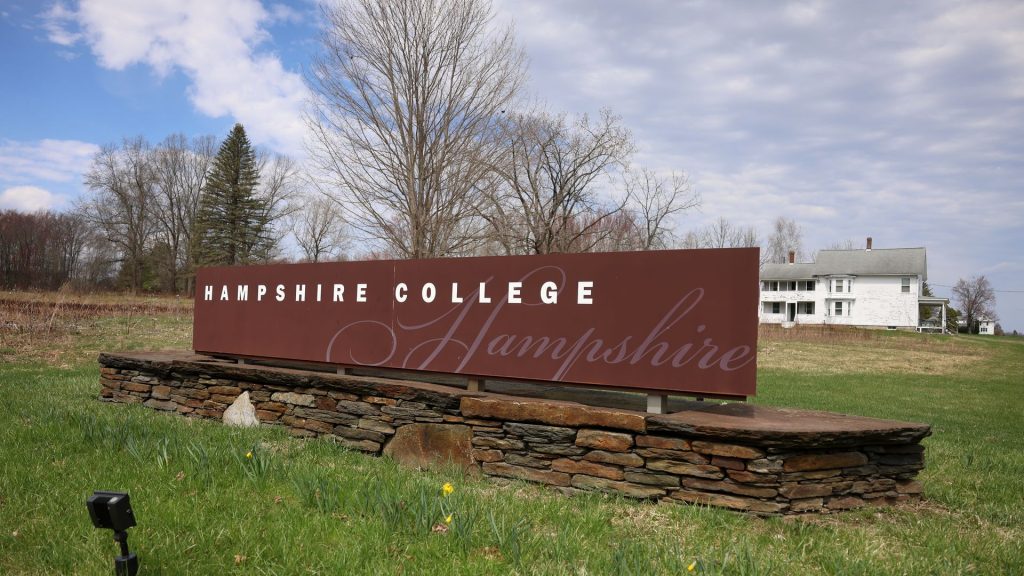
But schools like Hampshire College announced they will officially close due to financial issues and dwindling enrollment.
Other schools may need to make changes as this future issue becomes a reality.
“Colleges are going to have to shrink some,” Startz said.
Alexander pointed to colleges and universities attempting to make their campuses more attractive to prospective students, and not just in a physical sense of making their campus a prettier place.
This competition was coined the “amenities arms race.”
What Alexander meant was more support for students.
“Mental health, physical health, faculty that are more interested in trying to support their students, and also trying to support students who suffer from different challenges,” he said.
Round out your reading
- They built an Epstein files library, but realized they couldn’t let everyone read them.
- The doctor who claims functional medicine reversed her MS.
- For many Americans, ‘one more round’ no longer serves their lifestyle or budget.
- Trump claimed economic data is ‘rigged.’ Former officials pledge to ‘watch like hawks’ for political manipulation.
- We’re building a new Straight Arrow. Help us shape our future by taking our survey.
Ella Rae Greene, Editor In Chief