Pentagon to scale back NATO forces in Europe: Report
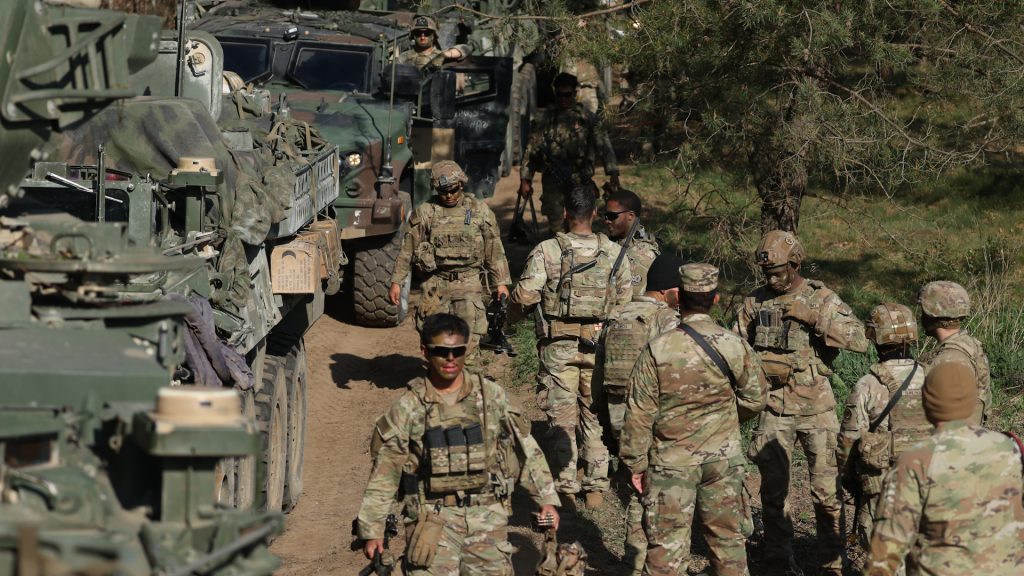
The Trump administration plans to tell NATO allies this week that it will reduce the U.S. military capabilities reserved for major European crises, Reuters reported.
The move would advance Washington’s push for Europe to take on more conventional defense responsibilities, while allies press for details on timing, troop cuts and how NATO would avoid gaps in deterrence against Russia.
The shift centers on the NATO Force Model, which lists the forces allies could activate during a war or other major crisis. The Pentagon plans to significantly reduce the U.S. commitment, though details remain classified.
American officials are reportedly presenting the policy shift during a Friday gathering of military leaders in Belgium.
This development represents a tangible shift toward President Donald Trump’s goal of forcing European nations to shoulder the main burden of their own defense.
Reuters reported that Trump has made clear he wants Europe to take over more of its own conventional defense. Elbridge Colby, a top Pentagon policy official, previously said Washington will maintain its nuclear deterrent for the alliance.
What officials are saying about the shift
Speaking in Brussels, NATO Secretary General Mark Rutte declined to comment on the U.S. drawdown. But he described the transition as a natural step to reduce the bloc’s heavy dependence on American forces, Reuters noted.
“We know that adjustments will take place, the U.S. has to pivot toward, for example, Asia,” Rutte said. “This will take place over time, in a structured way.”
The Financial Times reported that European allies are already pressing Washington for a clearer timeline for U.S. troop reductions and changes to forces in Europe.
Reuters noted that several logistical questions remain unanswered, such as the exact timeline for transferring these emergency duties.
The U.S. delegation at Friday’s gathering is expected to be led by Alex Velez-Green, a senior deputy to Colby. Reuters reported that revamping these commitments is a primary objective for the Pentagon ahead of July’s NATO summit in Turkey.
NATO’s top commander, U.S. Gen. Alexus Grynkewich, told reporters in Brussels that he does not expect more U.S. troop withdrawals from Europe in the near term.
“The deployments that we have so far are all that’s been announced — it’s all that I’m expecting in the near term,” Grynkewich said.
Grynkewich also cautioned that while American forces will likely shift over time as European nations enhance their own capabilities, that transition will take place over multiple years.
Why European allies want a roadmap
European allies are asking for coordination to avoid creating gaps in deterrence against Russia.
The Financial Times reported that Estonia’s foreign minister, Margus Tsahkna, said the U.S. plans affect the collective security and defensive posture of the entire alliance, not just individual member states.
The concern follows a series of recent U.S. force decisions in Europe. The U.S. pulled 5,000 service members from Germany, but the Pentagon unexpectedly scrapped plans to remove 4,000 troops from Poland.
The withdrawal of a dedicated long-range missile unit from German bases has sparked alarm, as European forces lack immediate equivalents. One senior diplomat told The Financial Times that they were confident NATO’s top commander would do everything possible to patch the resulting vulnerabilities.
Round out your reading
- They built an Epstein files library, but realized they couldn’t let everyone read them.
- The doctor who claims functional medicine reversed her MS.
- For many Americans, ‘one more round’ no longer serves their lifestyle or budget.
- Trump claimed economic data is ‘rigged.’ Former officials pledge to ‘watch like hawks’ for political manipulation.
- We’re building a new Straight Arrow. Help us shape our future by taking our survey.
Ella Rae Greene, Editor In Chief