New Yorkers prep for hectic Monday commute amid Long Island Rail Road strike
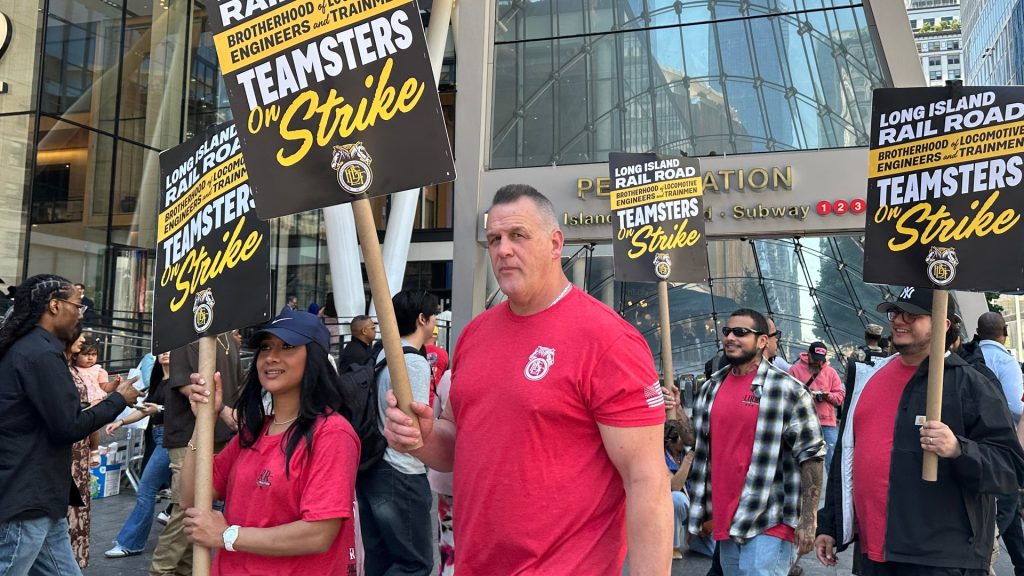
A strike by 3,500 Long Island Rail Road workers entered its second full day Sunday, halting service on the nation’s busiest commuter railroad and disrupting travel for more than 300,000 daily riders as state officials and union leaders traded blame over the breakdown in contract negotiations.
The walkout, the first shutdown of the Long Island Rail Road in more than 30 years, followed failed negotiations Friday night between the Metropolitan Transportation Authority and a coalition of unions led by the International Association of Machinists and Aerospace Workers and the Transportation Communications Union.
Union leaders said workers had gone four years without raises while inflation and living costs surged across the New York metropolitan area. They argued the strike could have been avoided if MTA leadership had accepted recommendations made by two Presidential Emergency Boards that supported higher wage increases.
“The cost of living in the New York area keeps going up while many of us have gone years without a raise,” said Mike Frank, a backshop machinist and IAM union member. “We want to be back on the job serving the public with a fair contract that respects the work we do.”
Christian Jahkhah, a stockman and TCU/IAM member, said workers were “effectively fighting for retroactive pay after four years of stagnant wages while paying more for everything.”
IAM International President Brian Bryant said the unions remained willing to return to negotiations “at any time” if MTA leadership was prepared to bargain seriously.
According to the union coalition, the gap between the two sides was less than 1% before talks collapsed.
New York Gov. Kathy Hochul urged both sides to resume negotiations while implementing emergency measures to reduce disruptions for commuters.
“For the first time in 30 years, the hundreds of thousands of people who rely on the LIRR are without service because of a strike,” Hochul said during a news conference Sunday. “The railroad is the lifeblood of Long Island. Without it, life as we know it is simply not possible.”
Hochul said state agencies had been directed to implement telecommuting policies and encouraged private employers to allow employees to work remotely during the strike. Beginning at 4 a.m. Saturday, the MTA deployed shuttle buses to transport essential workers from Long Island to subway connections in Queens.
The governor also criticized the Trump administration for allowing the labor dispute to advance beyond mediation.
“This strike would not have been possible if the Trump administration had not taken the highly unusual step last fall of releasing labor unions from mediation,” Hochul said.
President Donald Trump rejected Hochul’s criticism in a post on Truth Social, saying he had “nothing to do with it” and accusing the governor of mishandling the dispute.
“If you can’t solve it, let me know, and I’ll show you how to properly get things done,” Trump wrote.
MTA chair and CEO Janno Lieber defended the agency’s bargaining position, saying negotiators repeatedly offered proposals to narrow the divide.
“We were more than willing to meet them halfway on wages,” Lieber said. “We need ideas about how to bridge the gap.”
State officials warned commuters to expect severe delays and overcrowding on alternate transit systems if the strike continued. The MTA said additional buses and subway capacity would be monitored and adjusted as needed.
Labor leaders maintained that responsibility for the shutdown rested with MTA management and emphasized they remained ready to resume negotiations immediately.
“No one wanted this strike,” Jahkhah said. “But we can’t keep falling further behind.”
Ella Rae Greene, Editor In Chief