Clinical trial keeps Stage 4 skin cancer victim alive years after ‘four months to live’
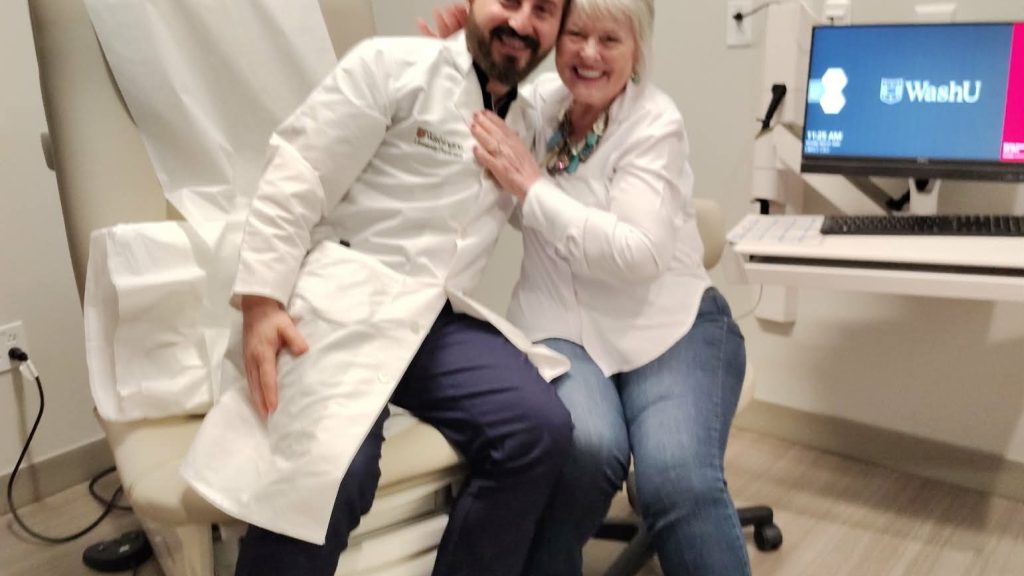
ST. LOUIS — What began as a small, hard-to-see mole on her ankle became a life-threatening battle with Stage 4 melanoma for Deborah Dieman. Doctors told the Missouri woman at one point that she had only months to live. Today, more than four years after enrolling in an experimental immunotherapy trial, she is alive and sharing her story to urge others not to ignore changes in their skin.
Dieman discovered a mole years ago, but she had difficulty monitoring it because of its location. Routine checkups initially raised no alarms until her primary care physician urged her to see a dermatologist immediately. Tests later confirmed the mole was malignant melanoma.
The cancer spread aggressively. Surgeons removed tumors from her ankle and lymph nodes, and she underwent months of infusions with immunotherapy drugs. Despite treatment, the cancer returned rapidly, erupting into hundreds of painful tumors throughout her leg, causing severe infections and organ damage.
Doctors told her chemotherapy might extend her life by only two months. She declined and went for a second opinion.
A renewed hope
She sought out the Siteman Cancer Center in St. Louis — a more than four-hour drive each way. The options were limited, but there were options. Doctors offered her participation in a clinical trial involving targeted immunotherapy injections.
“At that point, I was willing to try anything,” Dieman said, “If it helps one person later, then it’s worth it.”
Dr. David Chen, an assistant professor of medicine at Washington University School of Medicine, knew the Dieman was ready to fight.
“It wasn’t that we had good options — it was that we had to try something new,” Chen said in an interview with Straight Arrow. Dr. Chen treats patients with advanced melanoma that has failed standard therapies, focusing on combinations of immunotherapy guided by molecular testing of tumors.
The treatment worked. Tumors began to shrink, and Dieman, now in her mid-70s, is alive more than four years after enrolling in the trial.


The dangers of melanoma
Melanoma accounts for about 100,000 diagnoses each year in the United States. When caught early, surgery is often the cure. But once melanoma spreads to the lymph nodes or distant organs, treatment becomes far more difficult.
A major reason cases advance unnoticed, doctors say, is that melanomas can form in places people rarely check, such as the scalp, back, soles of the feet or under nails. Others are simply dismissed as harmless spots.
Ultraviolet radiation from the sun remains a leading risk factor, Chen said. Sunscreen helps block harmful rays when applied generously and reapplied every 90 minutes to two hours during sun exposure.
Cloudy skies and car windows are not reliable protection. UV rays can penetrate clouds and most glass, contributing to cumulative skin damage over time.
Despite growing awareness, there is no universal recommendation for routine full-body skin cancer screening for all adults. However, people with a family history of melanoma or extensive sun exposure are urged to have suspicious moles checked. Getting into a dermatologist’s office can be difficult, as the field is very small. Doctors suggest starting with a primary care physician.
Free skin checks
The American Academy of Dermatology has conducted more than 2.9 million free skin cancer checks since 1985, identifying more than 293,000 suspicious lesions, including over 33,700 suspected melanomas. The program emphasizes early detection as key to saving lives.
For Dieman, whose husband and adult son both died during the years of her illness, survival has come with scars — physical and emotional. Still, she considers herself fortunate.
“I love talking about it,” she said. “If it gets one person to get checked, it’s worth it.”
Click here to find a free skin cancer check near you.
Round out your reading
- Are aliens real? Pentagon’s newly released UFO files suggest the truth is out there.
- A million Americans get this knee surgery every year. But does it work?
- Is the apocalypse now? One man is tracking flights by the rich to find out.
- ‘No Mow May’: A boon for the bees or a well-intended mistake?
- We’re building a new Straight Arrow. Help us shape our future by taking our survey.
Ella Rae Greene, Editor In Chief