WHO says ebola a ‘public health emergency of international concern’
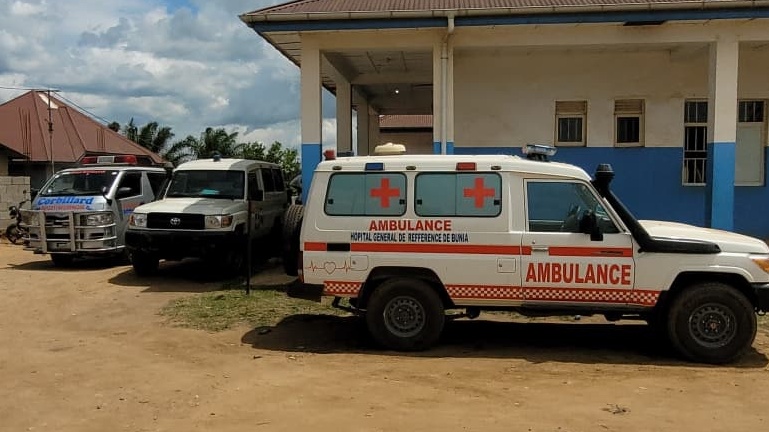
Health officials in Central and East Africa are working to contain an Ebola outbreak spanning the eastern Democratic Republic of the Congo and neighboring Uganda, while the United States warns against travel to the hardest‑hit areas.
Early Sunday morning, the Director-General of the World Health Organization, Tedros Adhanom Ghebreyesus, proclaimed the epidemic a “public health emergency of international concern.”
In Congo’s Ituri province, about 336 suspected cases and 87 deaths have been reported as of Sunday morning as testing continues to identify the virus strain, while Uganda has confirmed at least one death tied to the Bundibugyo species, raising concerns about cross‑border spread. On Friday, the number of deaths was 65.
The World Health Organization and other partners have deployed teams and supplies to support surveillance, contact tracing, mobile laboratory testing and clinical preparedness.
The dual outbreaks have raised concerns about regional spread, particularly given frequent cross‑border travel and economic activity. Health officials cite challenges including gaps in contact tracing, infection‑control difficulties and insecurity in affected areas as key risk factors.
In response, the Africa Centers for Disease Control and Prevention convened an emergency coordination meeting with officials from Congo, Uganda and South Sudan, along with international agencies and private‑sector partners, to align response strategies and mobilize resources.
The United States government has issued travel and safety warnings as the situation develops. Both Uganda and Congo are under a Level 3 advisory urging Americans to reconsider travel. U.S. officials warned their ability to provide emergency services in the region is “extremely limited” and advised against travel there under any circumstances.
Ebola virus disease is a severe and often fatal illness that spreads through direct contact with the bodily fluids of infected people or contaminated materials. Public health authorities emphasize that early detection, isolation, contact tracing and safe burial practices are essential to halting transmission.
Despite the seriousness of the outbreak, experts say Ebola is unlikely to become a global pandemic. Unlike respiratory viruses that spread easily through the air, Ebola typically requires direct physical contact with infected fluids, which limits how readily it can move through large populations.
Research also suggests the virus doesn’t spread between people as easily as highly contagious pathogens. Studies comparing Ebola to viruses such as SARS‑CoV‑2 show that Ebola has lower transmission potential and is historically contained to localized epidemics rather than global outbreaks.
Still, health officials caution that the current outbreak presents real risks, particularly in areas with dense populations and cross‑border movement. Authorities in both Uganda and Congo are urging residents to report symptoms and avoid direct contact with suspected cases.
Round out your reading
- Are aliens real? Pentagon’s newly released UFO files suggest the truth is out there.
- A million Americans get this knee surgery every year. But does it work?
- Is the apocalypse now? One man is tracking flights by the rich to find out.
- ‘No Mow May’: A boon for the bees or a well-intended mistake?
- We’re building a new Straight Arrow. Help us shape our future by taking our survey.
Ella Rae Greene, Editor In Chief