
Supreme Court allows telehealth abortion pill prescriptions, mail delivery
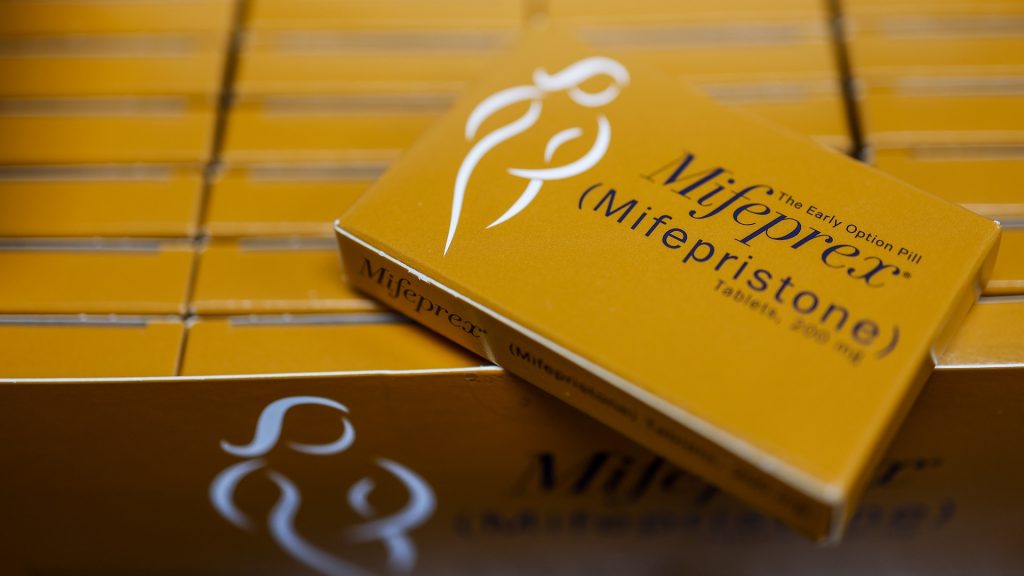
The Supreme Court has ruled the abortion pill mifepristone can continue to be prescribed via telehealth visits and sent out by mail. In a brief order on Thursday, the nation’s highest court put a pause on a lower court’s decision requiring in-person visits to obtain the drug.
The court did not explain its decision.
Justices Clarence Thomas and Samuel Alito dissented. Alito called the order “remarkable” and accused the majority of allowing states to circumvent the court’s decision overturning Roe v. Wade.
The pills are now used in nearly two-thirds of abortions in the U.S. and about one-quarter involve telehealth, according to The New York Times.
Louisiana at the center
The case started after Louisiana sued the FDA over Biden-era rules that expanded access to mifepristone by mail. The state argues the policy undercuts its strict abortion ban and puts women at risk.
Abortion rights groups and drugmakers say restricting access would create nationwide disruption for patients and providers.
In 2021, the FDA lifted a regulation requiring patients to see a provider in-person before obtaining the abortion pill. Earlier this month, the U.S. Court of Appeals for the Fifth Circuit reimposed that rule in response to Louisiana’s lawsuit.
Since the pause is only temporary, the issue is expected to return to the Supreme Court again.
FDA reviewing mifepristone
Lawyers for the Trump administration have said the FDA is conducting a review of mifepristone’s safety. They’ve asked the lower courts to delay Louisiana’s lawsuit until that review is complete.
In the wake of the Supreme Court’s decision, the FDA said in a post on social media it will “press forward to complete its science-based safety review” of the pill.
Sen. Josh Hawley, R-Mo., introduced a bill in March that would revoke the FDA’s approval of mifepristone. It would also make labeling and distributing mifepristone for pregnancy termination a violation of federal law and create a pathway for women to sue drug manufacturers for damages.
The bill would still allow for the drug’s use to treat other issues, like Cushing’s syndrome.
Round out your reading
- Are aliens real? Pentagon’s newly released UFO files suggest the truth is out there.
- A million Americans get this knee surgery every year. But does it work?
- Is the apocalypse now? One man is tracking flights by the rich to find out.
- ‘No Mow May’: A boon for the bees or a well-intended mistake?
- We’re building a new Straight Arrow. Help us shape our future by taking our survey.
Ella Rae Greene, Editor In Chief