Air Force underestimating aircraft maintenance delays, GAO finds
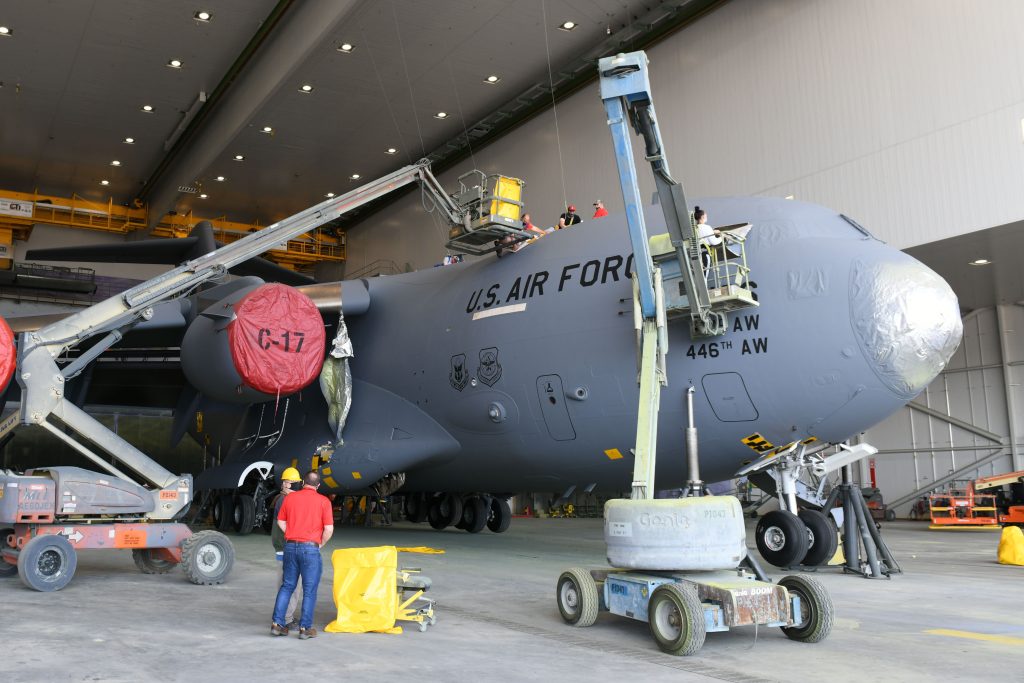
The U.S. Air Force is underestimating the lengths maintenance delays at its aircraft maintenance depots, according to a new government watchdog report.
Unplanned maintenance — the inevitable surprises that are discovered when aircraft undergo scheduled work — are not being reflected in metrics that assess depot performance. The result is that the Air Force “is not reporting the full extent of depot maintenance challenges and may not be able to make accurate comparisons across the fleet,” warned the Government Accountability Office in a report released Thursday.
The question is how unplanned maintenance is recorded. When assessing whether depots are meeting their deadlines or experiencing delays, the Air Force is supposed to use the scheduled target date for completion.
But depots often discover unexpected problems with an aircraft, such as corrosion or stress cracks, that require additional time to fix.
“Air Force officials cited unplanned work as a major issue contributing to overall delays,” GAO said.
When this happens, depots often miss their deadlines.
“The depot planned to fix, say, 20 things,” Diana Maurer, a director in GAO’s defense capabilities and management team, told Military Times. But as far as the depots are concerned, “if it turned out that 30 things need to be fixed, that shouldn’t be on the depot.”
So, depots often file revised target dates for completing maintenance of an aircraft. The Air Force tends to use those revised target dates when assessing depot performance, as part of a system that tracks the reasons for delays.
However, regarding unplanned maintenance, “the system does not include it as a category, including delays obtaining parts and engineering reviews related to the unplanned work,” said the report. For example, “targets are often revised after maintenance is completed, leading to many targets being revised to match actual performance, thereby showing no delays in those instances.”
“Moving the target date makes it look like things are better than they really are,” Maurer said.
Depot maintenance performance varies widely depending on which metrics are used.
“More than half of the Air Force’s depot maintenance is delayed, and timeliness is worsening, according to the original target,” the report said. “However, according to the revised target, the Air Force completes more than half its depot maintenance on time and has improved in fiscal year 2024, compared with 2023.”
Nor does the Air Force always analyze the reasons for delays.
“We found root causes that are entered into the tracking system are not analyzed by AFMC [Air Force Material Command] to quantify the relative scale of delay causes and their trends across the depots,” the report noted.
GAO recommended that the Air Force use the original target date as its metric for depot maintenance performance. The watchdog also suggested that unplanned work be tracked as a separate cause for delays.
Burnishing numbers is hardly uncommon in the commercial or government spheres. Airlines, for example, are notorious for padding flight times to make their on-time performance look better.
But maintenance depots have been struggling for years, as they deal with aging aircraft and a shortage of skilled workers. In 2019, 31% of aircraft experienced delays in meeting their target maintenance date, according to GAO. By 2024, that figure had soared to 74%.
Masking problems with depots only complicates the search for solutions, GAO said.
“Without complete and credible metrics to understand the full extent of depot maintenance delays, decision-makers will not fully understand the sustainment challenges related to its aging fleet,” the agency concluded.
“Consequently, they will not have the information needed to determine the resources necessary to sustain the Air Force’s aging fleet and thereby be able to accurately plan for impacts on aircraft availability for training and operations.”
Ella Rae Greene, Editor In Chief