Hollywood stars look to states to stop blockbuster studio merger
Hollywood was on strike when Mark Ruffalo and Matt Stoller met over Zoom one day in 2023. But the movie star and the head of the American Economic Liberties Project had something bigger on their minds: the perils of huge Hollywood mergers.
“We came together because we recognized the root cause of the [Writers Guild] strike,” Ruffalo and Stoller wrote in a New York Times op-ed published May 7. “A handful of corporations were swallowing an entire industry and leaving those who work in it worse off. Netflix, Amazon and Disney were accumulating power, combining their production capacity with their enormous distribution platforms to form what could quickly become the kind of oligopolistic entities not seen in Hollywood in decades.”
Three years after that conversation, Ruffalo and Stoller are trying to take action against the dangers they identified during the strike.
After Paramount Skydance won a bidding war for Warner Bros. Discovery in April, Ruffalo and Stoller formed a coalition of actors, unions and civil society groups to lead a campaign to stop it.
Under the banner of “Block the Merger,” they are asking state attorneys general around the U.S. to do what the federal government seems unlikely to do: file antitrust lawsuits to derail the $110 billion deal.
The merger, the coalition said in an open letter, would lead to “fewer opportunities for creators, fewer jobs across the production ecosystem, higher costs, and less choice for audiences in the United States and around the world. Alarmingly, this merger would reduce the number of major U.S. film studios to just four.”
So far, more than 5,000 people have signed on to the open letter, including Hollywood A-listers like Bryan Cranston, Lily Gladstone, Tiffany Haddish and Joaquin Phoenix
Meanwhile, politicians, such as California Attorney General Rob Bonta, Sen. Cory Booker, D-N.J., and New York City Mayor Zohran Mamdani, have also spoken out, held hearings and launched investigations.
This is more than just a Tinsel Town dispute. The merger would combine two of the world’s largest entertainment companies and would affect the future of CNN, one of the world’s largest news organizations. The “Stop the Merger” campaign could be a test case for applying antitrust laws in an era of rapid media consolidation.
“When thousands of industry stakeholders speak out about how they think a merger will affect them, it’s evidence that can be presented in court as to the harms of a merger,” Stoller, the author of “Goliath: The Hundred Year War Between Monopoly Power and Democracy,” told Straight Arrow.
The potential harms are real, Stoller added: “layoffs, price hikes, censorship, the closure of theaters.”
Warners Bros. Discovery spokesperson Megan Klein responded to SAN, “No comment from WBD.”
Seeking state action
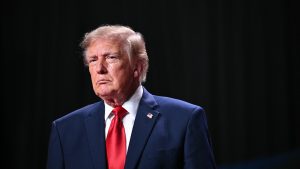
The coalition does not expect the Justice Department to challenge the merger on antitrust grounds, given that President Donald Trump endorsed Paramount’s bid for Warner over rival Netflix.
So the “Block the Merger” campaign leans heavily on the power of state attorneys general.
“State Attorneys General are key enforcers of state and federal laws governing consumer protection, antitrust, and civil rights,” the “Block the Merger” website says. “Right now, they are among the primary regulators positioned to challenge this proposed merger by filing a preliminary injunction before the DOJ rubber stamps the transaction.”
So far, no states have sued to stop Paramount from taking over Warner. However, California’s Bonta told The New York Times that the acquisition is “not a done deal.” And in filings with the Securities and Exchange Commission, Paramount disclosed that it has received subpoenas from “various” attorneys general about the merger.
“We have been cooperating with the state attorneys general in responding to their requests,” the company said.
Although federal laws govern large mergers, states have been successful in other antitrust matters.
Most recently, a bipartisan group of 13 state attorneys general challenged the merger of two large owners of local television stations, Tegna and Nexstar. The $6.2 billion merger would create a conglomerate with stations that reach 80% of the U.S. population. In many markets, it would own multiple stations, potentially reducing competition in local news.
After the Federal Communications Commission and the Justice Department approved the merger, the state attorneys general persuaded a federal judge to issue a preliminary injunction blocking the deal. Nexstar has appealed the injunction.
That’s just one of many cases in which state officials have played a key and powerful role in antitrust cases.
Large corporations have repeatedly said they needed to be free of antitrust constraints to pursue profitable mergers, Stoller told Straight Arrow.
“AT&T said it needed to do this when it bought Time Warner in 2019, Discovery said it needed to do this when it bought Time Warner from AT&T in 2022,” Stoller said. “Nexstar is saying this about Tegna right now. Lots of companies make this claim. None of them ever ‘compete’ with big tech after such an acquisition.”
Fear and hesitation in Hollywood
Paramount’s chief executive is billionaire David Ellison, and his bid for Warner was backed financially by his father, Oracle founder Larry Ellison, one of the richest people in the world and a friend of Trump’s.
Still, David Ellison promised more creative avenues for artists if the merger goes through.
But some don’t believe it.
‘’We should know better than to trust promises by the ultrarich,” Ruffalo and Stoller wrote in their New York Times op-ed. “This chapter includes the potential end of one of the great movie studios, as well as putting CNN under the same roof as the now imperiled CBS News.”
But some in Hollywood were hesitant — or even scared — to sign the open letter.
“We heard time and time again from artists, when asked to sign this letter, that they supported it but were afraid of retribution,” Ruffalo and Stoller wrote. “Their fear is not unjustified. When the editorial director of The Ankler, one of the last independent trade magazines, who also founded the publication and serves as one of its columnists, was seen at an event carrying a bag of ‘Block the Merger’ buttons, Paramount reportedly pulled its advertising in response.”
Stoller told Straight Arrow that the state attorneys general may be the artists’ only hope.
“Trump is corrupt and the Ellisons and Arab sovereign wealth funds are his backers,” Stoller said, “so the feds will allow the merger and try to override the state case against it.”
Round out your reading
- Are aliens real? Pentagon’s newly released UFO files suggest the truth is out there.
- A million Americans get this knee surgery every year. But does it work?
- Is the apocalypse now? One man is tracking flights by the rich to find out.
- ‘No Mow May’: A boon for the bees or a well-intended mistake?
- We’re building a new Straight Arrow. Help us shape our future by taking our survey.
Ella Rae Greene, Editor In Chief