An online movement to resurrect Spirit Airlines has amassed millions in pledged funding
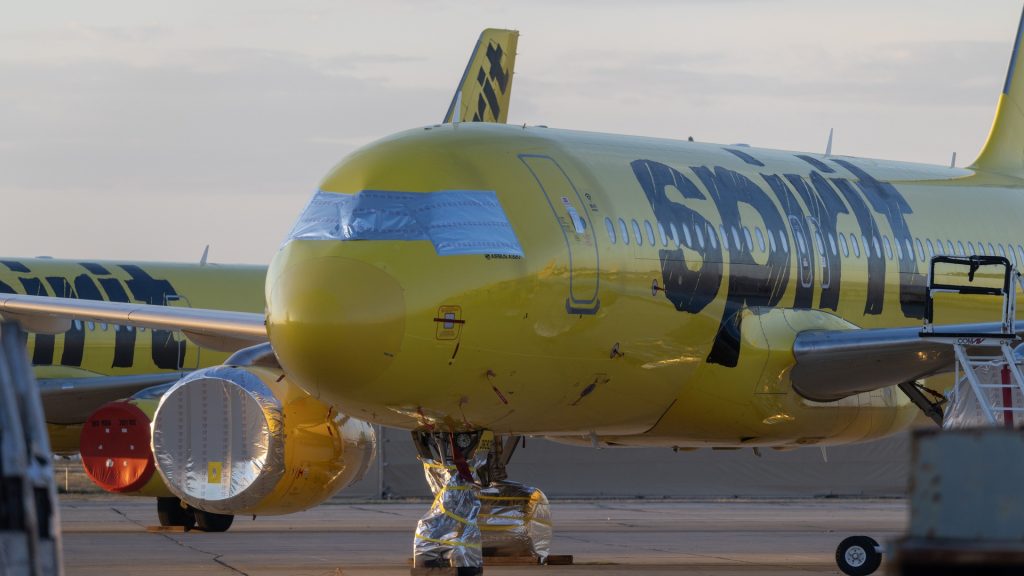
Thousands of Americans want to resurrect the now-shuttered Spirit Airlines before its engines have cooled off. But financials and low profit margins in the airline industry will prove difficult, an analyst told Straight Arrow.
Speculation about turning Spirit into a public company started hours after the airline went dark. Hunter Peterson, a voice actor, floated the idea as a joke, but changed his tune when he saw the public’s response. He started with a plan to get 20% of all Americans over the age of 18 to pledge “the cost of a Spirit fare.”
It has now amassed 124,755 supporters pledging more than $88 million for the plan. Peterson has indicated on his website — LetsBuySpiritAir.com — it is just “a movement, not an investment product.”
“This started as a joke, and this is rapidly going out of control the best possible way,” he said in a May 3 video.
Peterson’s website crashed repeatedly, which users joked was reminiscent of Spirit’s operations.
“Well I tried to pledge but after 2 different verification codes, and 10 minutes the website finally functioned properly,” Instagram user Myndi Simmons commented on Peterson’s May 2 video. “Very spirit airlines coded, I’m in.”
Despite the airline’s constantly low satisfaction ratings compared to the 10 other airlines offering economy seating, people are clamoring to revive the bright yellow jets.
Getting the airline is an unlikely task due to court proceedings and debt, Marc Scriber, senior transportation policy analyst at the Reason Foundation, told Straight Arrow. That’s largely due to the $8.1 billion debt Spirit reported in August 2025.
“What caused Spirit to fold while negotiations on a bailout continued were those creditors decided that Spirit was worth more to them in selling off the fleet than as an airline,” he said. “The financial state of Spirit had deteriorated to such a degree they could see any path forward.”
Doing it like the Packers
Peterson envisions people having one vote for the board, a nod to the Green Bay Packers’ model.
According to the Packers, the team has been a publicly-owned organization since 1923, with about 5.2 million shares held by 538,967 people.
“Fans have supported the team financially on several occasions, including six stock sales: 1923, 1935, 1950, 1997, 2011, and 2022,” according to the Packers. “To protect against someone taking control of the team, the articles of incorporation prohibit any person from owning more than 200,000 shares.”
It’s a troubled path for an airline. Scriber said owning a sports team is viewed as a prestigious thing among owners who earn little profit from their assets. Green Bay uses the appeal of being community-focused. Scriber said the model isn’t viable for airlines as the markets are vastly different.
“For the airline industry, it’s extremely competitive, and the margins are low,” Scriber said. “I don’t think there’s enough popular support to run an airline like that, especially one that’s losing so much money.”
Peterson noted in follow-up videos needing guidance on the process, saying that his regular lawyer hasn’t yet weighed in, and he’s seeking advice from aviation lawyers and public relations professionals.
“I don’t want to own this, but I do want to hire people who have aviation experience,” Peterson said.

Too broke to be bought
Even if Peterson were to pull off the herculean fundraising task, Scriber said the company agreed Monday morning to liquidate its assets. So, any public purchase would create an airline without aircraft.
Scriber said that Spirit reported to the bankruptcy court that it would sell off its fleet to satisfy debt. According to court records, the sale consists of 66 leased and 28 Spirit-owned aircraft, 18 engines and other spare parts. That sale, he said, could be for the aircraft or parts. The fate of the company’s new Florida headquarters is still up in the air.
He noted that other budget carriers could move toward reorganization to avoid a closure as people started opting for the likes of Delta, United and other airlines for their premium, first-class offerings. Already, airlines like JetBlue have announced plans to absorb some of Spirit’s routes to serve more passengers.
“It’s tough out there in the U.S. low-cost carrier market,” Scriber said. “It’s ultimately what consumers want, and if we see declining economic fortunes and people seek the lowest cost above all else, budget carriers will have to adapt, but they can still compete.”
Beyond competition costs, Scriber noted that fuel was a driver in Spirit’s downfall and would affect any airline owner. Spirit said in court documents that it had paid nearly $100 million in fuel between March 1 and April 30.
Scriber said a way to keep airlines afloat is to revisit federal ownership laws, which currently forbid all non-U.S. citizens from owning more than 25% of an airline. He noted that the law led to Virgin Airlines’ demise in the U.S.
“If politicians want to make sure the airline industry is in the best footing, they need to take care not to burn them, but to also reduce barriers to entry and competition,” Scriber said.
By comparison, Canada allows non-Canadian citizens to own up to 49% of an airline.
In Canada’s format, Scriber said the 49% owner could have higher voting power than the 51% if the remaining is split off among various stakeholders. If that were in place, Virgin wouldn’t have left the U.S. in 2016.
“Ideally, you would allow straight majority ownership by non-U.S. citizens, that way airlines like RyanAir can open and operate in America, and not see the airline get sold out from under them,” Scriber said. “Ultimately, it’s a global industry with government barriers still in place.”
A company for the people
John Farrell, co-director and energy democracy director with the Institute for Local Self-Reliance, told Straight Arrow that there’s always been heightened public attention to airlines.
“Folks have been arguing to regulate the airlines, and one of the major consequences in deregulation is the concentration in the big airlines,” Farrell said.
He said a public airline would fill in gaps left by airline mergers, mainly in rural communities. But a lack of competition, he said, creates a favorable market for the premium airlines.
“The idea of a public airline is intriguing for filling in the gaps of places that lost service with deregulation,” Farrell said.
Round out your reading
- First, it was the schools. Now they’re coming for your cellphone at work.
- Why one of America’s top economic forecasters is worried about a recession.
- AI companies may not be adhering to their own guidelines — with potentially deadly outcomes.
- Data centers are a thorny issue for Democrats. Maine shows us why.
- We’re building a new Straight Arrow. Help us shape our future by taking our survey.
Ella Rae Greene, Editor In Chief