Fed keeps interest rates unchanged. What does that mean for you?
The Federal Reserve kept interest rates unchanged Wednesday, meaning costs for mortgages, car loans, credit card debt, business loans and other everyday borrowing are likely to remain high.
The Fed held its key interest rate in a range of 3.5% to 3.75%.
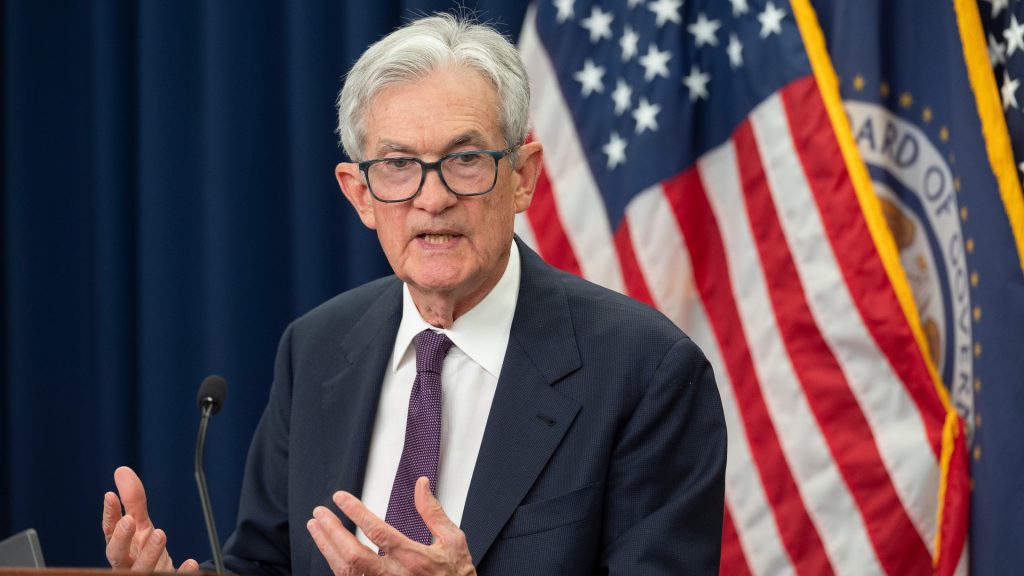
This rate decision “was guided by our dual mandate to promote maximum employment and stable prices for the American people” during a period when “the economic outlook remains highly uncertain,” Fed Chair Jerome Powell told reporters after the board’s meeting.
He signaled that rates could change in the months ahead.
Powell announced he’ll stay at the Fed as Warsh nomination moves forward
Wednesday’s news came the same day Kevin Warsh, President Donald Trump’s pick to replace Powell, moved a step closer to taking over the central bank by clearing a key Senate committee.
With Warsh’s confirmation all but certain, this was most likely Powell’s last meeting as the agency’s head after a turbulent eight-year run.
However, he announced that he will stay on as a board member, citing his concerns about a “series of legal attacks on the Fed” that he said were unprecedented in the central bank’s 113-year history.
Trump and Powell have clashed over monetary policy, with the president repeatedly demanding rate cuts as polls showed voters broadly disapproved of his handling of the economy.
At Trump’s urging, the Justice Department opened a criminal investigation of Powell over cost overruns in the renovation of the Fed’s headquarters in Washington. Officials recently announced that the investigation was suspended with no charges.
Powell said the legal attacks give him “no choice” but to stay until the investigation is fully closed.
Stepping down from the board would have given Trump a chance to nominate a member more aligned with his agenda.
What does Wednesday’s Fed decision mean for household budgets?
The Fed does not directly set the rates Americans pay for mortgages, car loans, credit cards or other household needs.
Instead, its rate decisions affect how much banks charge each other and serve as a benchmark for setting business and consumer rates. The impacts ripple through the entire economy.
The Fed is a central player, but not the only one that determines the cost of borrowing money, said Jon Hilsenrath, who covered the Fed for The Wall Street Journal for 25 years and is now a senior advisor at the financial services firm StoneX.
Hilsenrath used the analogy of a game of pool.
“When you hit the break shot, the Fed is like that first ball in a sequence of events that sets the direction of the other balls,” he told Straight Arrow. “While it’s the key ball, it’s not the only ball.”
More immediately, stocks, bonds and other financial markets will respond to Fed decisions, but Hilsenrath said investors had already baked Wednesday’s expected decision into prices.
The Dow Jones index and the S&P 500 closed only slightly lower on Wednesday.
It can take months for changes in Fed rates to affect the borrowing costs paid by everyday Americans and businesses.
When businesses pay more for loans, they often cut back on hiring and investments, which can raise unemployment and lower GDP that in turn cools inflation.
The Fed’s balancing act: interest rates vs. inflation
The Fed was in a tough bind: If it cut interest rates, inflation would climb higher. But by keeping rates high, it risks slowing economic growth and harming American households and businesses.
Economists had expected the Fed to keep rates unchanged to avoid increasing the annual U.S. inflation rate, which rose to 3.3% last month, according to U.S. Labor Department data. That is well above the Fed’s inflation target of 2%.
Even with interest rates unchanged, experts predict inflation could keep rising, particularly as the Iran war – which a Pentagon official said Wednesday has already cost the U.S. about $25 billion – continues to push oil prices above $100 a barrel.
Economists warn that succumbing to Trump’s pressure to lower rates could set off a dangerous chain reaction, as history has shown.
During the COVID-19 pandemic, the Fed under Powell’s leadership slashed interest rates to near zero to support the economy. But inflation spiked as trillions of dollars of government relief flooded into a reopening economy and as supply bottlenecks, labor shortages, strong consumer demand, the Russia-Ukraine war and other shocks rippled through the economy. The Fed responded by aggressively raising rates to cool spending and bring prices down.
Another cautionary tale, said Hilsenrath, is the public and private pressure campaign by President Richard Nixon on then-Fed Chair Arthur Burns in 1972. Lowered interest rates fueled a short-term economic boom, but then helped drive inflation into the double digits by 1974. Another consequence of that pressure, Hilsenrath said, was that “Americans lost faith in their leadership.”
Diane Swonk, chief economist at KPMG, wrote on X that it is a “tough time to become a Fed chair.” She described the Fed as being on the “sidelines” for now, “but in a good place to move in either direction [on rates], dependent on the course of the conflict in the Middle East.”
Will the Fed remain independent going forward?
That is now one of the biggest questions hanging over the central bank.
Warsh has tried to reassure senators and markets that he would preserve the central bank’s independence, but has stopped short of any pledge to resign over disagreements with Trump.
“I do not believe that independence of monetary policy is threatened when elected officials state their views on rates,” Warsh said this month. “Independence is up to the Fed.” But he also said that the central bank’s independence must be “earned.”
Powell said Wednesday that he will keep a “low profile” at the Fed once he passes the baton, but stressed that going forward, the Fed must “ignore political considerations completely” for the benefit of the general public. If the bank loses its independence, he warned, “the markets would lose faith in us, and our ability to control inflation would be gone.”
Economists generally agree.
“The incentives of a central banker are different from the incentives of a politician,” Hilsenrath said. “Politicians want the economy to run faster, particularly as elections come up, while Fed members think longer term.”
Round out your reading
- Scientists unearth new evidence on how the Grand Canyon was shaped.
- Why the Army is adding a second fitness test for combat.
- Illegal midwives, growing demand: The fight over home birth in America.
- 40 years after Chernobyl, the U.S. pushes nuclear power once again.
- We’re building a new Straight Arrow. Help us shape our future by taking our survey.
Ella Rae Greene, Editor In Chief