How the Iran war put America’s food supply at risk
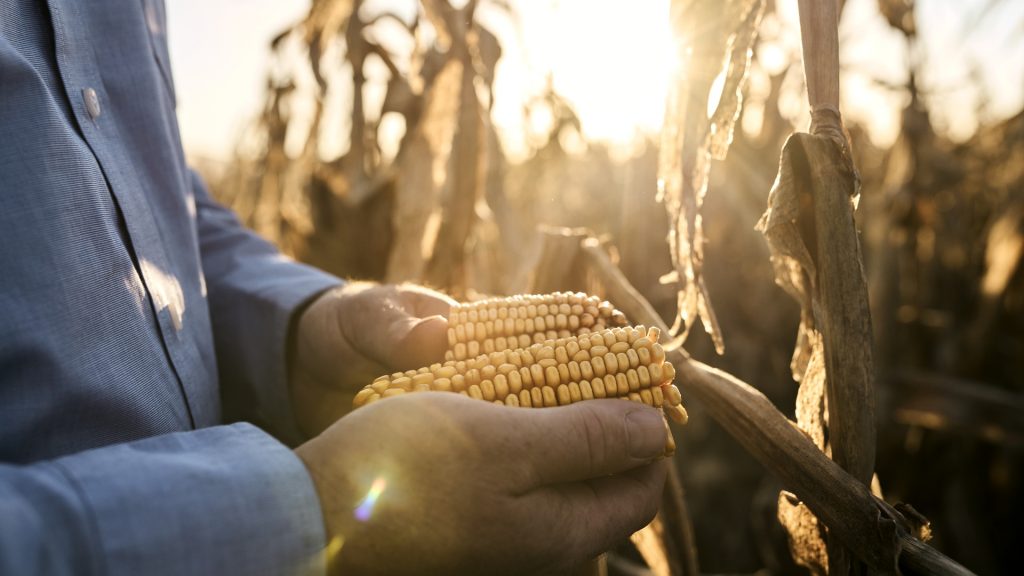
The war in Iran exposed a fundamental weakness in the U.S. food system: its dependence on a fragile global fertilizer network.
The closure of the Strait of Hormuz, through which a significant amount of the world’s fertilizer supply passes, underscored the degree to which the American farm economy is vulnerable not just to weather, but also to geopolitical turmoil, energy shocks and other global disruptions — with fallout that hits farmers first and then consumers at the grocery store.
Whether or not the Strait remains open during the two-week ceasefire announced Tuesday by President Donald Trump, supply chains disrupted by the conflict — including fertilizer shipments — may take months to recover.
Iran war triggered a cascade of farming shocks
The Strait of Hormuz is one of the world’s most important shipping channels not only for crude oil, but also for crop nutrients and the natural gas used to make them. About a third of the global seaborne fertilizer trade passes through it when it’s not blocked.
Gulf producers are major exporters of key nitrogen fertilizers, ammonia and urea.
“Fertilizer sits at the intersection of the fossil fuel industry, the mining industry and the shipping industry,” said Raj Patel, a research professor at the University of Texas at Austin and a member of the International Panel of Experts on Sustainable Food Systems. “And it inherits the vulnerabilities of all three.”
Even with a fully opened strait, Patel said, “the supply chain won’t snap back.”
“Nitrogen fertilizer is essentially fossilized energy — you’re burning natural gas at high pressure to fix atmospheric nitrogen into a form plants can use,” Patel told Straight Arrow News.
Meanwhile, phosphorus and potash, other key soil nutrients, are mined only in a handful of countries. Much of the sulfur used to process phosphate fertilizer also travels through the strait.
The timing of the planting season has compounded the crisis.
While a ceasefire could help cool oil and freight markets, the timeline for fertilizer is biological, Patel said.
“Crops need nitrogen at specific moments in their growth cycle,” he said. “You can’t retroactively fertilize a corn plant in July that needed it in April.”
US farmers are hitting a breaking point
The U.S. produces roughly three-fourths of the fertilizer it consumes. But, like oil, fertilizer is a globally traded commodity, so price shocks abroad also drive up domestic costs.
U.S. farmers have been paying up to 40% more than they were just weeks ago for some nitrogen products, according to recent market reports from the U.S. Department of Agriculture.
America’s smaller farms, already operating on razor-thin margins, are on the brink.
“It’s really hard to stay positive and find hope,” said Jed Bower, a central Ohio farmer who grows corn and soybeans on his fifth-generation family farm.

According to the USDA Economic Research Service, many small farms are not profitable even in the best years. Mid-sized farms may also operate in the red: In 2024, they reported a median farm income loss of nearly $3,000, while the households associated with them reported a median income from both farm and non-farm work of $70,886.
Bower told SAN this will be the fourth consecutive year he has operated at a loss. The shortfalls are eating up his savings, and he doesn’t know if his 20-year-old son, poised to become a sixth-generation farmer, will be able to keep the business going in the years ahead.
“We’re used to hard times, but normally, it’s Mother Nature,” Bower said. “This is really bad.”
Lance Lillibridge, a farmer in Vinton, Iowa, echoed that sentiment.
“Legacy farms are running out of capital,” he told SAN.
Like Bower, Lillibridge questions whether there is a viable future in American family farming.
“My 19-year-old son sees mom and dad’s stress and financial failures,” he said. “Why would our children want to do this work?”

SAN asked the Department of Agriculture for comment about how high fertilizer costs are affecting American farmers and food prices.
Without addressing the fertilizer shocks, a USDA spokesperson responded, in part: “President Trump is the most pro-farmer President of our lifetime, and through his leadership, the administration is supporting farmers through unprecedented international market access, lowered taxes, and improvements to the farm safety net in the One Big Beautiful Bill.”
The spokesperson also pointed to $12 billion in one-time farmer bridge payments announced in December to provide relief to American farmers facing market disruptions.
But Lillibridge said those relief payments, while demonstrating “a mindset of trying to help,” are swallowed by soaring input costs, including fertilizer, that in some cases rose further after aid arrived.
Have fertilizer companies profiteered from the crisis?
Fertilizer prices are largely determined by global supply and demand, even when the nutrients are produced and sold in the U.S. While farmers struggle, major fertilizer corporations can reap windfalls by increasing prices even when their costs don’t change.
For example, the stock price of CF Industries — an Illinois-based global producer of ammonia and other nitrogen products used to make fertilizer — rose more than 35% in the weeks following the initial U.S.-Israeli strikes on Iran in late February. Its stock fell by about 8% Wednesday after Trump announced a ceasefire with Iran.
Even though CF Industries is a domestic supplier, U.S. pricing reflects the “current global market realities driven by supply and demand dynamics,” the company said in a statement.
U.S. prices for nitrogen fertilizer are still lower than global prices, it added.
A spokesperson for The Mosaic Company, another major American fertilizer producer, told SAN just before the ceasefire that the company did not anticipate “any material disruption to our operations” from the conflict.
Yet the company still raised its prices, explaining to SAN that prices are not determined by individual companies but by market factors that include global supply and demand, energy costs and geopolitical conditions.
Meanwhile, farmers described a different marketplace, saying multibillion-dollar corporations hold all the bargaining power and have used the Iran war to price-gouge and boost profits.
“As farmers, we have a boot on our neck,” said Lillibridge, who accused these corporations of profiteering.
The fertilizer industry is highly concentrated, with a handful of companies controlling a huge share of the global market. This consolidation, said Patel of the University of Texas, poses risks to the food supply.
“These companies are optimized for global logistics and profit margins, not for national resilience,” he said. “The cost of that efficiency is fragility, and we’re paying for it now.”
Bower suggested that America’s heartland farmers are at the bottom of a complex, global food chain. “We’re now being strangled by these giant corporations which will drive many of us out of business and lead to even more consolidation and control by large companies.”

Will fertilizer shock raise food prices?
Experts said the fertilizer shock may still push food prices higher, though it is too soon to know whether the ceasefire might limit that damage.
Asked by SAN how fertilizer costs might affect food inflation, a spokesperson for the National Grocers Association responded: “Independent grocers across the country are closely monitoring rising input costs, which can affect transportation, distribution, and other parts of the food supply chain.”
Food prices in February 2026 were 3.1% higher than a year earlier, according to USDA data, and the agency has projected food prices will rise 3.6% in 2026.
“If farmers aren’t ready to plant this spring, our yields will go down and prices will go up,” Lillibridge said. “That will affect grocery store prices and typically once they go up, they don’t go back down.”
Could fertilizer price spikes reshape American farming?
The fertilizer shocks may have already driven some farmers away from nitrogen-dependent corn and wheat toward other crops. Some agricultural and health experts would celebrate that development.
A USDA report released on March 31 shows a 3% national drop in corn acreage and a 4% increase in soybeans, and that’s before the full price shocks hit.
“This is a wakeup call about our vulnerability to supply chain disruptions,” said Mark Lewis, co-founder of Trailhead Capital, a mission-driven investment firm that supports regenerative agriculture.
Lewis said moving away from corn production and the “industrial chemical food system,” and adopting regenerative and organic farming practices, would make the U.S. less susceptible to international and geopolitical shocks. These alternative farming models, he said, produce better soil and safer, more nutritious food with less environmental impact.
“Food security is national security,” he said.
Patel agreed that America’s dependence on corn is risky.
“U.S. corn production — which is the backbone of the animal feed system, the ethanol system, and the processed food system — requires enormous nitrogen inputs,” he said.
U.S. farming was jolted by supply chain breakdowns during the COVID-19 pandemic, a fertilizer price shock after Russia’s invasion of Ukraine in 2022, and now another geopolitical shock — one that may be paused for now but is not resolved.
“At some point, the pattern should tell us something about the system itself,” Patel said, “not just the latest geopolitical trigger.”
Ella Rae Greene, Editor In Chief