Ford hit by tariff squeeze, asks White House for help: Report
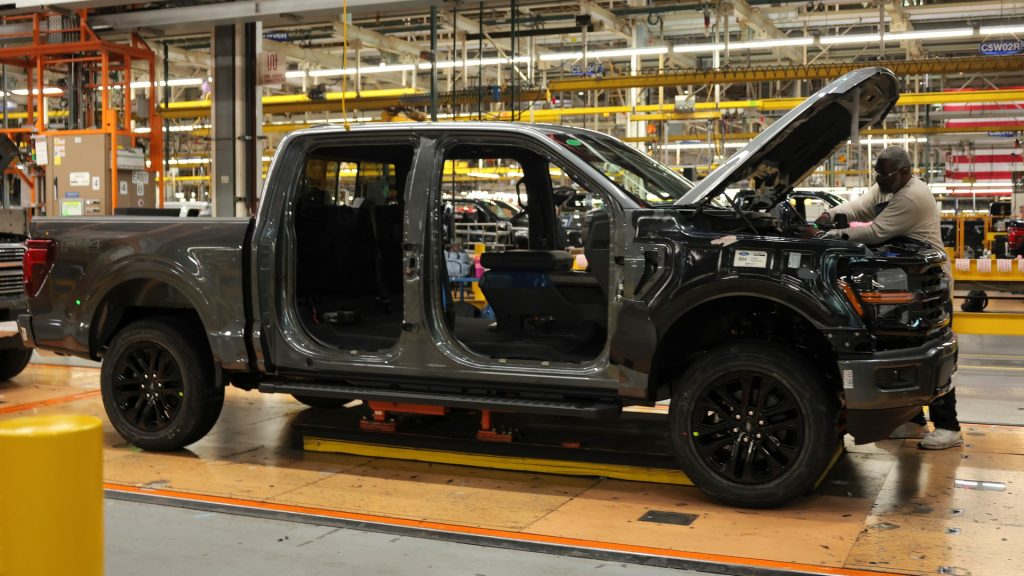
Ford Motor Company is seeking financial relief from the White House, according to The Wall Street Journal, as it grapples with tariffs and fire damage at a key aluminum supplier. So far, the automaker has not received any assistance.
Effect of fire at domestic aluminum producer
A major fire last September at the Novelis plant in Oswego County, New York disrupted aluminum production critical to the auto industry. A second fire in November compounded the damage.
The incidents knocked the plant’s hot mill offline, forcing Ford and other automakers — including GM, Toyota and Stellantis — to source aluminum elsewhere.
Unbiased. Straight Facts.TM
Novelis expects to restart its hot mill in Oswego, New York, “late in the second quarter” of 2026.

”We are urgently taking steps to minimize the impact of the recent fire at our Oswego facility on our customers,” a Novelis spokesperson said in a statement to Straight Arrow News last October. “We have activated Novelis’ global network of plants and are also partnering with industry peers to source material in order to help mitigate the gap in supply.”
Tariffs on imported aluminum
The Journal reports Novelis, a division of India-based Hindalco Industries, is now supplying aluminum from facilities in Europe and South Korea.
That material is subject to the Trump administration’s 50% tariff on imports — a cost passed on to automakers, including for high-volume vehicles like the Ford F-150.
Appeal for financial relief
Ford has approached the administration seeking temporary relief from those tariffs until the Oswego plant returns to full capacity, according to the report.
Sources told the Journal the administration has so far declined, pointing to earlier measures that allowed automakers to recoup some tariff costs on auto parts.
A White House official said companies have raised “supply concerns in light of the Novelis incident,” but have not sought tariff relief in a “pronounced way.”
Ford revealed in February the supply disruption has already cost the company $2 billion, with another $1 billion in added costs expected this year due to tariff-driven imports.
Additional cost pressures
New tariff changes announced last week could further increase costs. The Trump administration revised its metals policy so that goods made with imported aluminum and steel are now subject to a 25% tariff on the full value of the finished product — rather than a 50% tariff applied only to the aluminum component.
The shift could raise overall costs for manufacturers.
Ella Rae Greene, Editor In Chief