Small farmers face a new era of hemp prohibition
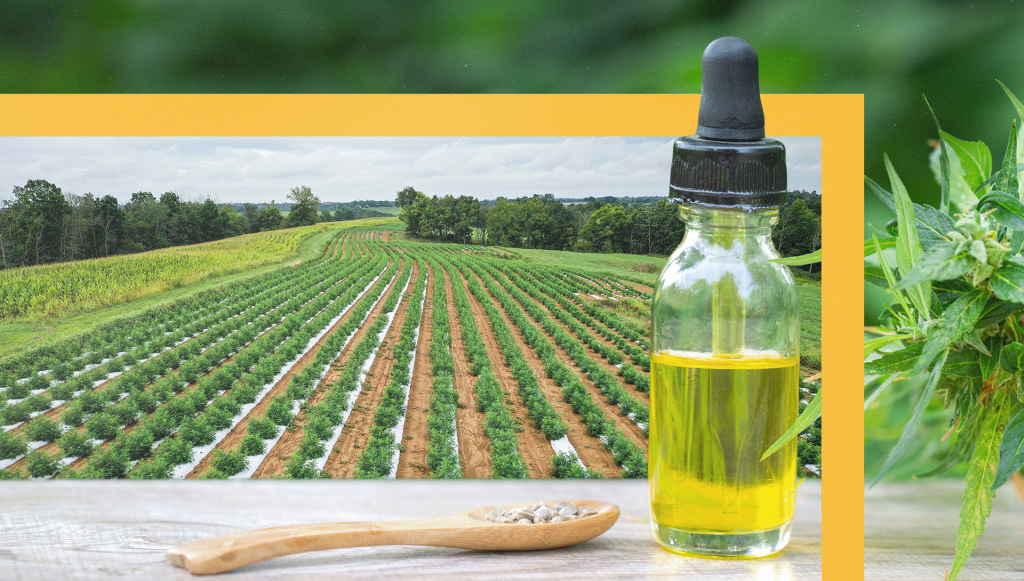
CLEVELAND — In a sparsely populated neighborhood in suburban Cleveland, an empty building stands in place of the former storefront and production facility for a cannabis-infused drink company forced to close in March when Ohio legislators rewrote the state laws that had once encouraged a fledgling market.
Wes Bryant, who owned 420CraftBeverages, told Straight Arrow News that laying off the 50 people he directly and indirectly employed at the beverage business “cut me to my core.”
After several boom years, new legislation in states like Ohio and New Jersey, as well as new federal laws, are bringing about a bust for business owners like Bryant.
“There’s just no viable path forward,” he said.

What is driving changes in the hemp industry?
New state and federal hemp restrictions represent an existential threat to a struggling industry, according to hemp sellers and growers.
Even if the rules, which are intended to combat a flood of marijuana imitation products stocking convenience store and gas station shelves, don’t destroy the hemp industry, they will leave it irrevocably damaged, they said in interviews.
Nov. 12, 2026, when federal restrictions take effect, “is tattooed in my brain,” said Jammie Treadwell, who owns a citrus and hemp farm in Umatilla, a central Florida town hugging the Ocala National Forest. “Every day I wake up worried about it.”
Her farm persevered through tribulations like COVID-19.
“We’re at a place where we can make a reasonable profit and now we have the threat of all of these federal sanctions,” Treadwell said. “It’s disappointing that we’ve survived through all of this tumultuousness and now we have a whole other set of concerns.”
Hemp restrictions were quietly tucked into a Congressional budget bill in November.
State and federal laws previously said that hemp could contain no more than 0.3% THC Delta 9, marijuana’s psychoactive ingredient.
Hemp-derived cannabidiol (CBD) is often marketed as a wellness supplement, although its efficacy is a matter of debate. But hemp — which, like marijuana, comes from cannabis — also contains THC A, THC Delta 8 and THC Delta 10. Those components, made popular in the early 2020s, are thought to produce a mild high and are often derided as “gas station weed.”
The budget bill says hemp can contain no more than 0.3% total THC and bars hemp-derived products with more than 0.4 milligrams of THC per container. At least three states — Ohio, Texas and New Jersey — passed similar laws.
“Nearly all of the Delta 8 you see on the market has been synthetically produced from hemp,” said Katharine Harris, a fellow at Rice University’s Drug Policy Institute.

A once-hot market cools
A handful of hemp growers were buffeted by the mid-2010s CBD craze, when state lawmakers eager to give farmers a windfall legalized cultivation of the crop in dozens of states.
Word of hemp’s profitability seeped out of early-growing states like Kentucky and Colorado, said Marguerite Bolt, a hemp extension specialist for Purdue University.
“The language that I was hearing from farmers was ‘get rich quick,’ and ‘We’re going to make so much money,’” she said.
But supply exceeded demand, leaving many without a place to sell their wares, she said. By the early 2020s, hemp-related bankruptcies were common.
“There are not many of us left,” said Allison Justice, founder and CEO of the Cannabis Research Center and Coalition.
Ohio awarded 539 hemp cultivation licenses in 2020, the first year those licenses were available. In 2025 the state issued 45, including 10 for researchers. Other states saw similar declines.
When New Mexico first issued hemp manufacturing and warehouse licenses in 2018, it awarded hundreds, a New Mexico Department of Agriculture spokesperson said. In 2025, the state awarded 18. New Jersey gave out 55 hemp growing licenses and 21 processor and handler licenses in 2021. In 2025, those numbers declined to 21 and 10, respectively, Kerr said.
Ohio farmer BobMcKenzie stopped growing the crop several years ago.
“There’s no money in hemp,” he told SAN.

Can hemp restrictions keep kids safe?
Kentucky Sen. Mitch McConnell said in November that he included hemp restrictions in November’s budget bill because cannabis products were being marketed to children.
Industry backers successfully pushed back in some states.
Hemp supporters effectively killed an Indiana law that would have heavily restricted hemp-based products, Bolt said. But nothing is stopping state legislators from trying again.
“They’ve been trying to ban these hemp-derived THC products for a couple of years,” she said.
The language in the Senate budget bill “clarifies the original intent of the 2018 farm bill, rooting out the bad actors and protecting the growing hemp industry,” McConnell said in November on the Senate floor.
However, it’s virtually impossible to grow cannabis without at least some THC, said John Kerr, hemp program manager for New Jersey’s Department of Agriculture.
“They’re essentially saying you can’t even grow the plant,” he said.
A 250 milligram bottle of hemp-derived CBD easily fits in the palm of your hand, and CBD shops sell containers with thousands of milligrams.
The 0.4 milligrams “is a speck of dust,” said Chris Karazin, owner of Carolindica, a hemp manufacturer and seller with locations in and around Raleigh, North Carolina.
A McConnell spokesperson told Straight Arrow News that McConnell is not available for an interview while the legislative body is on a break.
The Texas Poison Control Center recorded 2,669 cannabis-related hospitalizations in 2025, compared with 923 in 2019, the year the state legalized hemp cultivation and sale. Texans who are 19 years old or younger made up nearly two thirds of those hospitalizations in 2025. Proponents of hemp restrictions highlight such data points.
“Children end up being the unknowing consumers of these poisonous products and being sent to the hospital at an alarming rate,” McConnell said in November.
Texas’ ban on smokeable hemp took effect March 31.
The Ohio Prosecuting Attorney’s Association categorized its own state’s ban as an effort to shield children from potentially dangerous intoxicants.
“The safety and the need to protect children exposed to marijuana in any form have been tantamount to our views,” the association wrote in a Jan. 29 letter supporting the state’s hemp updated hemp rules, which took effect in late March and mirrors the language in the federal budget bill.

What does the future look like for hemp growers and retailers?
The advocacy organization Texans for Safe and Drug-Free Youth said Texas’ hemp law doesn’t go far enough.
“We’ve always stood by the evidence and research that shows the most effective prevention is total elimination of these products from the marketplace,” Betsy Jones, the group’s director of policy and strategy, told SAN.
Restriction advocates also cite intoxicated driving as a concern.
“We already have a DUI problem in our state,” South Carolina state Rep. John McCravy said during a debate on a bill banning intoxicating hemp products, according to the South Carolina Daily Gazette. “To hand this into the mix, on top of the alcohol, it’s just going to make things worse.”
South Carolina’s bill is currently stalled.
Hemp-derived products are not well-studied and the extent to which they contribute to impaired driving and hospitalizations is unclear.
Industry backers say they aren’t opposed to restrictions, but favor a targeted approach. Karazin supports regulating hemp products like tobacco or alcohol.
“Clear regulation, not prohibition, is what our industry is asking for,” he told SAN.
Some legal marijuana businesses support hemp restrictions. David Bowling, executive director of the Ohio Cannabis Coalition told the Ohio Capital Journal that Ohio’s hemp law “gives law enforcement clear authority to ensure that intoxicating THC products are no longer freely sold to children through thousands of locations in Ohio.”
Opponents of the state’s intoxicating hemp rules say the coalition’s stance is self-serving.
“They’re worried about competition,” said Tim Johnson, founder of the advocacy organization Cannabis Safety First, noting that Ohio dispensaries still sell products with THC.
A coalition spokesperson did not respond to SAN’s requests for comment.

Could we see a second hemp boom in time?
Hemp industry lobbyists continue to push Congress to soften federal restrictions. JD McCormick, founder and chairman of the hemp lobbying organization Americans for Healthy Alternatives, supports a bill before Congress to delay the federal rules by three years.
“There are quite a few champions of this issue,” he told SAN.
The latest version of the Farm Bill softens hemp restrictions, Harris said, but that could change.
Hemp is also a versatile crop that can be made into clothing, building materials and paper, and experts like Bolt predict the industry will endure.
“We do have industrial hemp processing facilities throughout the U.S.,” she said. “Not as many as we need, but they have a big economic impact in their communities.”
Ella Rae Greene, Editor In Chief