Why Hungary’s election matters to Trump, Orbán and Russia
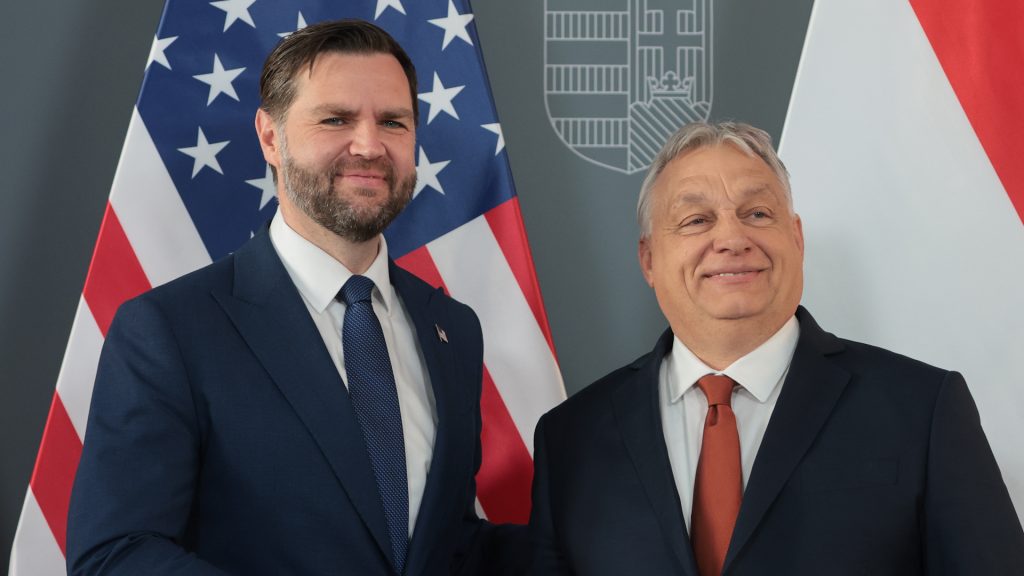
Vice President JD Vance is in Budapest this week, making a last-minute push for one of President Donald Trump’s closest allies in Europe.
Hungary heads to the polls Sunday in a closely watched election, with Prime Minister Viktor Orbán seeking a fifth straight term. He’s facing his toughest race in years and is trailing challenger Péter Magyar’s Tisza party in several polls.

(Attila KISBENEDEK / AFP via Getty Images)

(Balint Szentgallay/NurPhoto via Getty Images)
Why the election matters beyond Hungary
The stakes extend well beyond Hungary. Orbán has become one of Trump’s closest ideological allies in Europe and a frequent source of tension inside the European Union.
For Trump, Orbán represents a partner aligned with his political worldview. For many on America’s right, he has become a model for hard borders, national sovereignty and opposition to Europe’s liberal mainstream.
The election also carries weight in the broader geopolitical landscape. Both Washington and Moscow both see Orbán as a useful player, particularly when it comes to Europe’s divisions over Ukraine. The New York Times reported the Kremlin has relied on him to help slow sanctions and aid efforts tied to the war.
What Vance’s trip and Trump’s backing show
Vance’s visit is a clear sign of the White House’s investment in the outcome.
CNN reported the trip is widely seen as a signal of that support. In Budapest, Vance told Orbán that “the president loves you, and so do I,” while his office said the visit is aimed at strengthening ties on energy, technology and defense.
Trump has repeatedly praised Orbán, calling him earlier this year a “truly strong and powerful leader, with a proven track record of delivering phenomenal results.”


A Washington Post opinion piece noted that Orbán has become an outsized figure for some American conservatives and has appeared repeatedly at CPAC gatherings, including those held in Budapest.
The administration’s backing also aligns with its broader approach to Europe. The New York Times reported the strategy includes closer alignment with what it describes as “patriotic European parties,” often outside the continent’s political mainstream.
Why Orbán is still vulnerable
Even with that backing, Orbán remains in trouble.
CNN reported one late-March poll shows Tisza with 56% support among decided voters, compared with 37% for Orbán’s Fidesz party. Other surveys showed a tighter race, with a sizable share of undecided voters that could still shift the outcome.
Magyar has focused his campaign on distancing Hungary from Russia’s war in Ukraine, while Orbán has emphasized security and opposition to deeper involvement in the conflict.
The key question now is whether outside support from America can close the gap.
A loss for Orbán would remove a major obstacle inside the European Union on Ukraine policy — and cost Moscow a key partner in the bloc.
Ella Rae Greene, Editor In Chief